

What if everything you’ve been told about “white identity” wasn’t just misleading, but part of a long-term strategy to weaken your connection to your heritage? What if this identity wasn’t built from the ground up by those who lived it, but was instead imposed by elites who wanted to control how entire populations think and behave? For centuries, those in power have been quietly shaping how we see ourselves, replacing rich tribal traditions with a shallow, manufactured label. If you’ve ever felt like something about modern identity feels hollow or disconnected, this article might help explain why.
Arditi Issue No. VII, now in print.
When we take a closer look at the history of white identity, it becomes more obvious that this label has been largely shaped and guided by ruling elites. Their main goal seems to have been to redirect the loyalties of the non ruling class by moving them away from older, tribal affiliations and replacing that with a more general and synthetic label that is easier to control from the top down.
One early example of this shift was the creation of the English identity. After the Norman Conquest, the Norman elite subjugated the native Anglo-Saxons, and eventually, the distinctions between Normans and Anglo-Saxons were smoothed over into something new. Even though the Anglo-Saxons far outnumbered the Normans, a unified English identity was formed to serve elite interests. Over time, this identity became associated with being “white,” and the English went on to form the core of Anglo-American culture.
Benjamin Franklin once wrote that only the English and the Saxons (meaning a sub group of Germans) were truly “white.” He viewed other Europeans like the Italians and the French as “tawney” or “swarthy.” That shows how arbitrary and limited the definition of white identity has always been and how much it has changed depending on who is doing the defining.
“That the Number of purely white People in the World is proportionably very small. All Africa is black or tawny. Asia chiefly tawny. America (exclusive of the new Comers) wholly so. And in Europe, the Spaniards, Italians, French, Russians and Swedes, are generally of what we call a swarthy Complexion; as are the Germans also, the Saxons only excepted, who with the English, make the principal Body of White People on the Face of the Earth.”
-Benjamin Franklin
The ability to control how people perceive themselves is one of the most powerful tools a ruling class can have. If someone has strong ties to their tribe, family, and ancestry, they’re much harder to manipulate. But if their identity is vague, abstract, and defined by someone else, they become easier to influence.
I’m not saying we should destroy white identity entirely. But I do think it’s time to reconnect racial identity to the actual tribes and lineages we come from. The problem today is that white identity is still largely managed by people who don’t have our best interests in mind. That’s why so much of “white culture” seems bland, commercial, and artificial, especially when viewed through media and mainstream narratives. But our true cultural pasts are far more vivid and meaningful.
The term “white” itself is a kind of invented category. It wasn’t born naturally out of any single cultural group, it was developed to replace a wide variety of ancestral identities with something easier to manage. The idea was to break those older, deeper connections and repackage us under a single, politically useful label.
We can see this play out today in government classifications. The FBI, for example, considers Arabs, Latinos, and North Africans as “white” in their crime statistics. Many people wouldn’t consider these groups white in a cultural or historical sense, but they’re included anyway. This further dilutes the meaning of the term and makes it harder to defend or define a consistent identity.
The definition of white has always been unstable. Irish, German, and Slavic immigrants were once viewed as racially “other” when they first came to the United States. Even though they shared much in common with the English in terms of culture and values, they were excluded until it became convenient to fold them into the white category.
That history brings me to my main point. Instead of clinging to the increasingly shallow idea of white identity, we should move toward a broader but more grounded identity, something like a collective Aryan tribal identity. This wouldn’t exclude anyone traditionally considered white. In fact, it would offer them a more meaningful connection to their ancestors, histories, and cultures.
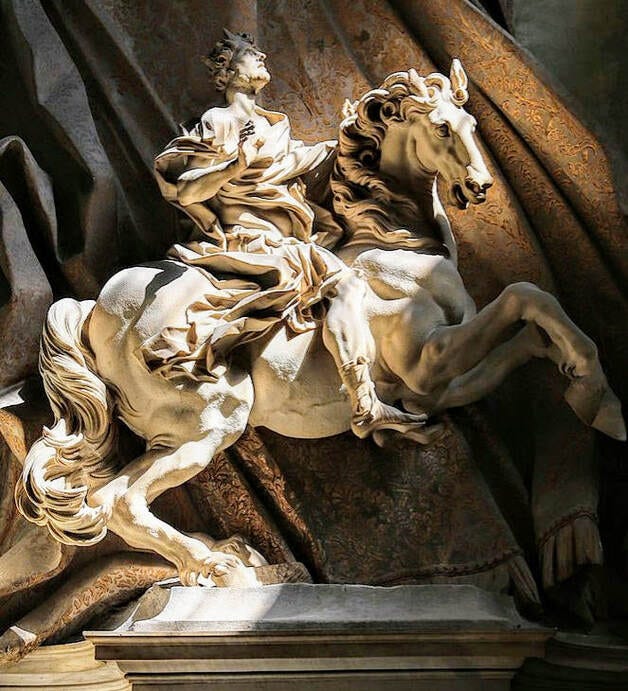
By embracing an Aryan identity rooted in Indo-European heritage, we can sidestep much of the negative propaganda aimed at “whiteness.” We don’t have to play defense anymore—we can build something on our terms. This isn’t about hate or superiority. It’s about returning to a richer, more accurate story of who we are and where we come from.
When people ask, “What is white culture?” the mainstream answer often sounds like a parody of consumerism: barbecuing hot dogs, drinking Budweiser, watching football, or shopping at the mall. These things are real parts of life for many, but they don’t reflect a deeper cultural foundation. In fact, a lot of these traditions come from older tribal customs that have been repackaged for a mass market. White identity, as we know it, often strips the soul out of these practices.
Looking at history again, most people today have very little actual connection to the systems of power labeled “white supremacy.” During the American slavery era, for instance, only a small number of wealthy elites owned slaves, some of them were Jewish, and some were even Black. Today, the modern elite holds just as much disproportionate wealth and influence, and the average white person’s ancestors were usually poor laborers or farmers, not rulers.
Despite this, the idea of a monolithic “white problem” is promoted by the same class of elites who benefit most from keeping working people divided. They weaponize the white label while holding themselves above the consequences of the division they create.
A return to Aryan tribal identity allows us to side step that trap entirely. It offers a stronger connection to who we really are, instead of letting ourselves be defined by external forces. It’s a path toward unity without uniformity, an identity that’s both inclusive and respectful of real cultural boundaries.
The Aryan story, beginning on the Eurasian Steppe, includes the ancestors of the Germanic, Celtic, Latin, Greek, and Slavic peoples. These groups all came from a common origin, and although they evolved in different directions, they share key cultural and linguistic roots. That makes Aryan identity a powerful framework not because it erases differences, but because it respects difference within pan Aryan unity.
“As long as the German people was united it has never been conquered. It was the lack of unity in 1918 that led to collapse. Whoever offends against this unity need expect nothing else than annihilation as an enemy of the nation. If our people fulfills its highest duty in this sense, that God will help us who has always bestowed His mercy on him who was determined to help himself.”
Proclamation by Adolf Hitler, Chancellor of the Reich, to the German People, September 3, 1939.
Unlike the imposed “white” category, Aryan tribalism doesn’t erase distinctions. The Germanic tribes remained separate from the Celts and Slavs, even though they shared common ancestry. Each developed unique languages, religions, and governance structures. Their diversity wasn’t a weakness it was the foundation of their strength and resilience.
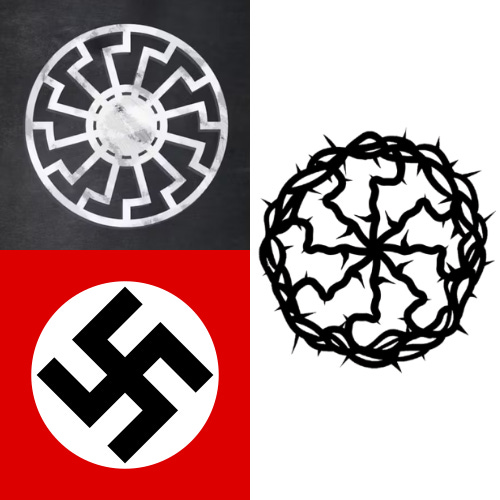
This form of identity is naturally inclusive among Indo-European peoples, yet it maintains the boundaries that keep traditions and cultures intact. There is no pressure to conform to a single homogenized idea. Instead, each tribe contributes to a bigger picture, where shared ancestry is celebrated without erasing uniqueness.
By returning to this kind of identity, we create something that is resilient and harder for elites to manipulate. The term “Aryan,” when understood historically and correctly, gives us a solid, traceable, and culturally rich identity. It’s not a label invented in the 20th century for political gain, it’s an ancient reality with modern relevance.
In the end, adopting Aryan identity gives us a way to rewrite the elite’s metanarrative. It allows us to reclaim heritage that has been stolen or suppressed, and to stand strong against the propaganda machines that want us weak and divided. It is both a defense against cultural erasure and a vision for the future, an identity that honors where we come from and helps us imagine where we can go.
Fifth Column Library offers free to download books for your enjoyment.