

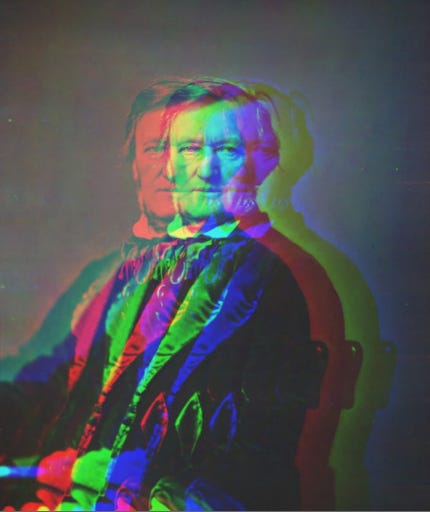
Napoleon Bonaparte, William Shakespeare, and Richard Wagner. Doubtless, there was a greatness about these men that established them as exemplars for each successive era. While not entirely flawless, their very names denote a certain weightiness which many men aspire to. They were models of artists, of kings, and of many things that make a good man. And yet, so few eminently great men come to the foreground of history every hundred years.
On what basis can we call a man great? To what, exactly, ought we aspire to become as men? Are we limited to some perfect pie-in-the-sky ideal, or can a sinful and broken man still be great?
“…Universal History, the history of what man has accomplished in this world, is at bottom the History of the great men who have worked here. They were the leaders of men, these great ones; the modelers, patterns, and in a wide sense creators, of whatsoever the general mass of men contrived to do or to attain; all things that we see standing accomplished in the world are properly the outer material result, the practical realization and embodiment, of thoughts that dwelt in the great men sent into the world: the soul of the whole world's history, it may justly be considered, were the history of these.” -Thomas Carlyle1
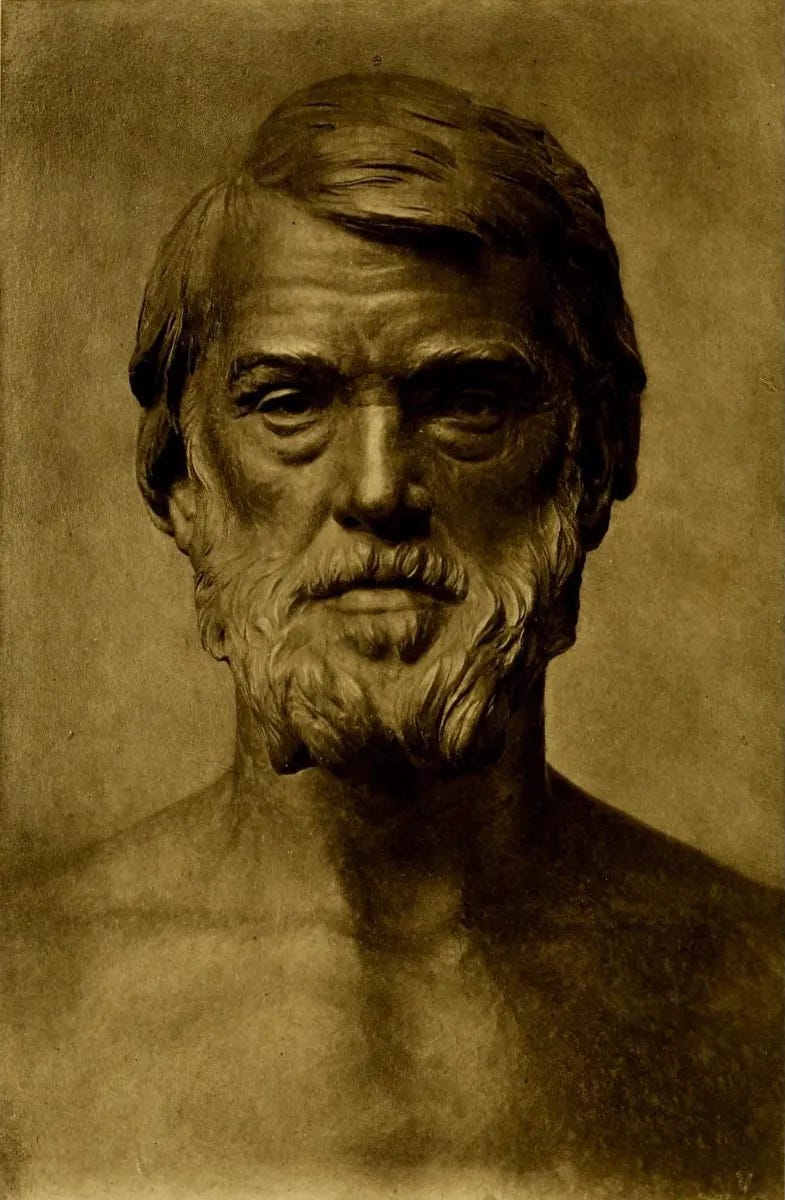
If Carlyle’s work is inspected closely, it is quite clear that he is no Christian and does not hold up Jesus Christ as the greatest man or even as a man we should seek to emulate. With this fault stated at the outset, there remains much to be gained through careful contemplation of his work, even if he does not fit seamlessly into your overall ideological project. He is certainly a good place to start in considering some great men of history, the nature of history, and how we might adopt some semblance of the greatness that has gone on before us to our benefit. There is much practical advice in his work On Heroes, which can be found freely online.
Carlyle posits that heroism, and therefore greatness, is best understood through six archetypes: the Divine (or Creator), the Prophet, the Poet, the Priest, the Man of Letters, and the King. These are not strict categories of what certain historical (or fictional) heroes must fall under, but rather are ways to better understand the function of heroes in the upbuilding and preservation of a people. Heroism is constructive at its core. A truly great man is not purely a force for destruction without the renewal of what is good and the restoration of order.
As an aside, it may be worthwhile to note that Communism, at its roots, is a revolutionary ideology that destroys and fails to truly create. Communist “prophets” declare and demand the worship of man rather than the worship of the only true God. Communist “poets” attack beauty and give words to guttural animalistic urges rather than defending beauty and expressing it appropriately. Communist “priests” demand conformity to corruption and degeneracy rather than demanding moral rectitude and a life of integrity. Communist “men of letters” argue for the degradation of humanity and the destruction of tradition rather than the genuine elevation of humanity through truth, goodness, and beauty. Communist “kings” are continually genocidal and usurious, destroying the very same people they ought to protect with their God-given authority. Finally, communist “creators” may attempt to create something new that has never been tried before, but continually create frameworks in which the prior villains thrive.
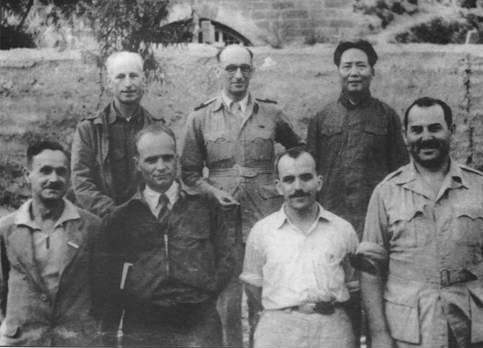
Carlyle’s six archetypes, which were just now utilized to critique ideological leaders of communism, are quite helpful to employ as a scaffolding while one works toward developing a more comprehensive theory of history (formally called historiography).2 However, his work seems to be incomplete and, at times, essentially overcomplicates the issue. One may instead think through the biblical roles of Priest, King, and Prophet as a viable framework for heroism. This offers a sharper, more unified lens than Carlyle’s scheme because it is rooted in the covenantal structure of Scripture itself, and even in the very nature of man growing to maturity.
The event of the fall of man in the garden of Eden occurred essentially because Adam abdicated his biblical roles. He failed to declare truth against the lie of the serpent (abdicating his prophetic responsibilities), he failed to establish justice for wrongdoing (abdicating his kingly responsibilities), and he failed to guard the garden’s righteousness by crushing the head of the snake (abdicating his priestly responsibilities). At each layer, Adam failed.
The structure of the Old Testament of the Bible centers around the maturity (or lack thereof) of the people of God. In the priestly age, God’s people received the law and were responsible for holding it as their code of righteousness so that they might rightly worship God. They failed to guard this righteousness and continually turned away from God’s standard. In the kingly age, they were responsible for declaring justice on the wicked and defending the innocent. They again failed for the most part, and many of the kings of the time did the exact opposite. In the prophetic age, they were responsible for declaring truth in a world deceived by the forces of evil. Instead, they killed those who sought to declare truth and celebrated those who taught what was convenient. In these things, they mimicked Adam’s failure closely.
As Christians, we hold Jesus Christ to be the Great Man and the ultimate standard for heroism. He is the perfect Priest, King, and Prophet of His people, the Church.3 In each stage of maturity, Christ succeeds when His people fail. Jesus Christ declares truth over the devil’s lies, establishes justice in His reign, and ultimately crushes the head of the snake. It is through union with Christ that man has the capacity to mature spiritually and fulfill in his own life the roles which God has called them to fulfill. When we are young in the faith, we take what is handed down and seek to guard it. As we mature into kingship, we seek to enact God’s will righteously. Maturing then into man’s prophetic role, we seek to publicly declare the truth without fear. These are both stages as well as roles that men must continually seek to fulfill.
There are many men throughout history who have faithfully fulfilled these roles, serving as examples for men who seek to do the same. Richard Wagner embodied the prophetic role through musical and operatic stories, writing leitmotifs that sought to make audible the objectivity of virtuous or evil actions or characters. Men such as William Shakespeare wrote characters both to show how these roles may be rightly fulfilled (such as Henry V) and how the roles may be abdicated or abused in perversion and villainy (Macbeth, King Lear, Antony). This sort of art takes discernment, erudition, and a sort of spiritual maturity to create. Men like Napoleon Bonaparte or Frederick the Great upheld law and order in a world that seemed to consist of only chaos continually.
Dear reader, be encouraged by the men who have gone before us. Aspire to greatness. To this end, seek to be Christlike! Worthily fulfill your priestly, kingly, and prophetic roles in your family, community, and nation. Do this with integrity, and your very name may well carry weight with those who come after you.
Important Announcements
Saturday Blockbuster!
The New Way in conjunction with Fifth Column Library is screening films relevant to our struggle each Saturday night at 8 pm EST.
This week we will be featuring two documentaries on Auschwitz:
David Cole’s “David Cole Interviews Dr. Franciszek Piper”
& “Auschwitz: The Surprising Hidden Truth”
White Power


The definitive edition of White Power by George Lincoln Rockwell has just been published by Fifth Column Library.
Here’s why this new edition was needed:
The official version from Rockwell’s own party was poorly formatted.
There was a ton of missing context.
It was clearly edited to add bias or reference events that took place after Rockwell was killed.
So of we fixed those issues.
Our new edition includes:
Clean, readable typesetting
Restored original text
Fair historical context
An updated forward
Over 40 pages of endnotes
Brand new cover art
Hyperlinks for easy navigation (PDF only)
6”x9” Hardcover and Paperback options
The new edition is available now:
For a more comprehensive work of historiography, this writer highly recommends the work of Oswald Spengler in The Decline of the West. The initial volume of that work is available for free at https://www.gutenberg.org/ebooks/72344.