


Introduction
We have been told for years and years that eugenics is bad and that those that proposed or promulgated eugenics were evil people. And it’s understandable to feel that way. Often times when you think of eugenics, you think of Margaret Sanger and Planned Parenthood murdering children. But are all eugenicists the same or is there some nuance in what eugenics actually purports?
First written in 1911 by the father of American Eugenics, Charles Davenport, Hereditary in Relation to Eugenics,1 argues that many human traits are genetically inherited and that it would be possible to selectively breed people for desirable traits to improve the human race. Davenport believed that the laws of heredity, established through the study of plants and domesticated animals, also apply to humans.
Support Aryan businesses by purchasing “Arditi Issue No. I: Those Who Dare”. Featuring 7 new articles and 5 illustrations, this magazine is packed with the blood, sweat, and tears of our Aryan brothers and sisters. If you would like to purchase a digital copy which includes 80 pages of content, click the link down below.
Heredity in Relation to Eugenics
The book begins with an explanation of eugenics, which consists of the science of human improvement through better crossbreeding. As the title suggests, C. B. Davenport will trace the relationship between what was known about hereditary factors and eugenics; the aforementioned author traces the origins of human embryonic development, from the fertilization of the egg to its transformation into a zygote, since this is where the entire human hereditary genesis begins.
In the first few pages, it is possible to foresee the direction that the book will take, consisting of a Mendelian interpretation of heredity;2 in these first pages, Davenport mentions the racial problems of his time, such as the proliferation of inferior elements, generally feeble-minded people who cost the American state 100 million dollars a year.
Another problem mentioned is venereal diseases, which affected the sexually immoral, who fall into the category of feeble-minded, or as previously mentioned, feeble-minded;3 The imprecision of the statistical methods of the time to qualify the weak-minded is also presented. Davenport proposes that not only psychological tests should be taken into account, but also the individual's history of crime and drug addiction, thus proceeding with sexual immorality.
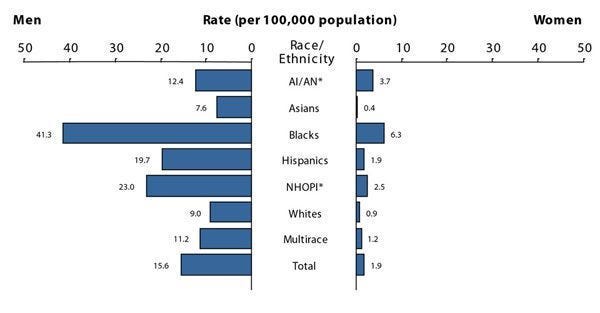
(The CDC presents unusually accurate figures for Asians, American Indians, and Pacific Islanders by presenting data separately for each group.)
Gonorrhea
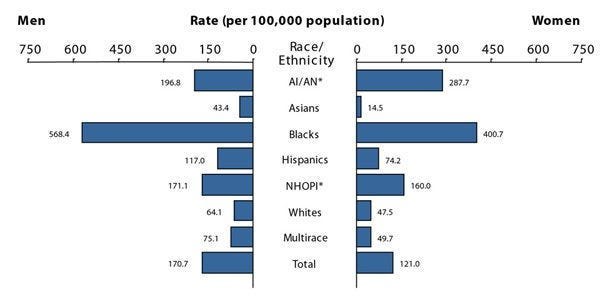
Primary and Secondary Syphilis
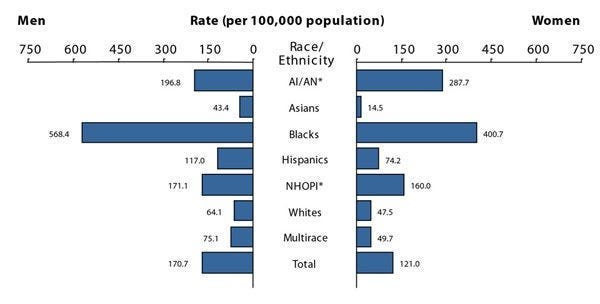
Chlamydia
The proposal not only of Davenport, but of all eugenicists, is that the strong should be helped and encouraged to procreate. Proof of this is what Davenport writes about eugenic marriage, that it was necessary to observe certain characteristics in the probable partner (obviously of the opposite sex) to avoid the proliferation of bad elements. In the chapters on heredity, the author defines the unit, the determiner and the simplex and duplex. The unit is a characteristic of one of the parents that will be the determinant within the germ plasm that will be incorporated into the soma (physical characteristic); from both parents comes a determiner, which will be composed in the unit, and in the case of one of the determiners being missing, it is called simplex; in the case of the presence of two determiners, it is called duplex.
The Simplex and Duplex
The simplex is what we call a recessive gene, which can have a positive or negative characteristic, and the duplex is what we call a dominant gene, also having the two characteristics previously mentioned. Here, positive and negative do not mean good or bad, but a gene or, as described in the book, a factor, which will be passed from generation to generation more frequently if it is a negative simplex, such as dark skin, or if the occurrence is infrequent, it will be a positive simplex or duplex, as is the case with genius in one of the categories, namely: literary composition, musical ability, mechanical ability, calculation and memory. On the other hand, we have bad characteristics, such as insanity, dementia, blindness of various types, imbecility. Some diseases are sex-limited, that is, only one of the sexes is capable of passing the disease on to the offspring, other diseases can be passed on by both sexes; Just as there are qualities and defects, one of them almost never appears exclusively in a person. For example, there is insanity and imbecility in the same person. In other words, the combination of qualities and defects in the same person, hence the emergence of the mad, immoral and sometimes aggressive genius or with these three characteristics combined in his person.
The Theory of Multiple Intelligences
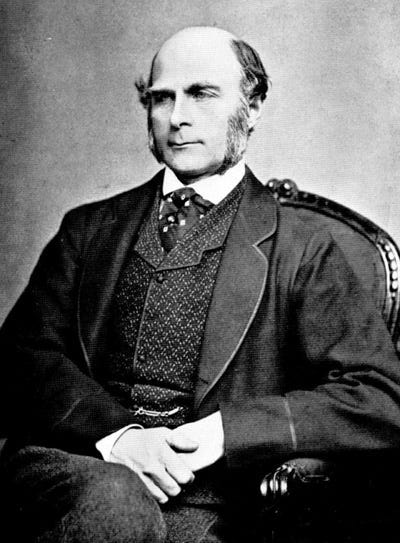
This theory of multiple intelligences4 is nothing new, and it should be stated that Howard Gardner, a Jew, actually stole the idea from the Father of Eugenics, Francis Galton. The original idea for multiple intelligences was from Galton’s book, Hereditary Genius.5
Davenport took Galton’s original idea of multiple intelligences and improved it by describing the multiple abilities mentioned above, all of which are in one way or another inherited and bequeathed, as explained. But, to prove the fact that talents as well as degeneration are inherited, we will start by citing the case of Mozart, regarding musical composition, who began his first compositions at the age of 5, Beethoven and Mendelssohn started early, the first at 13 and the second at 15.
In literary composition, there is a phrase that illustrates the issue well: “Poets are born; they do not become”. We can make the same reasoning and say that one is born a woman and not the opposite, however, this discussion is for another article. Still talking about literary composition, we have “The Brontës”, the Irish poets who say they were guided by their brilliant father Patrick Brontë.
The greatest example of what was previously exposed can be considered with the Pomeroy family, which possessed mechanical ability, and whose first ancestor on record is Eltweed Pomeroy, who in 1630 lived in Dorchester and was a blacksmith merchant, leaving his good genes to his descendants, descendants who stood out as having high mechanical ability until the end of the 19th century.
Race Mixing, Crossbreeding, and Dysgenics
Before continuing, it is necessary to make two distinctions, the first consists of race mixing and crossbreeding, the second in what is the opposite of eugenics, hence the name dysgenics; racial mixing or mongrelization as it is called a part of the title of Theodore Bilbo's book, “Take Your Choice, Separation or Mongrelization,”6 is distinguished from crossbreeding, by the fact that it results in racial impoverishment, not so much because the black is inferior, but rather due to the hereditary differences between both races that produce the aberration, the Mongrel, who hardly possesses any quality, except for exceptions to this rule. Mixture is not, therefore, when a German marries an Englishwoman, this consists of crossbreeding, which, unlike mixture, is ennobling, producing the best offspring even within its own race.
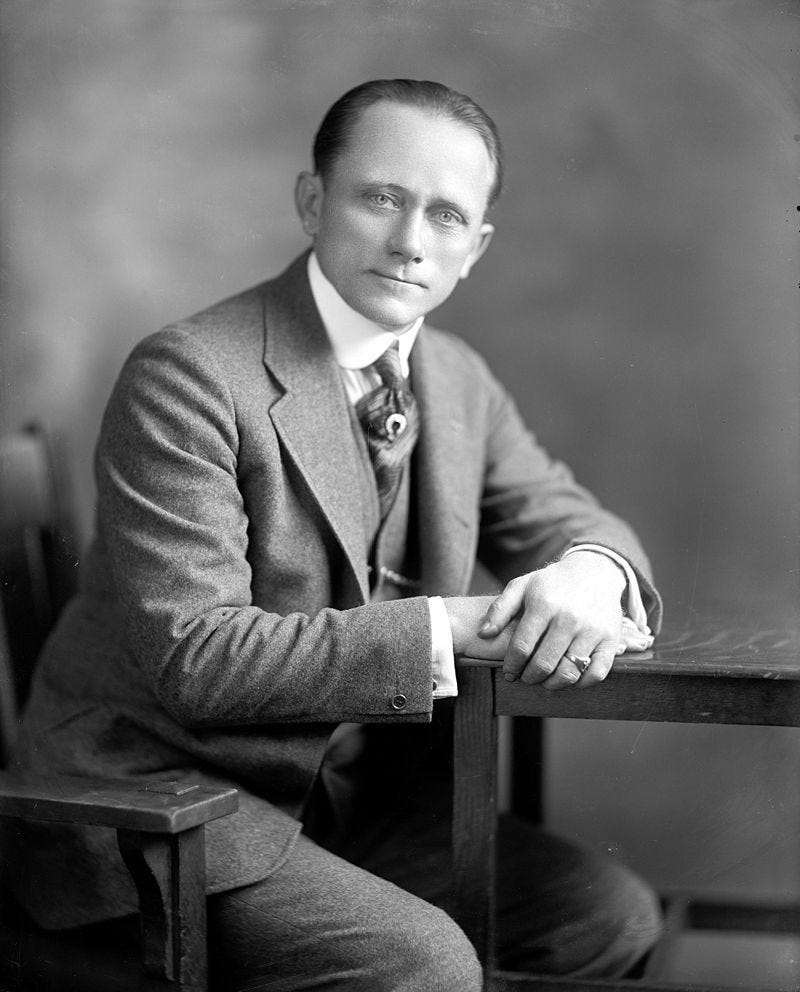
As for dysgenics, it is what Davenport himself describes as something that could happen, with difficulty, to the United States, which would be the fact that the majority of American inhabitants would become dark-skinned, lazy, insane and drunkards through bad crossbreeding; it is necessary to know what positive and negative eugenics are, the first consisting of bringing together the superiors and crossing them among themselves, this exists to a certain extent in current medicine, abstracting the question of race, negative eugenics constitutes the opposite of the first.
Nowadays, pure and simple dysgenics is practiced, one of the ways is to encourage abortion and race-mixing, or to take the negative dysgenic part, urging white women not to procreate, to “focus on their career and money”. I make this explicit in order to show that today's politicians practice the opposite of eugenics, which, due to so many negative stereotypes received and lies about its nature and objective, causes people to confuse distinct practices.
The digression in the last paragraph was necessary to talk precisely about the qualitative aspects of immigrants analyzed by Davenport and his conclusion and proposal, which we can see alive today in the policies of granting American citizenship to a foreigner; Davenport is wrong to state that there was a mixture of different white races in the United States, but he is right to say that the quality of the German, Austro-Hungarian, Irish and Italian immigrants would bring a good racial background to America, ennobling it.
Subversion from Jews
Despite Davenport's small error already explained in the previous paragraph, we can debunk the thesis of Noel Ignatiev, another Jew and a Communist, who wrote “How the Irish Became White,”7 a book of the same quality as his intestinal infection from which he was a fatal victim: The idea that the Irish were considered inferior by Americans.
Davenport does indeed speak about Irish people with "bad blood", but they were a minority. The most interesting fact is that Davenport cites authors from the time of the arrival of the Irish, and they did not consider them inferior, quite the opposite, they analyzed not only the physical beauty of the newcomers but also their moral beauty, their courage in exploring the distant lands of America. Therefore, on page 238 of the book discussed here, we can see that the idea that “the Irish were inferior” is a pure and simple lie. Davenport’s conclusion suggests that measures should be taken so that those who want American citizenship have their criminal and family history investigated, and if evidence is found of a crime committed by the applicant in his/her country of origin, or if there is a history of mental illness such as imbecility and insanity, or serious physical illnesses, that his/her entry into the country should be restricted.
Analyzing the Great American Aristocracy
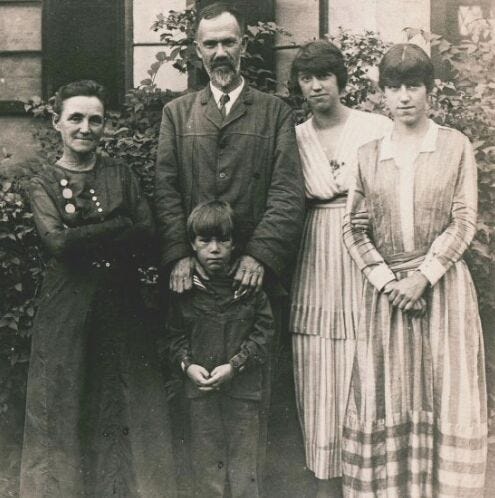
Davenport also analyzes the great American families, as well as the worst ones; I will first deal with the best ones in this paragraph. The origin of many names in American theology, legislation, literature and politics can be found in the couple Elizabeth Tuttle and Richard Edwards, who had an only son, Timothy Edwards. Elizabeth displayed above-average intelligence and culture, but she was sexually immoral, which is why her first husband divorced her; Their good genetics, as well as their bad ones, were passed on to subsequent generations, giving rise to the writer of the book Coniston,8 who shares the same name as one of the great figures of the Second World War: Winston Churchill. It is from this lineage that Aaron Burr, the third American vice-president, came from, who had the same characteristics as Elizabeth: genius and licentiousness.
Moving on to Virginia, we have the ancestors of the most famous general of the Civil War, Robert E. Lee; his ancestors are Richard Lee II and Letitia Corbin, both of English noble origin, whose descendants showed a disposition for military service, with courage certainly running through their veins.
Reviewing what Davenport called the Kentucky Aristocracy, it is surprising to the layman that John Preston and Elizabeth Patton were of Irish origin, the husband being half-English and the rest Irish, and his wife being entirely of Irish origin, producing beautiful and educated women, as well as men of enviable physical stature and high education as well.
On the other hand, dealing with the worst families, we have the Jukes family, so-called “The Jukers”, consisting of a group that descends from specifically a couple whose origin is Dutch and the first settlers of the State of New York; in this family the prostitution, crime, insanity and imbecility. In 1877, The Jukers, in a total of 75 years, cost the American public coffers more than a million dollars.
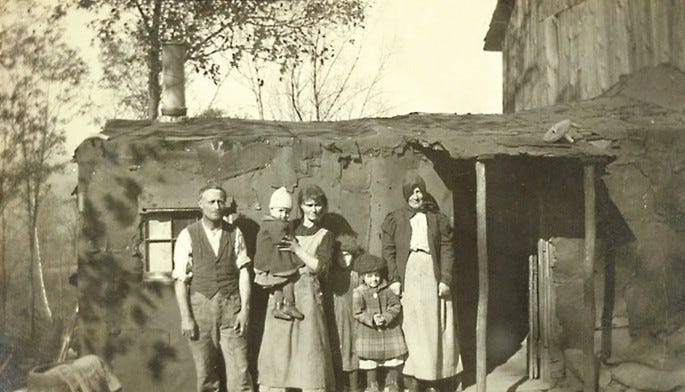
From the exposition made in the last two paragraphs, we come to the conclusion that at the time, it was possible to trace the origin of both criminals and imbeciles as well as the brilliant and courageous. This fact shows that it is not the environment that makes the criminal but rather his race.
However, something must be observed. Davenport's small mistake was to underestimate the euthenic, environmental issue, because in a degraded environment people tend to degrade themselves. However, the metaphysics of culture pointed out not only by Davenport but by other eugenicists, shows precisely that if the environment is horrible, it is because the inferiors have already proliferated to places from which they could never have reached: politics!
In Conclusion
In this regard, we can use the egalitarian language, that it was the historical process that led people to elect imbecile figures and forget their origins, disinheriting themselves; it began with the ideas of “cultural relativism” and “diversity is beneficial” of the Jew, Franz Boas, which were ridiculed in their time, but due to the misfortune of the new political configuration after the Second World War, these ideas were leveraged as if they were something of value, contaminating brilliant minds and transforming them into dark agents of destruction and death; the lesson that remains from eugenicists and in this case from Charles Benedict Davenport, is that when the racial factor is neglected, everyone is harmed, the superior is transformed into a Frankenstein monster thirsty for blood and revenge, he does not become the eugenicist superhuman, but rather the most miserable and inferior of creatures, believing he was fighting for noble values, when he had forgotten what nobility is, because he had forgotten his race.

Don’t miss out on your chance to join Arditi’s Telegram Channel!

Just as there are character and behavior we label male and female, there is no question in my mind that race and epigenetics also play a genetic (and hormonal) part in human development. It’s great to read that this way of thinking about human beings is being reconsidered given that multiculturalism-is-good has been jammed down our throats for the past 100+ years.
I knew nothing of Boaz until yesterday. What a coincidence.
https://www.bitchute.com/video/vJnJpA3CkS7F