

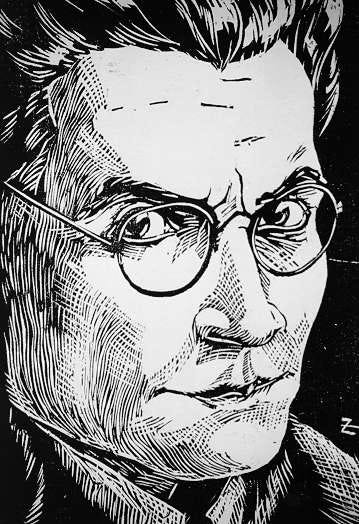
The book "The Computer - My Life" is the autobiography of Konrad Zuse, the German engineer credited with creating the world's first fully automatic and programmable computer.
The work chronicles his journey, from his childhood inspirations to the founding of his own company, addressing not only the technical history of his inventions, but also the difficulties, personal reflections, and the political climate of the time.
His most important milestone was the Z3, completed in 1941. This is widely considered the world's first fully programmable, automatic, and operational computer using binary floating-point calculations. It was built for engineering calculations and was used for stability analysis in aviation. The Z3, unfortunately, was destroyed during a bombing raid in 1943.
Zuse's work continued with the construction of the Z4, a more advanced successor. During World War II, Zuse evacuated the Z4 from Berlin and, with the machine safe, worked to complete it. The Z4 was the world's first commercially sold computer and, after the war, was installed at the ETH in Zurich. Today, it is on display at the Deutsches Museum in Munich, a fact that Zuse regrets, as its programs and results have been lost over time. At the same time, Zuse created Plankalkül between 1942 and 1945. Considered the world's first high-level programming language, its design was innovative, although not implemented at the time. The language included concepts such as data structures, subprograms, conditions, and loops, laying the foundation for future developments in programming languages.
After the war, Zuse founded his own company, ZUSE KG, in 1949. The company prospered with contracts to build computers. Zuse describes his role as the "dreamy inventor" among his business partners. The book details the company's growth, its move to Bad Hersfeld, and the eventual crisis that led to the departure of his partners and, eventually, its acquisition by Siemens AG. Zuse devotes the final sections of the book to his philosophical reflections. He discusses his doubts about the social responsibility of inventors and the difficulty of gaining public interest and support for new ideas. He also addresses the problems of the German patent system and the emergence of the "software problem," which became a crucial challenge for the industry. Zuse concludes with a reflection on his honors and the future, emphasizing that his life was defined by his work and his passion for invention. The book is a direct account of the history of computing, seen through the eyes of its pioneering inventor.