


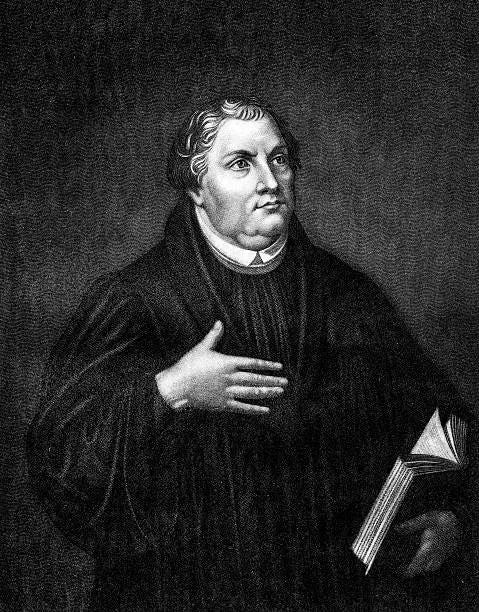
The modern fragmentation of Christianity has produced numerous theological systems that stand in direct contradiction to the apostolic faith preserved from the beginning. The Orthodox Church does not oppose these groups out of rivalry or sectarian pride, but out of fidelity to the faith “once delivered to the saints.” What unites the errors of these movements is the attempt to reconstruct, modify, or replace the apostolic deposit through new doctrines, private revelations, or interpretive novelties divorced from the living continuity of the Church founded by Christ. Each movement approaches Scripture through a hermeneutic of separation rather than communion, and each substitutes historical rupture for apostolic continuity.
Seventh-day Adventism errs first in binding the Old Covenant Sabbath to the life of Christians in the New Covenant. The Apostle Paul commands believers not to allow themselves to be judged by the observance of Sabbaths, for such practices were “a shadow of things to come, but the body is of Christ,” making clear that the Sabbath pointed toward the fulfillment of all creation in the Resurrection. St. Ignatius of Antioch, a disciple of the Apostle John writing near the year 110, affirms that Christians are no longer bound to the Sabbath but now live according to the Lord’s Day. St. Justin Martyr likewise explains that the Old Covenant feasts were temporary commands given to restrain sin and hardness of heart, not permanent marks of Christian identity. Adventism further elevates Ellen G. White as a continuing prophetic authority, but St. John of Damascus teaches that what the apostles handed down, the Fathers preserved, guided by the Holy Spirit—there is no second prophetic foundation after Christ.


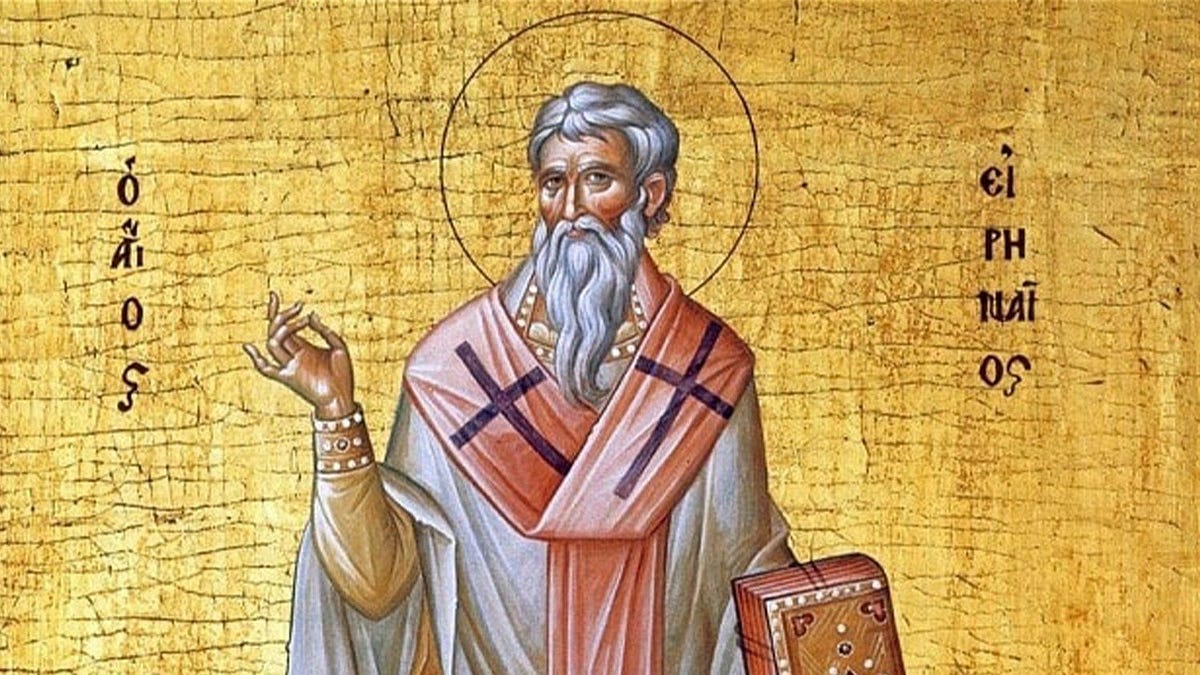
Pentecostalism and the Assemblies of God movement separate charismatic experience from the sacramental and liturgical life of the apostolic Church. Scripture teaches that God is not the author of confusion but of peace, and St. Irenaeus testifies that where the Church is, there is the Spirit of God—not in private spiritual phenomena detached from apostolic order. St. Cyril of Jerusalem warns believers not to seek tongues or emotional ecstasy, but to pursue wisdom and sober communion in the Church. When charismata are removed from the Eucharist, the priesthood, and apostolic succession, they cease to be gifts of God and become psychological or emotional self-confirmation.
“One should not seek among others the truth that can be easily gotten from the Church, for in her, as in a rich treasury, the apostles have placed all that pertains to truth, so that everyone can drink this beverage of life; she is the door of life.” - St. Irenaeus of Lyons
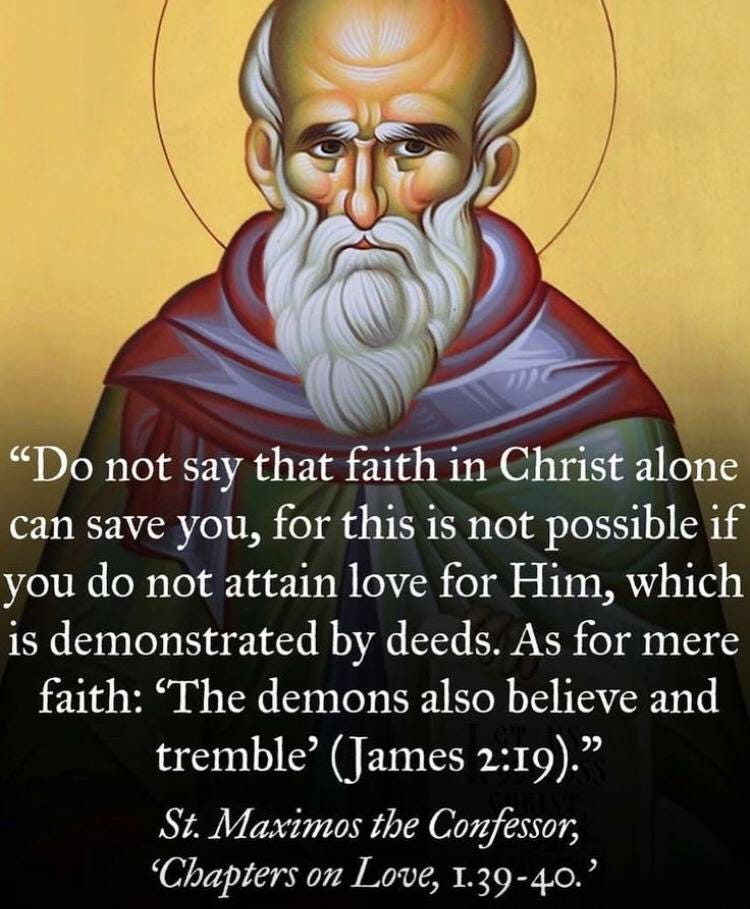
Protestantism as a whole departs from the apostolic faith through the doctrines of Sola Scriptura and Sola Fide. Sola Scriptura has no foundation in Scripture itself, for the Apostles command the faithful to hold fast to both written and unwritten traditions. St. Basil the Great affirms that many doctrines are preserved through apostolic tradition transmitted in the Church, not merely through written text. Likewise, Sola Fide contradicts the clear apostolic teaching that faith without works is dead and that justification is not by faith alone. St. John Chrysostom teaches that true faith must be accompanied by a life that accords with righteousness, or else it is merely a confession of words and not a participation in Christ.
Mormonism departs from Christianity by teaching that God was once a man and that humans may become gods. The Shema—“The Lord our God is one”—remains the foundation of revealed monotheism.
St. Irenaeus proclaims the rule of faith in one God, the Father Almighty, and one Lord Jesus Christ who is eternally divine. Mormonism further introduces new scriptures beyond the apostolic deposit, whereas St. Vincent of Lérins established that the true faith is that which has been believed everywhere, always, and by all. Revelation ended with the apostolic witness; there is no further gospel.
Jehovah’s Witnesses repeat the ancient Arian heresy by denying the full divinity of Christ. Yet John’s Gospel announces that the Word was God, and St. Athanasius teaches that the Son is not a creature, but the eternal offspring of the Father. St. Gregory of Nyssa affirms that the Trinity is one essence shared equally, without division or hierarchy of being. To deny Christ’s divinity is to sever salvation itself, for only God can save.
Restorationist movements claim that the true Church disappeared and had to be restored, but this contradicts Christ’s promise to be with the Church always, even to the end of the age. St. Irenaeus testifies that the apostolic tradition can be observed in every Church, and St. Cyprian teaches that no one can have God as Father who does not have the Church as Mother. The Church has never ceased; only schisms have departed from her.
Dispensationalism fragments salvation history into separate dispensations, suggesting distinct divine plans for Israel and the Gentiles. Yet the Apostle Paul teaches that Christ has made both one in His Body and reconciled all through the Cross.
St. Augustine explains that the New Covenant fulfills the Old, and St. Irenaeus emphasizes that one and the same God has guided mankind from creation through redemption. There are not two peoples of God, nor two paths of salvation.
These systems share a common flaw: each stands outside the living continuity of the apostolic Church. None possess the unbroken succession of bishops, the Eucharistic unity of the ancient Church, or the conciliar mind of the Fathers. The Orthodox Church alone preserves the faith of the Apostles, the doctrinal integrity of the Ecumenical Councils, and the sacramental life that unites the believer to Christ. To embrace these modern innovations is to sever oneself from the Body of Christ. The call remains: return to the faith of the Fathers, to the Church of the Councils, to the One Holy, Apostolic, and Catholic Orthodoxy.
Important Announcements
Saturday Blockbuster!
The New Way in conjunction with Fifth Column Library is screening films relevant to our struggle each Saturday night at 8 pm EST.
This week we will be featuring two documentaries:
George Lincoln Rockwell: A National Socialist Pioneer
Bilderberg: The Movie by Jake Bexx
White Power


The definitive edition of White Power by George Lincoln Rockwell has just been published by Fifth Column Library.
Here’s why this new edition was needed:
The official version from Rockwell’s own party was poorly formatted.
There was a ton of missing context.
It was clearly edited to add bias or reference events that took place after Rockwell was killed.
So of we fixed those issues.
Our new edition includes:
Clean, readable typesetting
Restored original text
Fair historical context
An updated forward
Over 40 pages of endnotes
Brand new cover art
Hyperlinks for easy navigation (PDF only)
6”x9” Hardcover and Paperback options
The new edition is available now:

Do you know of any good resources on how to reconcile Eastern Orthodoxy and National Socialism?
Isn't Eastern Orthodoxy necessarily opposed to National Socialism?