


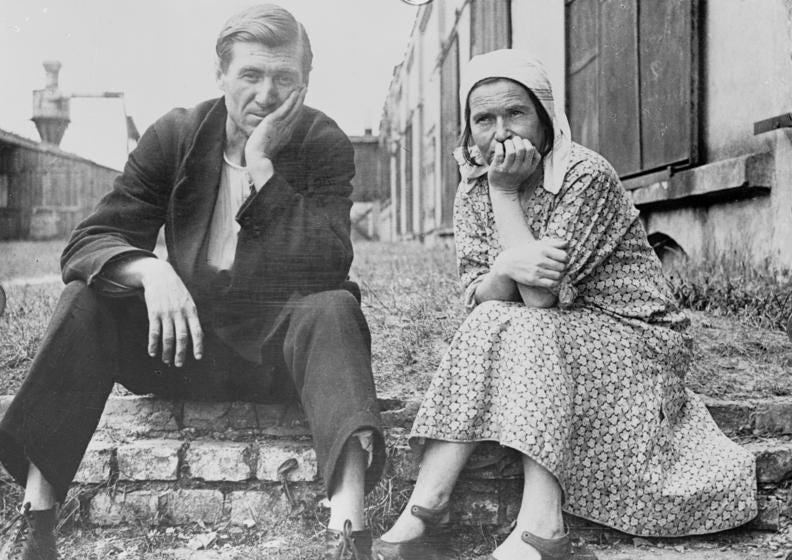
The National Socialist German Workers’ Party (NSDAP) came to political power on 30 January 1933 when President Hindenburg appointed Hitler as chancellor of Germany. This was in the middle of several man made famines raging in the USSR. The most famous of these famines was the Holodomor in Ukraine. But, in terms of percentage of the population to die of hunger, Ukraine lagged behind the Kazakh ASSR (Autonomous Soviet Socialist Republic) and the Volga German ASSR. While a large number of ethnic Germans died of famine in Ukraine in 1932 and 1933, the famine in the Volga German ASSR was of more concern to activists in Germany in 1933. This famine was the focus of a number of NSDAP activists, most notably Adolf Ehrt and Hans Steinarcher. The Volga German ASSR was created as an upgraded version of the Volga German Workers’ Commune on 24 February 1924.
That year the territory had its worst recorded grain harvest up until that time with a harvest of only 14,200 tons of grain. Volga German agriculture was still recovering from the damage caused by the Civil War and the massive famine of 1921-1922. But, yields greatly increased during the mid-1920s to reach 687,100 tons in 1928 (German and Pleve, 36). This economic recovery would be quickly reversed by agricultural collectivization and lead to an even more devastating famine.
The Soviet government began the forced collectivization of agriculture in the Volga German ASSR in September 1929. By June 1931, the regime had finally successfully collectivized a full 95% of all households in the territory. Grain production fell by more than half from 1931 to 1932. The yield in 1931 had been a respectable 672,100 tons versus only 251,600 tons in 1932. Livestock holdings also greatly decreased during this time (German and Pleve, 39-40). This led to a massive famine in the territory that killed mostly ethnic Germans. The famine only ended in 1934.In the meantime it became a political and humanitarian issue in Germany itself due to the efforts of certain NSDAP activists.
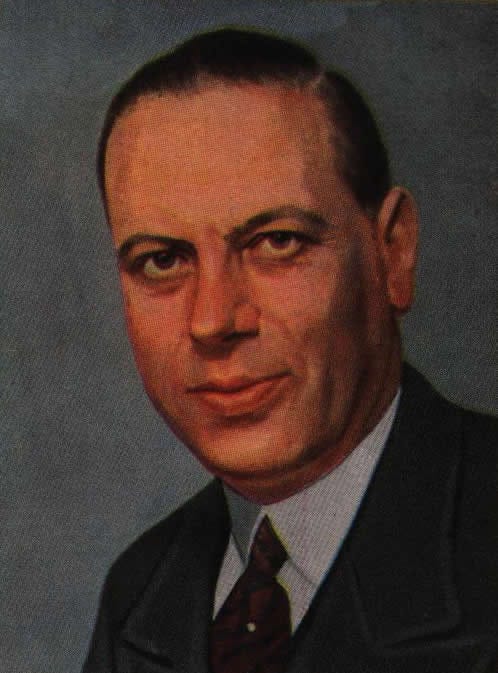
The Volga German ASSR lost a significant number of people from 1932 to 1934 due to both famine deaths and people fleeing famine. The territory had a population of 589,400 people, two thirds of them ethnic Germans, in 1932. The famine decreased the total population of the Volga Germans to only 433,500 people by 1934, a loss of almost 147,000 people (German 200, 247). This represented a loss of over a quarter of the territory’s population. This is considerably higher than Ukraine at 13.33% during the same time (Levchuk). As many as 120,000 people mostly ethnic Germans may have perished from famine in the Volga German ASSR from 1932- 1934.
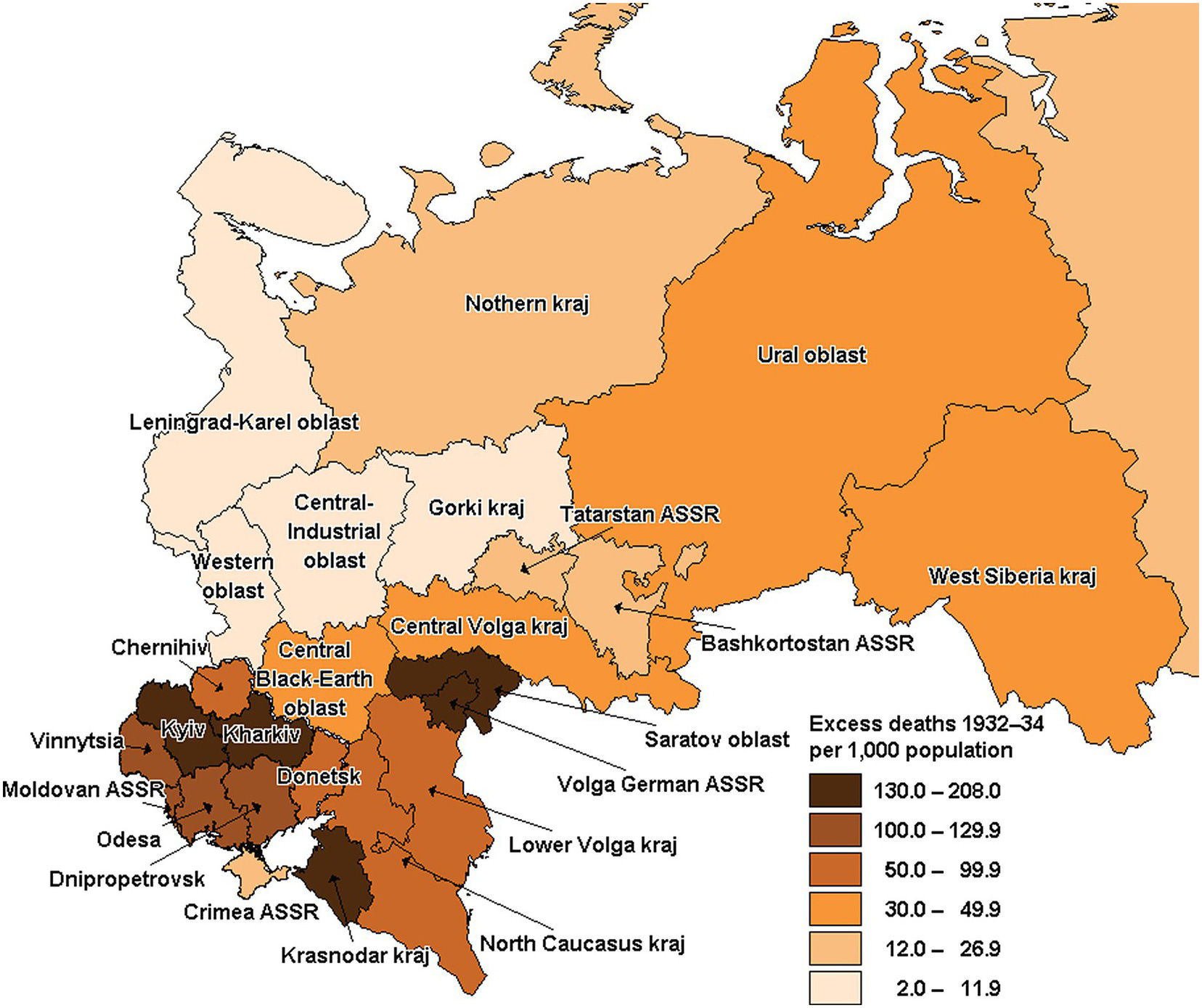
In Germany itself the famine in the Volga German ASSR was publicized by NSDAP activists who sought to raise awareness of this tragedy. These men were most active during the height of the famine in 1933 after Hitler was appointed chancellor of Germany. Adolf Ehrt was a Volga German born in Saratov and NSDAP activist involved in writing about the threat communism posed to ethnic Germans. He is most famous for his 1933 work on communist subversion in Germany, Communism in Germany: The Truth about the Communist Conspiracy on the Eve of the National Revolution. This short 91 page booklet was not his only publication in 1933. He also wrote a 17 page pamphlet on the famine in the Volga German ASSR published in 1933 called, Brüder in Not: Dokumente der Hungersnot unter den deutschen Volksgenossen in Russland (Brother in Need: Documents on the Famine of the ethnic Germans in Russia). This pamphlet sought to publicize the plight of starving Volga Germans in Germany in the first year of Hitler’s administration.
Hans Steinarcher, originally from Austria was also involved in publicizing the plight of the Volga Germans in 1933 in his capacity as the chairman of the Volksbundes für das Deutschtum im Ausland (National Association for Germandom Abroad). Die Welt-Post (The World Post) published an article with the title “Der Hungertod unter den Deutschen an der Wolga” (The Starvation Deaths of Germans in the Volga) on 3 August 1933. This article detailed the work of Steinarcher to raise awareness of the famine. Steinarcher was giving a series of talks on the subject in various parts of Germany at the time. Like Ehrt he was instrumental in raising awareness of the tragedy among people in Germany in 1933.
Although the famine of 1932-1934 in the Volga German ASSR is largely forgotten today it was well known in Germany when it was happening. This awareness was largely the result of the efforts of men like Ehrt and Steinarcher actively publicizing it. The mass death of tens of thousands of Volga Germans from hunger during this time is an underappreciated factor in understanding German policies later after the invasion of the USSR. But, the famine was certainly well known to both the German government and public. Its almost complete obscurity today is a testimony to the effectiveness in propaganda burying inconvenient facts.

Sources
Ehrt, Adolf, Bruder in Not. Dokumente der Hungersnot unter den deutschen Volksgenossen in Russland. Berlin: Zentralverband Berlin, 1933.
German, A.A., ed., Istoriia respubliki nemtsev povolzh’ia: V sobytiiakh, faktackh, dokumentakh. Moscow: Gotika, 2000.
German, A.A. and Pleve, I.R., Nemtsy povolzh’ia: Kratkii istoricheskie ocherk. Saratov: Saratov University, 2002.
German, A.A., T.S.Ilarionova, I.R. Pleve, eds., Istoriia nemtsev rossii: Khrestomatiia. Moscow: MSNK-Press, 2005.
Levchuk, Natalliia et al., “Regional 1932–1933 Famine Losses: A Comparative Analysis of Ukraine and Russia,” Nationalities Papers, vol. 48, Special Issue 3: Special Issue on the Soviet Famines of 1930-1933, May 2020, 492-512 .DOI: https://doi.org/10.1017/nps.2019.55
Die Welt-Post, Der Hungertod unter den Deutschen an der Wolga, 3 August 1933.
