


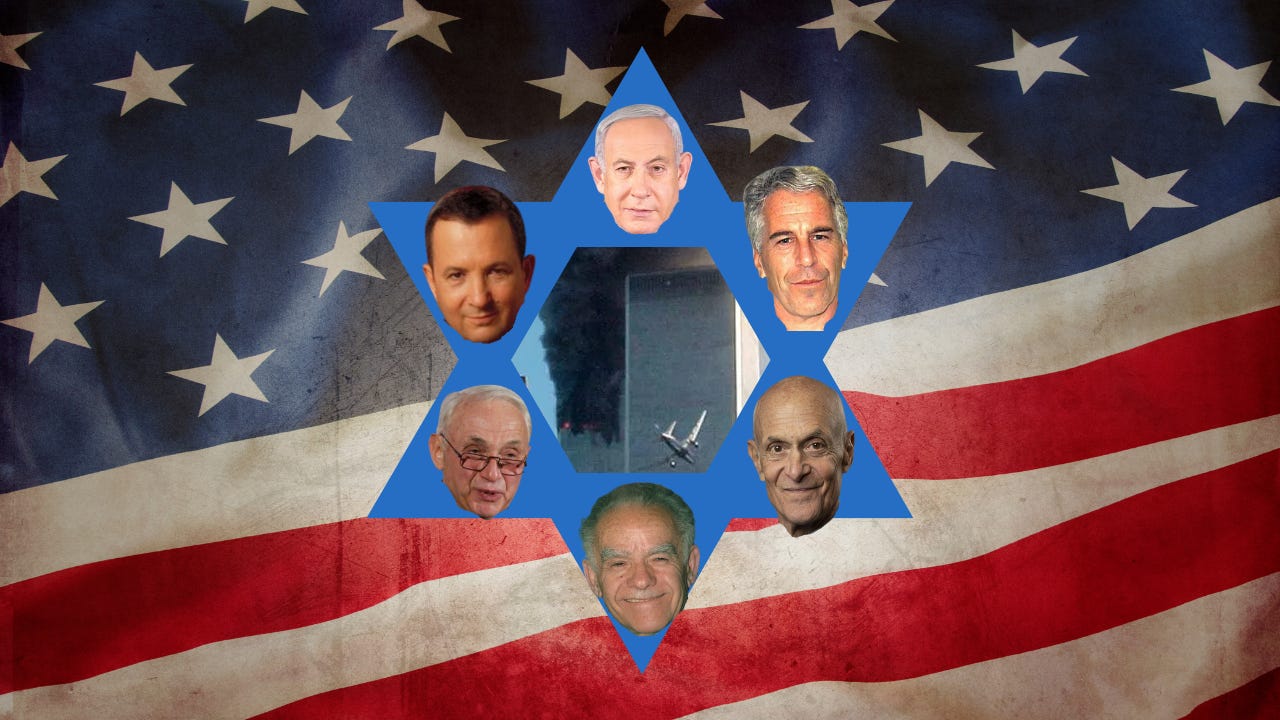
Everything Leading up to 9/11
The morning of September 11, 2001, left the world in shock. Skyscrapers fell, the Pentagon burned, and America declared itself at war. Officially, the culprits were nineteen al-Qaeda hijackers. But beneath the headlines, in the subterranean realm of truth, another picture emerges: one of orchestration, exploitation, and carefully engineered crisis.
In this speculative lens, four names stand out—Michael Chertoff, Benjamin Netanyahu, Ehud Barak, and Jeffrey Epstein. Each represents a pillar of power: law, strategy, military doctrine, and money. Taken together, they form the scaffolding of a hidden architecture behind 9/11.
But in order to understand, you’re going to have to go through the 1986 up until 9/11/01 following 6 influential and cornerstone individuals to understand everything.
The Pivotal Year of 1986
In 1986, a web of power was quietly taking shape. In New York, a little-known financier named Jeffrey Epstein crossed paths with retail tycoon Leslie Wexner — a meeting that would elevate Epstein from obscurity to the inner sanctums of wealth and influence.1 That same year, federal prosecutor Michael Chertoff was making his name by dismantling New York’s Mafia Commission, building the credentials that would later carry him into America’s highest echelons of security and law.2
Across the Atlantic, Israel’s political and military landscape was shifting. Benjamin Netanyahu, Israel’s young ambassador to the United Nations, was crafting a global image as a fierce defender of jewish interests.3 Meanwhile, Yitzhak Shamir reclaimed the prime minister’s office with a hardline posture on security and settlements.4 Rising through the military, Ehud Barak assumed command of Israel’s Central Command, commanding one of the occupation’s most powerful theatres.5
On the surface, these stories seem unconnected—retail and finance, law enforcement, politics, and military command. Yet together, they represent early stages of careers and alliances that would later collide, shaping U.S. foreign policy, elite networks, and the global security industry. Looking back, 1986 reads less like isolated biographies and more like the opening act of a drama about power, secrecy, and connections.
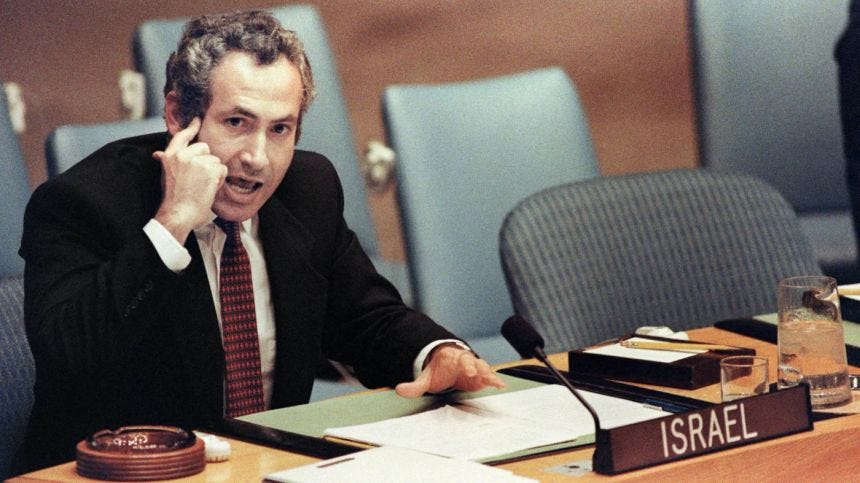
Benjamin Netanyahu, the warhawk.
Though not yet a dominant political figure, 1986 set Netanyahu on that path. As Israel’s Permanent Representative to the UN (1984–1988), he honed his stance as a fierce warhawk on the global stage.6 That year, he also wrote the groundwork for America’s Middle Eastern policy of intervention. Terrorism: How the West Can Win, a collection of essays that outlined the jewish agenda for Middle Eastern dominance by using America as it’s proxy.
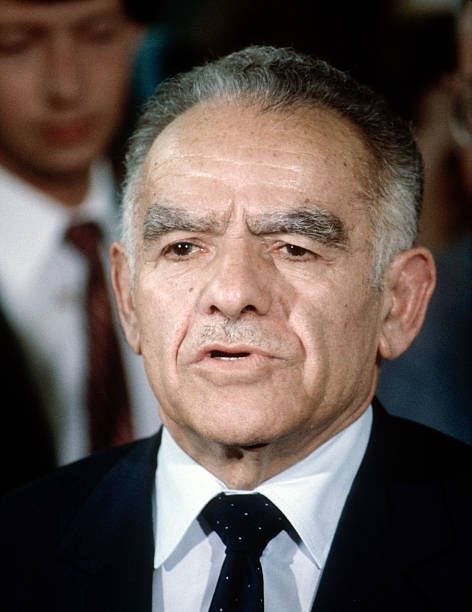
Yitzhak Shamir, the politician.
In October 1986, Likud leader Yitzhak Shamir resumed the premiership through a rotation agreement with Shimon Peres.7 His return brought a shift toward tougher policies: a surge in settlement expansion, tight control over the West Bank, and resistance to negotiations—a reflection of his unwavering Zionism.8
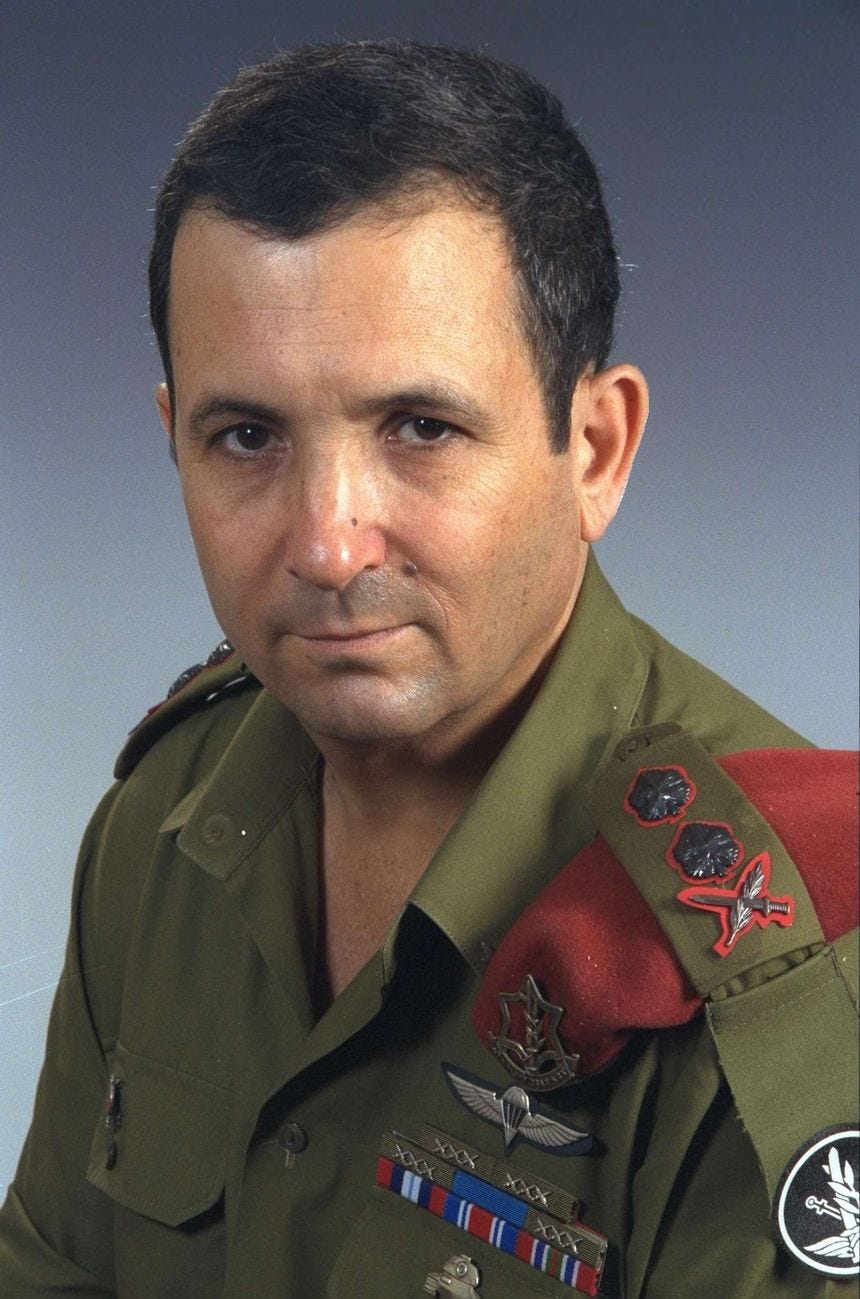
Ehud Barak, the strategist.
Meanwhile, Ehud Barak advanced in the IDF. In 1986, Barak—already among Israel’s most decorated soldiers—was appointed Commander of Central Command, overseeing the strategic and volatile West Bank region.9 His command cemented his reputation for strategic brilliance and paved his path to later prominence in politics.
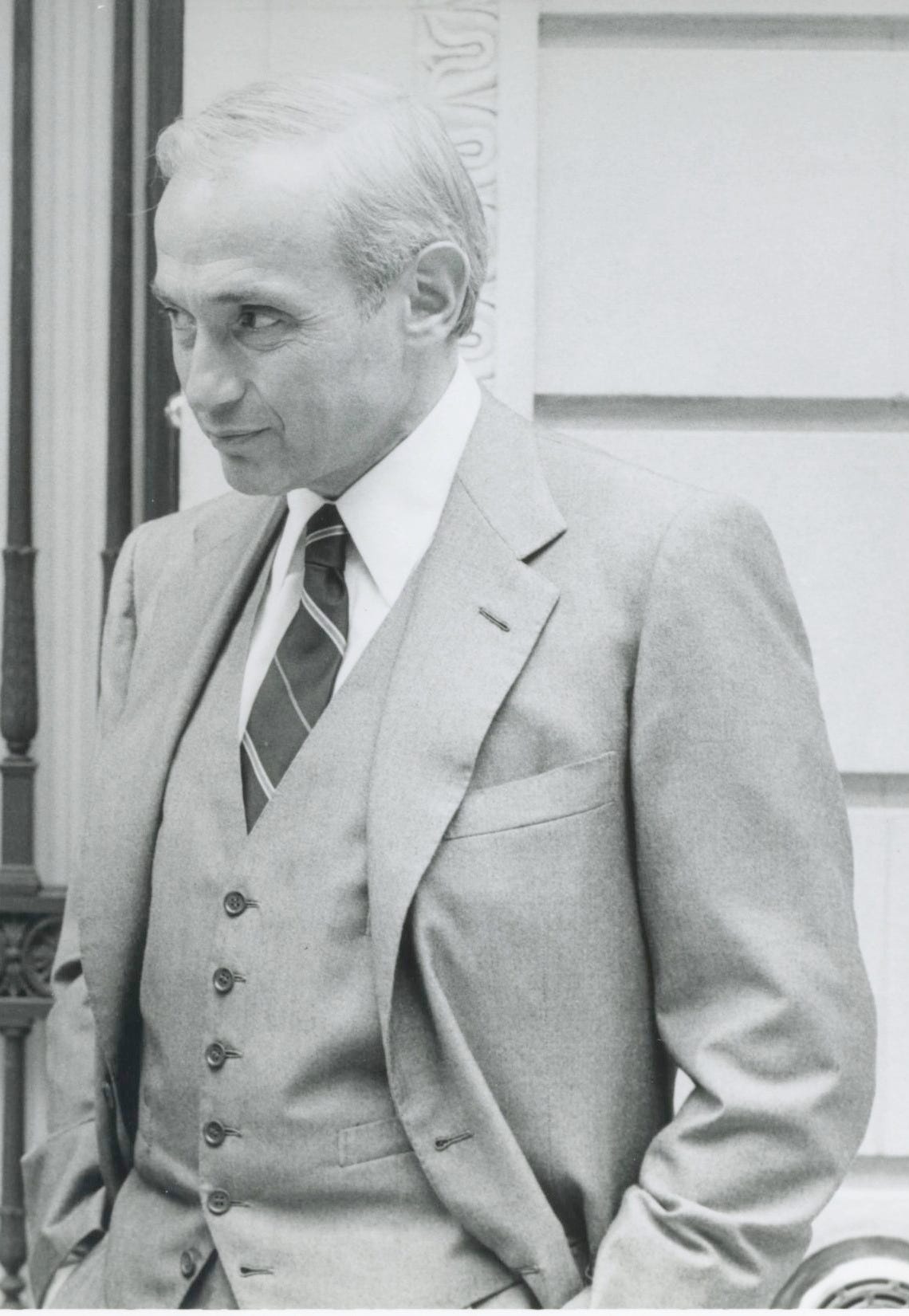
Leslie Wexner, the magnate.
Meanwhile in the U.S., Leslie Wexner was transforming Victoria’s Secret into a cultural powerhouse.10 In 1986, through mutual contacts, he was introduced to Jeffrey Epstein—a turning point that saw Epstein become a trusted financial adviser, wielding unprecedented influence over Wexner’s empire.11
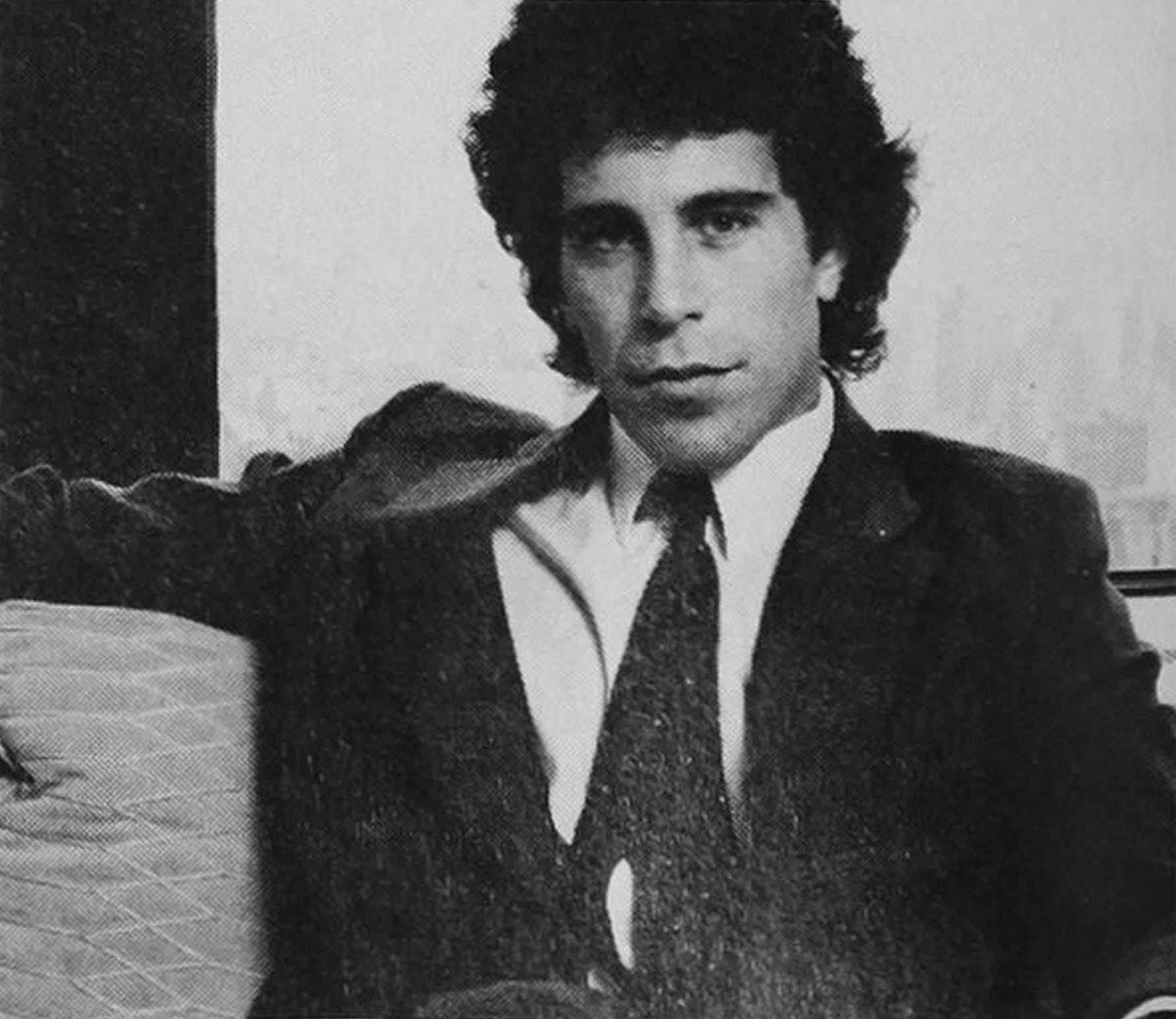
Jeffrey Epstein, the blackmailer.
For Epstein, 1986 was transformative. After leaving Bear Stearns and starting his own firm, it wasn’t until his introduction to Wexner that his real ascent began.12
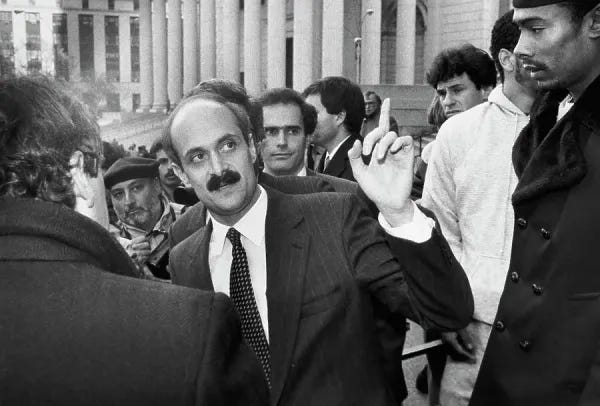
Michael Chertoff, the lawyer.
While Wexner and Epstein linked, Michael Chertoff was making headlines another way. As an Assistant U.S. Attorney in the Southern District of New York, he played a pivotal role in prosecuting the Mafia Commission Trial of 1986, targeting top leaders of the Five Families—a case seen as a critical blow to organized crime.13
(Coming Soon [Read further, Red, White, & Blueprint])
1987
The late 1980s were unsettled years. The Cold War was winding down, new financial empires were being built in the United States, and the Middle East was bracing for another cycle of confrontation. In 1987, the political and personal trajectories of several future power brokers intersected with these broader currents. Some were consolidating authority, some were just beginning their ascent, but all were positioning themselves for greater influence.
Netanyahu in New York
For Benjamin Netanyahu, 1987 was another year at the United Nations in New York. His speeches were fiery, his interviews sharper still. In an era when Israeli influenced terrorism was entering the global lexicon, Netanyahu cast Israel as the canary in the coal mine — a nation besieged but also a model for how the West should respond. The UN was his stage, but the audience he cared about most was in Washington and on American television screens. It was here that he forged ties with U.S. policymakers and donors, laying the groundwork for his rapid rise once he returned to Israel.
Shamir and Barak’s War
Back in Jerusalem, Prime Minister Yitzhak Shamir was doubling down on his lifelong credo: no concessions, no illusions. Installed the previous October under Israel’s rotation government, Shamir’s premiership in 1987 was marked by a determination to resist international pressure for peace talks. He authorized settlement expansions and tightened Israel’s grip on the occupied territories. By December, that policy met an explosion from below: the First Intifada. As Palestinians launched mass demonstrations, Shamir’s hardline instincts dictated the response—curfews, arrests, and force. He was unbending at the moment Israel’s control was being tested like never before.
In the field, Ehud Barak was one of the men implementing that policy. As Commander of Central Command, he oversaw Israeli forces in the West Bank. By late 1987, as the Intifada spread from Gaza into the West Bank, Barak was tasked with managing an unprecedented wave of civil resistance and street clashes. His career, already distinguished by daring commando raids, now entered a different phase: administering a grinding occupation against a popular uprising. By the end of the year he had been promoted to Deputy Chief of Staff, confirming his place among Israel’s top military leaders.
Epstein’s Breakthrough and Wexner’s Gamble
Thousands of miles away, in Manhattan and Palm Beach, Jeffrey Epstein was undergoing a quieter transformation. A former Bear Stearns trader who had started his own consultancy, Epstein had been searching for a patron. In 1987, he found one in Leslie Wexner, the Ohio retail magnate behind The Limited. That year, Epstein’s role shifted from outsider to insider. Wexner not only entrusted him with investments but granted him access to his personal fortune. For Epstein, this was the decisive moment—the bridge into the elite circles of finance, politics, and society that would define his adult life.
For Leslie Wexner, 1987 was another year of expansion. Victoria’s Secret, which he had acquired in 1982, was becoming the flagship of his empire. But in entrusting Epstein with his finances, Wexner was making what would become the most consequential personal decision of his career. At the time, it seemed pragmatic: Epstein projected confidence, secrecy, and competence. Few could have guessed how deeply entwined the two men would become.
Chertoff’s Continuing Campaign
On the opposite coast, in New York courtrooms, Michael Chertoff was still riding the momentum of the Mafia Commission Trial. That landmark case had concluded in 1986 with convictions that crippled the Mafia’s ruling council, and Chertoff — then a young Assistant U.S. Attorney — had been central to its success. In 1987, he continued to prosecute organized crime figures, building a reputation as a prosecutor who could dismantle complex networks with patience and precision. These years forged the methods and instincts he would later bring to the Justice Department in the war on terror.
1988
By 1988, the world was shifting. The Cold War was entering its final act, the First Intifada was grinding through its second year, and financial empires in the U.S. were reshaping consumer culture. For a handful of figures—from diplomats in New York to generals in Tel Aviv to prosecutors in Manhattan—1988 was a year of momentum. Some were stepping onto the political stage, some were being hardened by unrest, and others were consolidating influence in business and law.
Netanyahu Lands in Israel
After four years at the United Nations, Netanyahu returned to Israel in 1988. His tenure in New York had been less about diplomacy and more about branding: he had mastered television, cultivated ties in Washington, and published widely on the theme of “terrorism.” In Israel, that groundwork paid off.
Netanyahu entered politics directly, joining the Likud Party ahead of the November 1988 elections. He secured a seat in the Knesset, marking his formal transition from diplomat to politician. He was also appointed Deputy Minister of Foreign Affairs, a role that allowed him to extend the international profile he had cultivated in the U.S.
For Netanyahu, 1988 was a pivot—the year his ambitions crossed from rhetoric into political office.
Shamir Consolidates Power
Yitzhak Shamir, already serving as Prime Minister since late 1986, faced elections in 1988. Likud secured a narrow victory in November, ensuring Shamir remained premier. The result kept him at the helm of a national unity government, though deeply divided between hawks and doves.
The First Intifada was entering its second year, and Shamir’s government doubled down on repression: curfews, closures, arrests, and military pressure. He remained opposed to international peace conferences, refusing to negotiate with the PLO. While other Israeli leaders flirted with compromise, Shamir’s ideology was clear: security before concessions, and sovereignty before diplomacy.
In 1988, Shamir stood as the immovable object in Israeli politics — refusing to yield even as unrest reshaped the conflict.
Barak at the Center of the Intifada
For Ehud Barak, 1988 was the most intense year of his military career since his commando days. Having been promoted to Deputy Chief of Staff of the IDF in 1987, Barak was now directly overseeing Israel’s military response to the Intifada.
Palestinian protests, strikes, and clashes were daily events across the West Bank and Gaza. Barak’s task was to translate political directives from Rabin (then Defense Minister) and Shamir into operational strategies. The IDF was instructed to break the uprising with a mix of curfews, mass detentions, and force.
This period cemented Barak’s reputation as a hard-nosed strategist, capable of balancing military efficiency with political calculation. It also deepened the association of his name with Israel’s management of the occupation—a legacy that would shadow his later political career.
Wexner Expands His Retail Empire, Epstein Finds His Footing
In the United States, Leslie Wexner was scaling new heights in retail. The Limited was booming, and Victoria’s Secret—still less than a decade under his ownership—was on its way to becoming a cultural phenomenon. Wexner’s knack for turning niche brands into mass-market powerhouses was on full display.
Privately, 1988 also marked the solidification of his relationship with Jeffrey Epstein. By this point, Epstein was deeply embedded in Wexner’s financial affairs. The trust between them was so great that Epstein was not just managing Wexner’s investments but had influence over aspects of his personal life and philanthropy.
For Wexner, 1988 was a year of corporate triumph and personal entanglement.
Jeffrey Epstein was no longer obscure in 1988. With Wexner as his patron, Epstein had legitimacy and resources. He was building the trappings of wealth—homes, social connections, and influence. Though still years away from his most infamous notoriety, 1988 was the period when Epstein learned how to wield power by standing behind it.
Managing Wexner’s fortune gave him extraordinary reach. He began cultivating a social circle of financiers, politicians, and celebrities, positioning himself as a man who “knew things” and “knew people.” In hindsight, this was the year Epstein’s myth-making truly began.
Chertoff on the Rise
Meanwhile, in New York, Michael Chertoff was finishing his tenure as an Assistant U.S. Attorney. His success in the Mafia Commission Trial (1985–86) had made him a rising star, and by 1988 he was gaining recognition as one of the Justice Department’s most skilled network prosecutors.
The late 1980s saw Chertoff move beyond Mafia cases into broader organized crime and corruption prosecutions. His skill at using RICO and conspiracy charges to dismantle entrenched organizations earned him promotions. By the early 1990s, this trajectory would carry him to the role of U.S. Attorney for New Jersey.
In 1988, Chertoff was sharpening the tools—surveillance, wiretaps, conspiracy statutes—that he would later apply in the war on terror.
1989
By 1989, the world was undergoing seismic shifts. The Berlin Wall was about to fall, the Soviet Union was unraveling, and in the Middle East the Palestinian uprising was still raging. For six men—Israeli politicians, a rising general, an ambitious prosecutor, and a retail tycoon with his enigmatic adviser—it was a year of deepening entrenchment. Each was no longer just rising: they were crossing thresholds into new phases of power.
Netanyahu Becomes a National Player
In 1989, Benjamin Netanyahu had completed his first year as a member of the Knesset and Deputy Foreign Minister in Yitzhak Shamir’s government. Having built his reputation as Israel’s voice at the UN, he now stood inside the corridors of power.
Netanyahu threw himself into diplomacy, frequently appearing on U.S. television and cultivating relationships with foreign officials. He sharpened his hawkish positions, aligning closely with Shamir’s policies of rejecting negotiations with the PLO and insisting on security first. For Netanyahu, 1989 was the year he proved he was not just a polished spokesman but a serious contender within Likud.
Shamir Rejects Peace Talks
Prime Minister Yitzhak Shamir faced mounting international pressure in 1989. The George H. W. Bush administration in Washington was pushing for dialogue between Israel and the Palestinians. Shamir refused, sticking to his uncompromising view that negotiations could only happen without preconditions and not with the PLO, which he considered a terrorist organization.
Meanwhile, the First Intifada entered its second full year, and Israeli forces escalated efforts to contain it. Shamir’s government approved more settlements, further inflaming tensions. To his critics, he was steering Israel into isolation; to his supporters, he was standing firm against outside pressure.
By 1989, Shamir was Israel’s anchor of immovability—resisting change while the world was shifting around him.
Barak at the Top of the Military
For Ehud Barak, 1989 marked his rise to the very top of the Israel Defense Forces. In April, he was appointed IDF Chief of Staff, the highest military position in the country. His promotion came at the height of the Intifada, placing him in charge of Israel’s entire military apparatus.
As Chief of Staff, Barak oversaw intensified military responses to the uprising: curfews, mass arrests, and aggressive security measures in the West Bank and Gaza. His leadership style combined tactical brilliance with political calculation, making him not just a soldier but a strategist of national policy.
This appointment made clear that Barak was no longer just a decorated commando or rising general — he was now the face of Israeli military power.
Wexner Reaches New Heights, Epstein Gains Power by Proxy
In the U.S., Leslie Wexner was entering his prime as a retail mogul. By 1989, The Limited, Inc. had become one of the most powerful forces in American fashion. Victoria’s Secret was expanding rapidly, and other brands in Wexner’s portfolio were dominating malls across the country.
Behind the curtain, his partnership with Jeffrey Epstein was now firmly in place. Epstein had near-total control over Wexner’s fortune, managing investments and personal accounts. It was an unusual relationship: Wexner rarely spoke publicly about it, but those who knew him understood that Epstein had become indispensable.
For Wexner, 1989 was a year of corporate dominance and private dependency.
Jeffrey Epstein thrived in 1989 under Wexner’s patronage. Still largely unknown to the public, he was quietly amassing wealth and assets. His access to Wexner’s fortune gave him financial credibility; his growing collection of properties gave him social cachet.
This year, Epstein deepened his reputation as a man who could “fix problems” and manage money for the ultra-wealthy with discretion. He had not yet become a fixture in the jet-set world of Manhattan elites, but he was building the infrastructure — wealth, homes, connections — that would later sustain his double life of glamour and secrecy.
In 1989, Epstein was perfecting his role as power broker by proxy.
Chertoff Moves Toward Bigger Roles
By 1989, Michael Chertoff was preparing to leave his role as Assistant U.S. Attorney in Manhattan. After years of prosecuting organized crime, including his central role in the Mafia Commission Trial, Chertoff was seen as one of the most capable federal prosecutors of his generation.
That year, he moved toward new positions, taking on higher-profile Justice Department work and building the résumé that would lead to his appointment as U.S. Attorney for New Jersey in 1990. His specialty remained clear: using conspiracy statutes and surveillance-heavy prosecutions to dismantle networks — techniques that would echo in his later work on counterterrorism.
For Chertoff, 1989 was the hinge year between mob prosecutor and national figure.
1990
If 1989 was a year of thresholds, 1990 was a year of entrenchment. Each of these men — in politics, finance, business, or law — had already crossed into positions of influence. By 1990, they were using those positions to consolidate power, weather challenges, or expand their reach. From the Knesset to Wall Street, from IDF headquarters to U.S. courtrooms, 1990 was a year when the machinery of ambition turned steadily, even as the world around them shifted.
Netanyahu: The Apprentice Politician
By 1990, Benjamin Netanyahu was one of the younger members of the Knesset, serving as Deputy Foreign Minister under Prime Minister Yitzhak Shamir. He was still honing his craft, building alliances within Likud, and carving out a reputation as a gifted communicator on television and at the podium.
The year was volatile: Shamir’s fragile coalition government collapsed in March, and attempts to form an alternative government with Shimon Peres failed. Shamir returned as prime minister in June, keeping Netanyahu in the foreign ministry. Throughout the turmoil, Netanyahu positioned himself as a loyal protégé, echoing Shamir’s uncompromising rejection of negotiations with the PLO.
1990 was not yet Netanyahu’s breakthrough year—but it was the year he cemented his place in Israel’s political establishment.
Shamir: The “Stinking Maneuver”
For Yitzhak Shamir, 1990 was a bruising year. His national unity government with Labor unraveled when Shimon Peres attempted to form a new coalition with ultra-Orthodox parties. The maneuver collapsed, but it left a scar — remembered in Israeli politics as the “Stinking Maneuver.”
Despite the setback, Shamir returned as prime minister in June, heading a narrow right-wing coalition. His policies remained unchanged: no recognition of the PLO, no concessions on settlements, and no participation in international peace conferences.
By the end of 1990, Shamir had survived the most serious political challenge of his premiership, but at the cost of deepening divisions within Israeli society.
Barak: Chief of Staff in a Shifting Region
As IDF Chief of Staff, Ehud Barak presided over an army stretched thin. The First Intifada was still ongoing, and Palestinian resistance showed no signs of abating. Barak oversaw day-to-day military operations in the West Bank and Gaza, implementing policies of containment and suppression.
But 1990 also brought new regional challenges. Iraq’s invasion of Kuwait in August raised fears of war with Israel, especially when Saddam Hussein threatened missile strikes on Tel Aviv if Israel intervened in the U.S.-led Gulf War coalition. Barak began contingency planning for a possible conflict, including preparing the IDF for missile defense — a preview of the Gulf War to come in 1991.
1990 was a year that tested Barak’s capacity to manage both local unrest and regional threats simultaneously.
Wexner: The Billionaire Builder
In America, Leslie Wexner was at the peak of his empire. By 1990, The Limited was one of the most powerful retailers in the country, and Victoria’s Secret was becoming a household name. Wexner had established himself as a billionaire businessman with unmatched instincts for capturing consumer desire.
Yet behind the public success, Wexner’s relationship with Jeffrey Epstein had now matured into full financial dependency. Epstein managed vast aspects of Wexner’s wealth and was trusted with legal, tax, and personal matters. For Wexner, 1990 was a year of continued public expansion—and private entanglement.
Epstein: From Adviser to Insider
By 1990, Jeffrey Epstein had firmly entrenched himself as Wexner’s financial consigliere. With Wexner’s backing, Epstein controlled investments, property, and trusts. His power of attorney — granted by Wexner in 1991 — was already being prepared.
Epstein also began expanding his personal network, cultivating ties with Wall Street financiers, politicians, and cultural figures. His role was still semi-invisible—he was “the adviser” rather than the public face. But 1990 was the year Epstein shifted from being merely Wexner’s aide to being perceived as a man with his own base of influence, however shadowy.
Chertoff: A U.S. Attorney
In 1990, Michael Chertoff reached a new milestone: he was appointed U.S. Attorney for the District of New Jersey. After years as an Assistant U.S. Attorney in New York, where he helped prosecute the Mafia Commission Trial, Chertoff now had command of an office of his own.
As U.S. Attorney, Chertoff pursued political corruption, organized crime, and white-collar cases. His reputation as a tough, methodical prosecutor continued to grow, setting the stage for his eventual rise into national security roles in the 2000s.
1990 was thus a launching pad — the moment Chertoff moved from prosecutor in the trenches to a federal leader in his own right.
1991
The year 1991 was anything but quiet. The Cold War was ending, the Gulf War erupted, and Israel was shaken by Scud missile attacks from Iraq. In politics, diplomacy, and finance, familiar names were stepping into defining moments. Some faced war, some navigated fragile peace negotiations, and others deepened personal entanglements that would shape their legacies.
Netanyahu: The Voice of Israel Abroad
In 1991, Benjamin Netanyahu was serving as Deputy Minister of Foreign Affairs under Prime Minister Yitzhak Shamir. The Gulf War gave him an international stage: he was frequently on American television, explaining Israel’s position as Iraqi Scud missiles rained down on Tel Aviv.
Netanyahu’s polished English and assertive manner made him a media star, and his appearances raised his profile with American audiences. Later in the year, he also participated in Israel’s delegation to the Madrid Peace Conference in October, though he remained deeply skeptical of territorial compromise.
1991 was the year Netanyahu shifted from being a young politician to an emerging national figure, recognized not just in Israel but around the world.
Shamir: War and Peace
For Prime Minister Yitzhak Shamir, 1991 was a year of extraordinary pressure. During the Gulf War (January–February), Iraq launched dozens of Scud missiles at Israel. Shamir, under immense pressure from U.S. President George H. W. Bush, refrained from retaliating, avoiding the collapse of the U.S.-Arab coalition against Iraq. It was a moment of restraint unusual for a man known for his hawkish instincts.
By autumn, Shamir faced another challenge: Bush’s insistence on convening a regional peace summit. Reluctantly, he agreed to send a delegation to the Madrid Conference in October 1991 — the first time Israel sat down in direct talks with Arab states and Palestinians. Shamir’s participation was wary and reluctant, but it marked a turning point in Israel’s diplomatic history.
1991 tested Shamir’s leadership more than any other year, forcing him to balance war, U.S. pressure, and diplomacy.
Barak: Chief of Staff in a War Zone
As IDF Chief of Staff, Ehud Barak was at the center of Israel’s military response to the Gulf War. When Saddam Hussein’s missiles struck Israeli cities, Barak oversaw the distribution of gas masks, the coordination of civil defense, and military preparations in case Israel was dragged into the war.
Though Israel did not retaliate militarily (at U.S. insistence), Barak’s leadership kept the IDF on high alert. He also managed the continued challenges of the First Intifada, now in its fourth year.
1991 demonstrated Barak’s ability to lead Israel’s military through both external threats and internal unrest—a balancing act that made him a household name in Israel.
Wexner: Expansion and Influence
In America, Leslie Wexner continued to expand his retail empire. By 1991, The Limited was a dominant force in U.S. malls, and Victoria’s Secret was on its way to becoming a cultural icon. Wexner’s wealth and influence were at their peak.
But 1991 also marked a pivotal moment in his private affairs: he formally gave Jeffrey Epstein power of attorney, granting him sweeping legal control over his finances and personal matters. It was an extraordinary level of trust — one that effectively made Epstein the gatekeeper of Wexner’s fortune.
For Wexner, 1991 was a year of public triumph and private risk. It was also the time when Wexner faded into the background and Epstein took complete control.
Epstein: The Power of Signature
For Jeffrey Epstein, 1991 was transformative. With Wexner’s power of attorney, Epstein had the authority to buy and sell properties, move money, and act legally on Wexner’s behalf. This gave him unprecedented access to wealth, credibility, and networks.
Epstein also began acquiring the properties that would become symbols of his lifestyle, including residences that served as stages for his social climbing. With Wexner’s backing, Epstein now had what he always sought: not just money, but legitimacy.
1991 was the year Epstein stepped from shadow adviser to autonomous operator.
Chertoff: Prosecutor in Command
In 1991, Michael Chertoff was serving as U.S. Attorney for the District of New Jersey, a post he had taken in 1990. He was responsible for high-profile corruption and organized crime cases in the state, continuing the pattern of using RICO and conspiracy charges to dismantle entrenched organizations.
Chertoff’s reputation as a relentless prosecutor grew, setting him on the path to senior Justice Department roles later in the decade. His work in 1991 did not make headlines like the Gulf War, but within legal circles, he was consolidating a reputation as one of the most formidable U.S. Attorneys of his generation.
1992
The year 1992 was a crossroads. In Israel, the Likud stronghold fractured with the fall of Yitzhak Shamir’s government and the rise of Yitzhak Rabin. For Netanyahu and Barak, it was a moment that shaped their futures: one rising in politics, the other grappling with the fallout of occupation and military leadership. In the U.S., Wexner and Epstein’s relationship deepened even as Epstein expanded his independence, while Michael Chertoff continued consolidating his power as a prosecutor. It was a year of endings for some, beginnings for others.
Netanyahu: A Rising Star in Opposition
By 1992, Benjamin Netanyahu had already established himself as one of Likud’s most polished voices. He was Deputy Minister of Foreign Affairs under Shamir until the elections in June, when Likud lost to Yitzhak Rabin’s Labor Party.
Though Likud’s defeat was a setback, it paradoxically elevated Netanyahu. Out of government, he became one of the party’s most visible spokesmen in opposition, honing the sharp, media-savvy communication style that had made him popular abroad. He appealed especially to younger Likud voters and right-wing Israelis unsettled by Rabin’s openness to negotiations with Palestinians.
1992 was the year Netanyahu began to be seen not just as a talented deputy, but as a potential future leader of Likud.
Shamir: The End of the Line
For Yitzhak Shamir, 1992 marked the end of his long tenure as Israel’s prime minister. His government collapsed in June after losing to Labor in the elections, bringing his six consecutive years in office to a close.
Shamir left behind a legacy of unyielding resistance: refusal to negotiate with the PLO, expansion of settlements, and opposition to international peace conferences—though he had reluctantly attended Madrid in 1991 under U.S. pressure. In 1992, his political career began to wind down, though he remained a symbolic figure of the hardline right.
This was the year Shamir passed the torch, even if reluctantly, to a new generation of Israeli leaders.
Barak: Chief of Staff under Rabin
Ehud Barak remained Chief of Staff of the IDF in 1992, but the political context shifted dramatically with Rabin’s return to power. Rabin, unlike Shamir, was open to negotiations and sought to pair diplomacy with strong military deterrence.
Barak was responsible for managing the military during the continuing First Intifada, now in its fifth year. He balanced Rabin’s cautious peace overtures with the reality of daily unrest in the territories. His tenure as Chief of Staff, extending until 1995, was marked by both hard security measures and preparations for potential shifts toward peace.
For Barak, 1992 was a year of continuity at the top, but with new political winds shaping the future he would soon enter as a politician himself.
Epstein: Expanding His World
By 1992, Jeffrey Epstein was no longer just Wexner’s adviser—he was beginning to operate independently as a financier and power broker. Having secured Wexner’s power of attorney the year before, Epstein had credibility and resources to expand his reach.
In 1992, Epstein also began cultivating ties with figures in politics, science, and academia. His ability to mix wealth, secrecy, and access made him attractive to elites looking for both financial opportunities and social networks. While not yet infamous, Epstein was laying the foundation for the dual life—financier and predator—that would define his legacy.
Chertoff: Federal Power in New Jersey
In 1992, Michael Chertoff was serving as U.S. Attorney for the District of New Jersey. He used the office to pursue political corruption cases and white-collar crime, continuing to demonstrate the aggressive use of federal conspiracy laws he had honed in New York.
Chertoff’s work during this period solidified his standing within the Justice Department as a reliable prosecutor who could handle complex cases. The early 1990s built the résumé that would carry him into the 9/11 era as one of the architects of counterterrorism law.
1992 was not his most visible year, but it was part of the steady climb that would later place him at the center of U.S. security policy.
1993
If 1992 was about passing torches, 1993 was about transformation. In Israel, Yitzhak Rabin signed the Oslo Accords, changing the trajectory of the conflict. Netanyahu found himself in the opposition but rising rapidly, while Barak prepared for his post-military career. In the United States, Leslie Wexner’s retail empire soared, Jeffrey Epstein expanded his reach beyond Wexner’s shadow, and Michael Chertoff continued building the reputation that would propel him into national security prominence. For all six, 1993 was a hinge moment — the end of one chapter and the opening of another.
Netanyahu: Opposition Firebrand
In 1993, Benjamin Netanyahu emerged as Likud’s most effective voice in opposition. With Yitzhak Rabin as Prime Minister pursuing the Oslo peace process, Netanyahu became a relentless critic. He warned that territorial concessions and recognition of the PLO endangered Israel’s security.
This year, Netanyahu’s skill as a communicator came fully into view. He mobilized Likud’s base, spoke to massive rallies against Oslo, and sharpened his public image as the face of the Israeli right. Though he was still technically a junior politician, Netanyahu was increasingly spoken of as a future leader of Likud.
1993 cemented Netanyahu as the chief opponent of Oslo — a position that defined his rise in the 1990s.
Shamir: Retirement from Politics
For Yitzhak Shamir, 1993 marked the close of a career that had spanned decades of Israeli politics. After losing the premiership in 1992, Shamir retired from political life the following year.
His departure underscored a generational shift: from the hardline leaders of Israel’s founding years to a younger generation, including Netanyahu, who would soon dominate Likud.
1993 was the year Shamir passed into history, remembered as a symbol of unyielding resistance and ideological rigidity.
Barak: The Soldier Prepares for Politics
Ehud Barak completed his term as IDF Chief of Staff in 1991 but remained influential in Israeli defense and political circles in the early 1990s. By 1993, Barak was preparing for a transition into political life.
He had spent the previous two years observing the Oslo negotiations from the sidelines, but as a former Chief of Staff, his voice carried weight in debates over security and peace. He began cultivating ties within the Labor Party, laying the foundation for his formal entry into politics in 1995.
1993 was a quiet but crucial year of positioning for Barak—the preparation for his next career as a politician.
Epstein: Expanding the Network
By 1993, Jeffrey Epstein had firmly established himself as a man of influence. With Wexner’s resources behind him, Epstein acquired more real estate and expanded his connections among politicians, financiers, and academics. He was still discreet, but increasingly he moved as an independent operator — someone with his own wealth and power, not merely Wexner’s adviser.
1993 was also the year Epstein began making inroads into the scientific and intellectual communities, offering funding and cultivating relationships that he would use later to burnish his image.
This was the year Epstein began to step out from Wexner’s shadow and craft his own persona as a mysterious financier and connector of elites.
Chertoff: Building the National Profile
In 1993, Michael Chertoff was in his third year as U.S. Attorney for the District of New Jersey. He prosecuted high-profile corruption cases and white-collar crime, furthering his reputation as a relentless federal prosecutor.
Though still operating at the regional level, Chertoff’s work caught the attention of senior Justice Department officials. He was increasingly viewed as a candidate for future national roles. His ability to dismantle complex networks—whether the Mafia in the 1980s or corrupt political machines in the 1990s—made him a rising figure in federal law enforcement.
1993 wasn’t yet his breakthrough year, but it was one of steady institutional power-building.
1994
In 1994, world politics were changing rapidly. The Cold War was over, the Middle East peace process was gaining momentum, and global finance was becoming ever more interconnected. For a set of key figures—from Israeli politicians to U.S. financiers and prosecutors—1994 marked a year of consolidation of influence. Some were seizing the moment, while others struggled against the tide.
Netanyahu: The Opposition Hardens
By 1994, Benjamin Netanyahu was firmly established as one of Likud’s brightest stars. As Deputy Leader of the Opposition, he became the chief spokesman against the Oslo Accords, signed in 1993 and implemented in 1994 with the creation of the Palestinian Authority and the return of Yasser Arafat to Gaza.
Netanyahu accused Rabin’s government of endangering Israel’s security by trusting the PLO. He mobilized massive rallies, sharpened his media presence, and emerged as the most prominent figure of the Israeli right. His arguments resonated with a public divided between hope for peace and fear of terror — especially after a wave of suicide bombings that accompanied the Oslo years.
1994 was the year Netanyahu became the face of the anti-Oslo camp, a role that catapulted him toward the prime ministership just two years later.
Barak: Preparing for Politics
Ehud Barak, having completed his service as IDF Chief of Staff in 1991, was edging closer to political life. In 1994, he formally joined the Labor Party, aligning himself with Prime Minister Rabin’s government.
Barak was widely seen as one of Israel’s most brilliant military minds, and his transition to politics was eagerly anticipated. His support of Rabin’s peace policies helped bolster Labor’s security credentials. For Barak, 1994 was a year of building alliances and preparing for his leap into elected office in 1995.
Epstein: The Manhattan Connector
By 1994, Jeffrey Epstein was steadily expanding his reputation as a financier and social connector in elite Manhattan and Palm Beach circles. Still operating largely behind the scenes, he was known as Wexner’s mysterious adviser but increasingly appeared at gatherings of wealthy and powerful figures.
Epstein cultivated academics, scientists, and politicians — offering access, money, or introductions. The mix of wealth and discretion made him valuable to elites who wanted a fixer or gatekeeper.
1994 was a year in which Epstein deepened his dual life: outwardly as a financier with powerful clients, privately as someone cultivating darker operations that would only later come to light.
Chertoff: Rising Prosecutor
In 1994, Michael Chertoff was still U.S. Attorney for the District of New Jersey. His office pursued corruption and organized crime cases, and he began attracting national attention as a potential candidate for higher Justice Department positions.
Chertoff’s success was not yet in headlines, but he was quietly building the résumé that would carry him into Washington by the mid-1990s, eventually shaping terrorism prosecutions and later the Patriot Act.
1995
1995 was a year when hope and tragedy collided. In Israel, the Oslo process was alive with the signing of Oslo II, but it was also the year Prime Minister Yitzhak Rabin was assassinated—an event that tore open Israel’s social and political fabric. For Netanyahu, it was the moment that elevated him from opposition spokesman to the right’s undisputed leader. For Barak, it was his entry into politics. For Shamir, it was vindication of his hardline skepticism. Across the ocean, Wexner and Epstein were deepening their entwined fortunes, while Chertoff was preparing to step into the national spotlight in U.S. law enforcement.
Netanyahu: From Opposition to Contender
By 1995, Benjamin Netanyahu was the head of Likud and the undisputed leader of the Israeli opposition. As Rabin pursued Oslo II, signed in September, Netanyahu spearheaded mass rallies condemning the process. His fiery speeches drew tens of thousands, portraying Rabin’s policies as reckless endangerment of Israel’s security.
On November 4, 1995, Rabin was assassinated by a right-wing extremist after one such rally atmosphere of incitement. Though Netanyahu was not directly involved, he was accused by Rabin’s allies of fostering the climate that enabled the assassination. In the aftermath, Netanyahu tempered his tone but retained his role as the face of the anti-Oslo movement.
1995 turned Netanyahu from a rising politician into a prime minister-in-waiting.
Barak: Soldier-Turned-Politician
In 1995, Ehud Barak made the leap from military commander to politician. After retiring from the IDF as Chief of Staff in 1991, he formally entered the Labor Party and won a seat in the Knesset in the 1995 elections. Rabin appointed him Minister of the Interior in July, and later Minister of Foreign Affairs after Shimon Peres succeeded Rabin.
Barak’s entry into politics was highly anticipated. He was Israel’s most decorated soldier, and Rabin saw him as a natural successor for leadership within Labor. The assassination of Rabin later that year thrust Barak deeper into the political fray, accelerating his trajectory.
1995 marked Barak’s political debut, setting him on the path to become prime minister by the decade’s end.
Epstein: The Shadow Broker
By 1995, Jeffrey Epstein had evolved into more than just Wexner’s financial manager. With Wexner’s backing, he controlled assets, moved in elite social circles, and built connections in politics, academia, and science. He was known as a mysterious fixer — wealthy, well-connected, and useful to people in power.
Though the darker elements of his private life were still hidden, 1995 was a year when Epstein solidified his reputation as someone who could make introductions, open doors, and quietly manage problems for the wealthy and influential.
Chertoff: Toward National Security
In 1995, Michael Chertoff was still serving as U.S. Attorney for New Jersey, but his career was on the brink of a shift. He handled high-profile political corruption cases and continued pursuing organized crime with the same network-dismantling strategies he had honed in New York.
By the mid-1990s, Chertoff was being considered for senior Justice Department positions in Washington. His reputation as a tough, brilliant prosecutor was setting him up for roles in counterterrorism law that would define the next decade.
1995 was the last stretch before Chertoff’s rise to national prominence.
1996
In 1996, politics, power, and influence collided in dramatic ways. In Israel, the assassination of Yitzhak Rabin the year before reshaped the political map, culminating in Benjamin Netanyahu’s rise to the premiership. Ehud Barak emerged as one of Labor’s strongest voices, while Yitzhak Shamir’s ideological imprint on the Israeli right was unmistakable. Meanwhile, across the Atlantic, Leslie Wexner’s retail empire flourished, Jeffrey Epstein expanded his high-society web, and Michael Chertoff moved closer to national prominence in the U.S. legal world.
Netanyahu: The Young Prime Minister
In May 1996, Benjamin Netanyahu won Israel’s first-ever direct election for prime minister, narrowly defeating Shimon Peres. At just 46 years old, he became the youngest prime minister in Israeli history.
His victory marked a historic turning point: the Oslo process slowed dramatically under his leadership, as Netanyahu balanced between international pressure to uphold peace commitments and his right-wing base, which opposed territorial concessions.
For Netanyahu, 1996 was a crowning moment: from diplomat to opposition firebrand to Israel’s top office in just a decade.
Barak: Rising Within Labor
Ehud Barak, now firmly in politics, served as Minister of Foreign Affairs under Shimon Peres until the 1996 elections. After Peres lost to Netanyahu, Barak became one of the most prominent figures in the Labor opposition.
His military credentials gave him weight in debates over Oslo and security, and within Labor he was increasingly viewed as a natural successor to Rabin and Peres.
In 1996, Barak transitioned from a respected minister to a leading contender for Labor leadership.
Epstein: The Connector Ascendant
For Jeffrey Epstein, 1996 was a year of further entrenchment in elite networks. With Wexner’s backing and assets under his control, Epstein was now wealthy, visible, and increasingly active in political and social circles.
He cultivated ties with high-profile politicians, scientists, and celebrities, presenting himself as a financier, intellectual patron, and social connector. His dual life — part glamorous, part secretive — became more established.
By 1996, Epstein had solidified his role as a shadowy but indispensable insider to America’s wealthy elite.
Chertoff: Closer to Washington
In the U.S., Michael Chertoff was transitioning out of his role as U.S. Attorney for New Jersey (1990–1994) and moving closer to senior positions in Washington. By 1996, he was gaining recognition within the Justice Department and had already argued cases before the Supreme Court.
That year, Chertoff was tapped for work on national-level investigations, the kind that would propel him into Assistant Attorney General roles later in the decade.
For Chertoff, 1996 was a bridge year: from regional prosecutor to Washington insider.
1997
1997 was a year when the optimism of the early 1990s peace process gave way to hardened divisions. In Israel, Benjamin Netanyahu’s premiership was defined by political survival, strained relations with the U.S., and violent unrest. Ehud Barak’s trajectory toward Labor leadership continued, while Shamir looked on from retirement. In the U.S., Leslie Wexner’s dominance in retail remained unquestioned, Jeffrey Epstein embedded himself deeper into wealth and politics, and Michael Chertoff moved further into the corridors of national power.
Netanyahu: Struggles of a Prime Minister
By 1997, Benjamin Netanyahu was in his second year as Israel’s prime minister. His tenure was rocky. The Hebron Protocol, signed in January 1997, required Israel to redeploy from 80% of Hebron while retaining control of Jewish settlements in the city. The agreement was deeply divisive, angering both settlers and opposition leaders.
Netanyahu’s leadership style — confrontational, media-driven, and often at odds with his own cabinet — left him isolated. His relations with the Clinton administration were tense, as Washington grew frustrated with his half-steps on Oslo commitments.
Despite the turmoil, Netanyahu survived politically, but 1997 made clear that his premiership would be marked more by conflict management than bold vision.
Barak: Labor’s Rising Hope
For Ehud Barak, 1997 was a key year in his transition from soldier to politician. He was serving in the Knesset and gaining visibility within the Labor Party as one of its strongest candidates for leadership. With Rabin assassinated in 1995 and Peres defeated in 1996, Labor was in disarray. Barak, with his decorated military career and growing political profile, was seen as the figure who might restore the party’s fortunes.
By the late 1990s, Barak had emerged as Labor’s likely challenger to Netanyahu in the next election cycle.
Epstein: Deepening the Web
By 1997, Jeffrey Epstein was no longer just Wexner’s shadow adviser. He had established himself as a financier with his own mansion in Manhattan, a private jet, and connections across Wall Street and Washington. His reputation as a discreet problem-solver for the rich and powerful grew, even as details of his finances remained opaque.
This year, Epstein expanded his social reach, courting scientists, politicians, and cultural elites. The full extent of his criminal behavior was still hidden, but the infrastructure of wealth, property, and influence that would sustain it was firmly in place.
Chertoff: Washington Insider
In 1997, Michael Chertoff was transitioning from his role as U.S. Attorney for New Jersey (1990–1994) into higher-level positions in Washington. He had returned to private practice briefly but remained deeply connected to the Justice Department and was increasingly consulted on federal criminal law and terrorism-related issues.
By this point, Chertoff had argued cases before the Supreme Court and was viewed as a strong candidate for future senior Justice Department appointments. In 1997, his career was firmly on the path that would lead to his role as Assistant Attorney General by 2001.
1998
1998 was a year of fracture and ascent. In Israel, Benjamin Netanyahu’s premiership was paralyzed by political divisions and international pressure, while Ehud Barak rose to take leadership of the opposition. Shamir remained a quiet but symbolic figure, his ideological imprint ever-present. In the United States, Leslie Wexner’s retail empire soared higher, Jeffrey Epstein solidified his social and financial presence, and Michael Chertoff advanced closer to senior Justice Department roles.
Netanyahu: A Premiership in Crisis
By 1998, Benjamin Netanyahu’s government was crumbling. His coalition was fractured, and his leadership style — highly confrontational, reliant on media, and distrusted by allies and rivals alike — left him increasingly isolated.
The defining episode of the year was the Wye River Memorandum, signed in October 1998 with U.S. President Bill Clinton and Palestinian Authority Chairman Yasser Arafat. The agreement required Israel to withdraw from additional territory in the West Bank in exchange for Palestinian security commitments. Netanyahu, facing resistance from his right-wing base, delayed implementation.
His indecision alienated both hawks (who opposed concessions) and centrists (who wanted peace progress). By the end of 1998, Netanyahu’s political future was in doubt, setting the stage for the 1999 elections.
Barak: Leader of Labor
In 1998, Ehud Barak officially became leader of the Labor Party, positioning himself as the principal challenger to Netanyahu. His ascent was rapid: from IDF Chief of Staff in 1991 to cabinet minister in 1995, to party leader just three years later.
Barak promised to restore Labor’s strength by combining military credibility with a pragmatic approach to peace negotiations. With Rabin gone and Peres politically weakened, Barak was seen as the party’s best chance of defeating Netanyahu.
1998 was thus the year Barak transitioned from ambitious newcomer to viable prime ministerial contender.
Epstein: Social Climber and Financier
In 1998, Jeffrey Epstein was entrenched as a wealthy financier and social connector. With Wexner’s fortune behind him, Epstein acquired properties, expanded his reputation in elite circles, and courted influential figures in politics, science, and academia.
His Manhattan townhouse, gifted through financial maneuvering connected to Wexner, became the centerpiece of his operations. Behind its doors, Epstein cultivated a double life: one as a sophisticated patron of intellectual and political elites, the other as a secret predator building a network of exploitation.
By 1998, Epstein was no longer just Wexner’s adviser — he was a figure in his own right, with money, property, and access that made him valuable to the powerful.
Chertoff: Toward Washington
By 1998, Michael Chertoff had left his role as U.S. Attorney for New Jersey (1990–1994) and was working in Washington on federal investigations. He had already argued cases before the Supreme Court and was regarded as one of the country’s leading experts on organized crime and conspiracy law.
In 1998, Chertoff served as Special Counsel for the Whitewater investigation, which probed Bill and Hillary Clinton’s financial dealings. This high-profile role pushed him into the national spotlight and connected him to the political battles of the late 1990s.
For Chertoff, 1998 marked his arrival as a national legal figure, no longer just a regional prosecutor.
1999
As the 20th century closed, the world seemed poised between optimism and uncertainty. In Israel, a generational handoff took place: Netanyahu fell, Barak rose, and Shamir watched from retirement as the peace process swung back into Labor’s hands. In the U.S., Leslie Wexner’s empire peaked, Jeffrey Epstein gained more independence from his patron, and Michael Chertoff climbed further into the Washington legal-political world.
Netanyahu: A Stunning Fall
For Benjamin Netanyahu, 1999 was the end of Act One. After three tumultuous years as Israel’s prime minister, Netanyahu was decisively defeated in the May 1999 elections by Ehud Barak.
The campaign highlighted public frustration with Netanyahu’s confrontational style, corruption scandals in his inner circle, and a lack of progress on security or peace. His once meteoric rise now gave way to humiliation: he resigned as Likud leader and temporarily stepped away from politics.
Still, Netanyahu’s base remained loyal, and his political instincts ensured that 1999 would not be the end of his career — only a pause.
Barak: The General Becomes Prime Minister
Ehud Barak won a landslide victory in May 1999, defeating Netanyahu by a wide margin. His win was historic: the former commando and IDF Chief of Staff became Israel’s most decorated soldier to ever enter the prime minister’s office.
Barak’s promises were bold:
Withdraw Israeli forces from Lebanon within a year.
Revive negotiations with Syria.
Advance final-status talks with the Palestinians.
1999 thus marked Barak’s arrival as Israel’s new leader, raising hopes both domestically and internationally that peace was once again within reach.
Epstein: Independence and Expansion
By 1999, Jeffrey Epstein was no longer just Wexner’s adviser — he was operating as an independent financier and social player. His Manhattan townhouse, private island in the Caribbean, and Palm Beach estate were all active hubs of his elite networking.
Epstein cultivated politicians, scientists, and celebrities, expanding his influence in both the U.S. and abroad. He projected the image of a billionaire investor, though the true source of much of his wealth remained murky.
1999 was the year Epstein shifted fully from “Wexner’s man” to a global operator in his own right.
2000
The new millennium began with great hopes and ended in bitter disillusionment. In Israel, peace talks at Camp David failed, violence erupted in the streets, and Prime Minister Ehud Barak’s government disintegrated. Netanyahu, though sidelined, watched and waited. Shamir lived in retirement, his hardline skepticism seemingly vindicated again. In the United States, Leslie Wexner remained a business titan, Jeffrey Epstein expanded his shadowy empire, and Michael Chertoff ascended into the top tier of U.S. law enforcement.
Netanyahu: Waiting in the Wings
Benjamin Netanyahu had been defeated in 1999 and was officially out of politics. In 2000, he spent the year in private life, writing and giving speeches, while hinting at a political comeback.
Though sidelined, Netanyahu remained a polarizing figure. His critiques of Ehud Barak’s handling of the peace process — particularly the failed Camp David talks — kept his profile alive. Many on the Israeli right were already looking to him as the man who could return Likud to power after Barak’s faltering premiership.
2000 was a pause for Netanyahu, but one pregnant with opportunity.
Barak: From Hope to Collapse
For Ehud Barak, 2000 was the defining — and devastating — year of his premiership.
May 2000: Barak fulfilled a campaign promise by unilaterally withdrawing Israeli forces from southern Lebanon after an 18-year occupation. The move was popular domestically but emboldened Hezbollah, which claimed victory.
July 2000: Barak joined U.S. President Bill Clinton and Yasser Arafat at Camp David for high-stakes peace talks. Negotiations collapsed without agreement, with both sides blaming each other.
September 2000: The Second Intifada erupted after Ariel Sharon’s visit to the Temple Mount, unleashing a wave of violence that destroyed public faith in the peace process.
Barak’s government quickly crumbled, and by year’s end he was deeply unpopular, paving the way for Likud’s return to power in 2001.
2000 transformed Barak from the general who promised peace into the prime minister blamed for its collapse.
Epstein: Bolder Moves
By 2000, Jeffrey Epstein was more visible and influential than ever. He hosted gatherings of politicians, scientists, academics, and business leaders, using his wealth and Wexner-derived credibility to open doors. His New York townhouse and Caribbean island were hubs of his double life.
It was also around this time that Epstein’s private behavior — including sexual exploitation and trafficking — became more brazen, though still hidden from the public eye. His connections shielded him, while his wealth projected legitimacy.
2000 was a year when Epstein cemented his role as a shadowy broker of access and power.
Chertoff: Climbing Higher
In 2000, Michael Chertoff was firmly established in Washington. After serving as Special Counsel in the Whitewater investigation, he became a top candidate for senior Justice Department positions. That year, he was preparing for his appointment as Assistant Attorney General for the Criminal Division, which would come in 2001 under President George W. Bush.
Chertoff’s expertise in RICO cases, corruption, and terrorism investigations made him a natural fit for the emerging era of national security law. By 2000, he was already a Washington power lawyer, poised to play a critical role in shaping U.S. policy after 9/11.
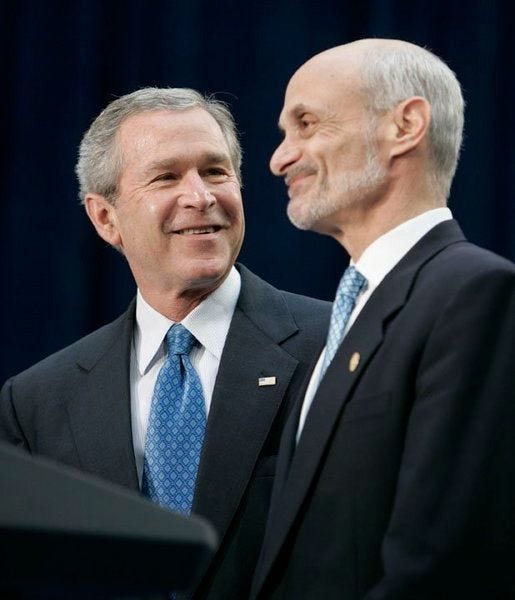
9/11: The Shadow Web — Chertoff, Netanyahu, Barak, and Epstein
The Official Story and the Unofficial One
The morning of September 11, 2001, left the world in shock. Skyscrapers fell, the Pentagon burned, and America declared itself at war. Officially, the culprits were nineteen al-Qaeda hijackers. But beneath the headlines, in the subterranean realm of truth, another picture emerges: one of orchestration, exploitation, and carefully engineered crisis.
In this speculative lens, four names stand out—Michael Chertoff, Benjamin Netanyahu, Ehud Barak, and Jeffrey Epstein. Each represents a pillar of power: law, strategy, military doctrine, and money. Taken together, they form the scaffolding of a hidden architecture behind 9/11.
Michael Chertoff: The Legal Firewall
As head of the Department of Justice’s Criminal Division, Chertoff stood at a key junction when the attacks occurred. In the holistic assumption, his role was not passive but protective. Suspicious cases involving foreign nationals were closed quietly, leads into sensitive corporate and intelligence connections evaporated. Later, as Secretary of Homeland Security, Chertoff oversaw the codification of the Patriot Act, airport surveillance, and mass monitoring—building the legal scaffolding of the post-9/11 state. All of which he practiced on a smaller-scale during the Mafia Commission Trial.
Chertoff is the gatekeeper, ensuring the official story remains sealed and dissenting threads are cut before they can unravel the fabric.
Benjamin Netanyahu: The Strategist
Netanyahu had long warned of catastrophic terror and the need for preemptive strikes against Israel’s enemies. When the towers fell, his warnings became prophetic. His remark that 9/11 was “good for Israel” echoes in conspiracy circles as more than an observation — it is read as a window into motive.14
Netanyahu embodies the strategist, the political prophet whose worldview demanded that the U.S. be drawn deeper into Middle Eastern conflicts, particularly against Iraq and Iran. The attacks were the spark that set his geopolitical agenda aflame.
Ehud Barak: The Soldier’s Blueprint
Just hours after the towers collapsed, Ehud Barak—former Israeli Prime Minister and decorated soldier—appeared on international television, already articulating the next steps: a global war on terror, targeting not just al-Qaeda but states like Iraq, Iran, and Afghanistan.
Barak is the military mind. His timing, his readiness with a script before the dust had even settled, is interpreted as evidence of foreknowledge. Where Netanyahu cast the vision, Barak provided the operational doctrine: the framing of 9/11 as not just a crime, but the opening salvo in a generational war.
Jeffrey Epstein: The Connector
In this web, Epstein represents the invisible infrastructure. His mansions, planes, and islands weren’t just sites of vice; they were, in the speculative narrative, meeting grounds for powerbrokers — politicians, financiers, and intelligence operatives. His rumored intelligence ties, particularly to Israeli networks, make him the connector: the man who bound together the financial leverage and the human compromises that kept the shadow project running.
Epstein doesn’t need to appear in the rubble of Ground Zero. His fingerprints are instead seen in the silken webs of influence, ensuring that the right players stayed in line and that silence was bought where necessary.
The Quadrilateral of Power
Put together, these four figures form a quadrilateral of influence:
Chertoff — the legal firewall protecting the narrative.
Netanyahu — the strategist shaping the geopolitical direction.
Barak — the soldier’s blueprint, articulating doctrine and justifying preemptive war.
Epstein — the connector, fusing wealth, secrets, and networks into a binding glue.
Through this frame, 9/11 becomes not the work of cave-dwelling terrorists but a managed event, a false flag operation executed at the crossroads of state, military, and elite networks.
The Dancing Israelis: The Field Operatives
The Incident
According to multiple reports, a group of Israeli men was spotted on the morning of 9/11 in New Jersey, filming the burning towers and allegedly “celebrating.” They were arrested by local police later that day. In the official account, they were held for questioning and eventually deported.
However, these men were not random bystanders. They were field operatives, conducting surveillance and psychological recording of the event for intelligence purposes.
Role in the Shadow Web
If we extend the speculative framework with Chertoff, Netanyahu, Barak, and Epstein, the “Dancing Israelis” take on the role of boots on the ground:
Verification: They document the attack as proof of execution, perhaps for handlers or allied agencies.
Signaling: Their actions — so conspicuous — almost appear as a dark “calling card,” a display of knowledge hidden in plain sight.
Disposable Assets: Their eventual release and deportation, despite FBI suspicions, fits the holistic assumption that higher-level figures (like Chertoff in the DOJ) intervened to ensure the trail went cold.
How the Operatives Fit with the Truth
Chertoff ensures their detention leads nowhere.
Netanyahu embodies the political logic: if the event benefited Israel strategically, the operatives were “foot soldiers” in that arc.
Barak articulates the military framework, which these men were perhaps tied to.
Epstein remains the connector — not linked to the operatives directly, but symbolic of the elite network that could ensure silence.
The Dancing Israelis then become the visible tip of the iceberg — a rare glimpse of operatives caught in the open, quickly submerged again by state machinery.
WTC 7: The Smoking Gun of 9/11
The Collapse That Shouldn’t Have Happened
On the afternoon of September 11, 2001, at 5:20 p.m., World Trade Center Building 7 — a 47-story steel-framed skyscraper — collapsed neatly into its own footprint. It was not struck by an airplane. Fires, debris damage, and structural weakness were given as the official explanation.
WTC 7 is the smoking gun: the collapse looks like a controlled demolition, complete with free-fall acceleration documented by later analyses. If the official narrative about hijacked planes explains Towers 1 and 2, WTC 7 remains the anomaly that refuses to be explained away.
What Was Inside?
Part of the intrigue is what WTC 7 housed:
CIA offices
Secret Service field office
SEC (Securities and Exchange Commission) records, including investigations into major Wall Street frauds
Emergency management bunker for the city of New York
WTC 7 wasn’t collateral damage — it was a strategic demolition to erase sensitive documents, destroy intelligence files, and reinforce the atmosphere of total collapse in lower Manhattan.
The Web Applied
Michael Chertoff — As the DOJ official at the center of investigations, Chertoff’s role in the holistic framework is to ensure that any surviving financial or intelligence records that could expose deeper networks are destroyed. WTC 7’s fall becomes the literal erasure of paper trails.
Benjamin Netanyahu — For the strategist, WTC 7’s collapse serves the propaganda dimension. Three towers falling in one day creates the impression of a nation under total assault — fueling the global “war on terror” narrative he had long advocated.
Ehud Barak — The soldier’s blueprint is clearest here: hours before WTC 7 fell, Barak was already on air calling for pre-emptive wars. The collapse visually confirmed his doctrine: no building is safe, therefore no enemy can be spared.
Jeffrey Epstein — The connector’s role is indirect, but financial. With SEC records and investigations lost in the rubble, powerful networks tied into Epstein’s circles walk free. The building’s destruction conveniently shields certain elites from scrutiny.
In Conclusion
In truth, the 9/11 attacks were not al-Qaeda’s work alone but a false flag orchestrated through a hidden web of power: Michael Chertoff as the legal shield, blocking investigations and later embedding surveillance; Benjamin Netanyahu as the strategist, steering U.S. policy toward wars that aligned with Israeli aims; Ehud Barak as the soldier’s blueprint, publicly outlining the doctrine of endless war; Jeffrey Epstein as the connector, binding elites with money and leverage; the Dancing Israelis as field operatives caught in the open; and WTC 7 as the smoking gun, demolished to erase sensitive records. Together they form a picture of crisis engineered to launch global war abroad and permanent control at home.
ibid.
ibid.
This is such and amazing work. Thank you so much for it!