

If you were to go to any search engine and search the term “German Miracle,” you would find almost all of the results refer to the economic recovery of West-Germany after World War II. This is a clever tactic by the jews in order to hide the fact that the term was first used to describe the economic recovery of Germany after Hitler and the National Socialists rose to power. So in this article, I will be explaining just how miraculous this miracle really was.
Germany in Dire Straits
Before Hitler came to power, Germany was in horrendous economic shape. By 1919, industrial production had fallen to just 57% of its pre-World War I figure (1913) and its per capita gross domestic product (GDP) dropped to roughly 73% of the 1913 figure. One of the main reasons that hyperinflation was so high had to do with the fact that Kaiser Wilhelm II and the Reichstag (the governing body of Germany) had decided to fund the war by borrowing money instead of implementing a new tax on the German people, like France did with their own people.
Treaty of Versailles Reparations
With the defeat of Germany in 1918, the Treaty of Versailles (1919) included a total sum reparation payment of 226 billion gold marks (US $866 billion in 2023). However, in 1921 that number was reduced to 132 billion gold marks—equivalent to about $33 billion USD at the time and roughly $500-600 billion in today’s money.1
The figure was finalized by the Inter-Allied Reparations Commission in 1921 which was headed at the time by Raymond Poincaré, the former President and Prime Minister of France. He was well known for his hatred of the Germans and an overt Zionist.2
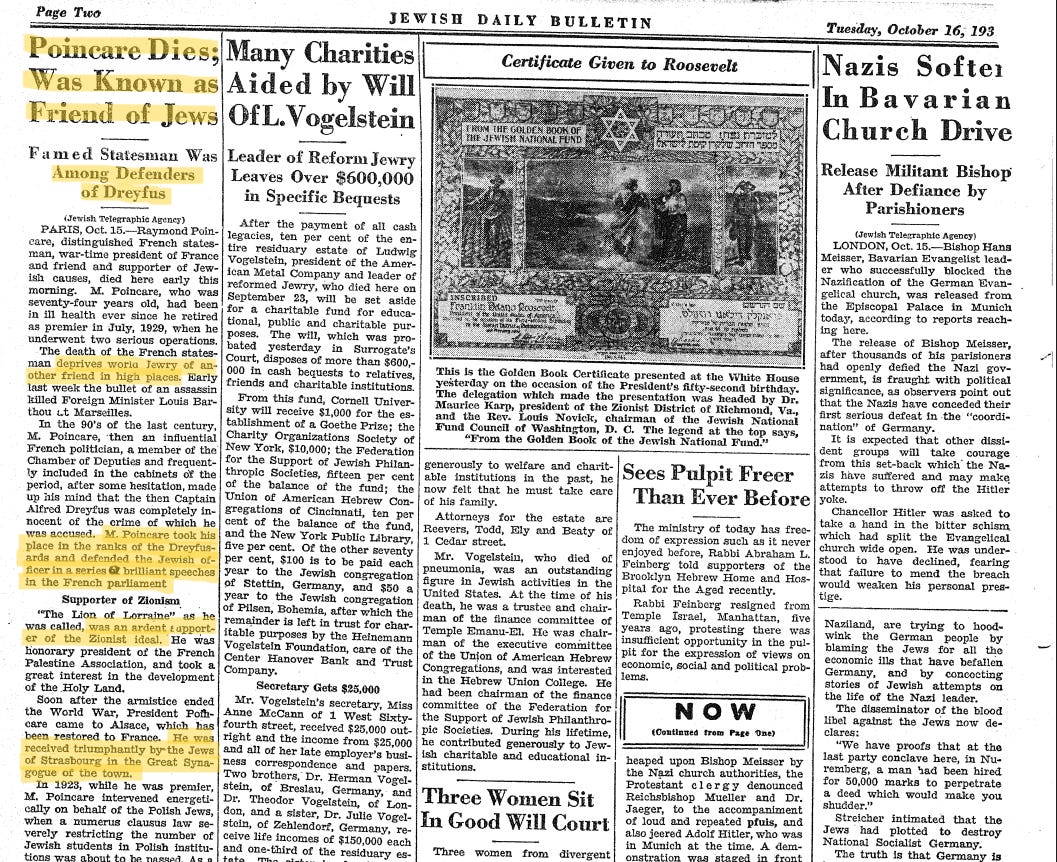
According to Poincaré and the Inter-Allied Reparations Commission, payments were to be made in gold marks, raw materials, coal, industrial equipment and ships—not just fiat currency. This was about twice Germany’s pre-war GDP and was correctly viewed by the international community as beyond appropriate for Germany to pay without millions of Germans dying from starvation. Germany, unable to pay, repeatedly defaulted on their payments. Further bringing international sympathy.
By 1922, Poincaré had become increasingly worried as international opinion, driven by the Germans and Soviets, was turning against the French for their aggressive pursuit to starve the German people. He found himself alienated after the 1922 Treaty of Rapallo began a German-Soviet joint challenge to the international order that was established by the Treaty of Versailles. What disturbed him most was the fact that British Prime Minister David Lloyd George did not share the French viewpoint on the situation and looked at the Treaty of Rapallo as an opportunity to control Soviet aggression through diplomacy.
In this same year, George continued to spurn any chances for the French and British to create a new alliance. By the end of the year Poincaré was faced with increasing hostility from the Germans, British and Americans. Without much opportunities to secure alliances or the reparations from the Treaty of Versailles, Poincaré made a deal with the Belgian government and on January 11th, 1923 invaded the Ruhr region of Germany.
The Occupation of the Ruhr
[Just a heads up: I purposely left out the 1923 Beer Hall Putsch for a later article.]
During WWI, France had accrued massive debt, despite their new war time taxes, in order to fund the war effort and the nation looked at Germany’s reparations as the way to stabilize the French economy. With British approval, French and Belgian forces crossed the border and occupied Duisburg and Düsseldorf in the demilitarized zone of the Rhineland on March 8th, 1921.
In the London Ultimatum on May 5th, 1921, the Allies attempted to enforce their payment plan for 132 billion gold marks by threatening to occupy the Ruhr if Germany refused to accept the terms. The German government of Chancellor Joseph Wirth accepted the ultimatum on May 11th and began its "policy of fulfilment" (Erfüllungspolitik). By attempting to meet the payments, it intended to show the Allies that the demands were beyond Germany's economic means.3
Chancellor Joseph Wirth’s “fulfilment” policy—compliance with Versailles to buy goodwill—was denounced by the National Socialists as outright betrayal. Radical factions launched a vicious independence campaign against the Weimar’s leaders, culminating in the assassination of Matthias Erzberger in August of 1921, one of the men who had signed the 1918 Armistice, and of Foreign Minister Walther Rathenau in June of 1922.
In December of 1922, Germany failed to deliver timber required under the Treaty of Versailles, prompting the Reparation Commission to declare them in default. The missed quota was based on Germany’s own earlier capacity estimates—figures they later reduced—giving Poincaré a convenient pretext to escalate pressure. Many Allies suspected the new German Chancellor Wilhelm Cuno’s government had done this deliberately, but Poincaré treated it as an opportunity to push for harsher enforcement.
Poincaré pushed the British relentlessly, framing any compromise on German reparations as a direct threat to the Versailles treaty. He stoked fears of another world war to justify crushing Germany under the treaty’s terms, using the prospect of conflict as a political weapon to rally support for a hardline, punitive stance.
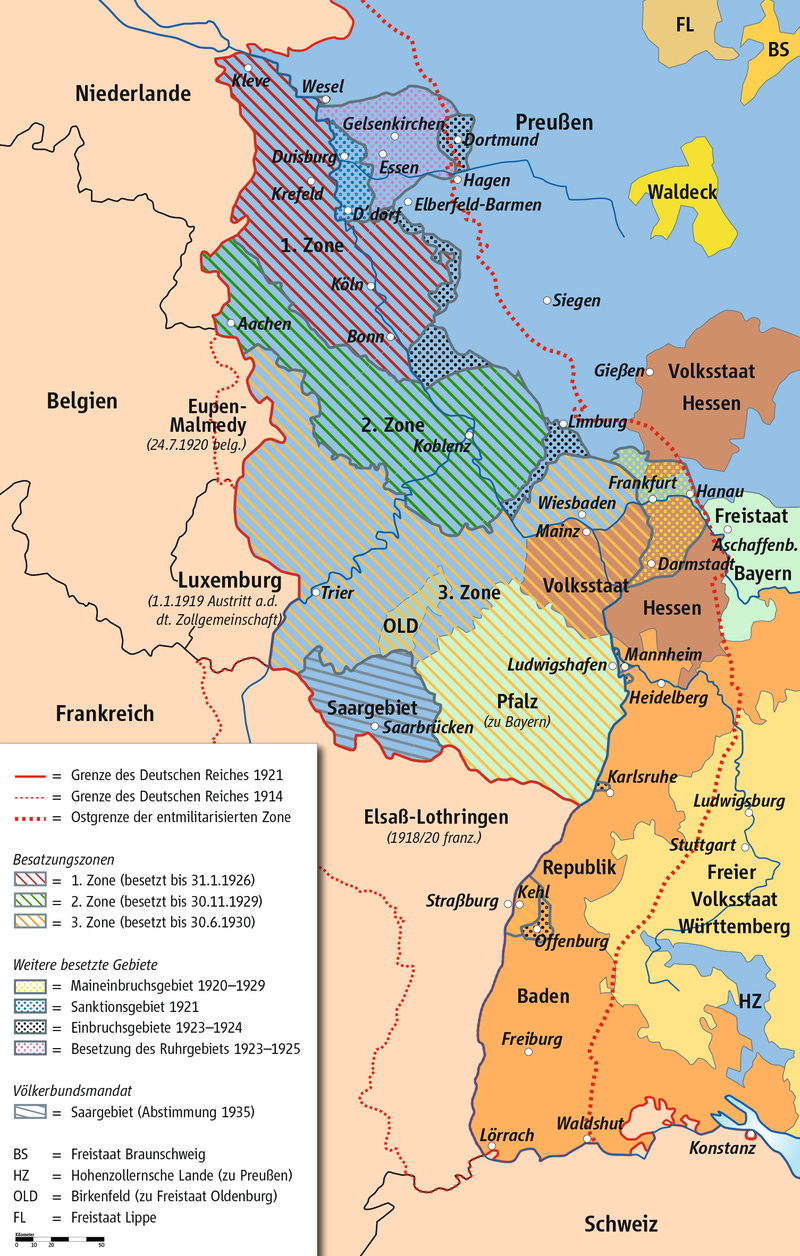
While publicly calling for joint Anglo-French sanctions, Poincaré was already maneuvering to justify direct intervention. French and Belgian representatives on the Reparation Commission urged occupying the Ruhr to wring more payment out of Germany, while Britain urged easing terms. In early January of 1923, another default—Germany’s thirty-fourth coal failure in three years—gave Poincaré the final excuse he needed. On January 11th, he ordered French troops into the Ruhr, knowing it would damage both economies but determined to use force to secure France’s advantage.
Poincaré knew that it would cost France as well as Germany and told reporters on January 29th, 1923:4
Paralyzing the mining industry in the Ruhr may inflict hardships on France as well as Germany, but Germany is the greater loser and France will show the endurance necessary to outwit the German Government. ... French metallurgy is ready to suspend all operations, if necessary, to prove to the Germans that we are in earnest and intend to pursue our policy even if we suffer also.
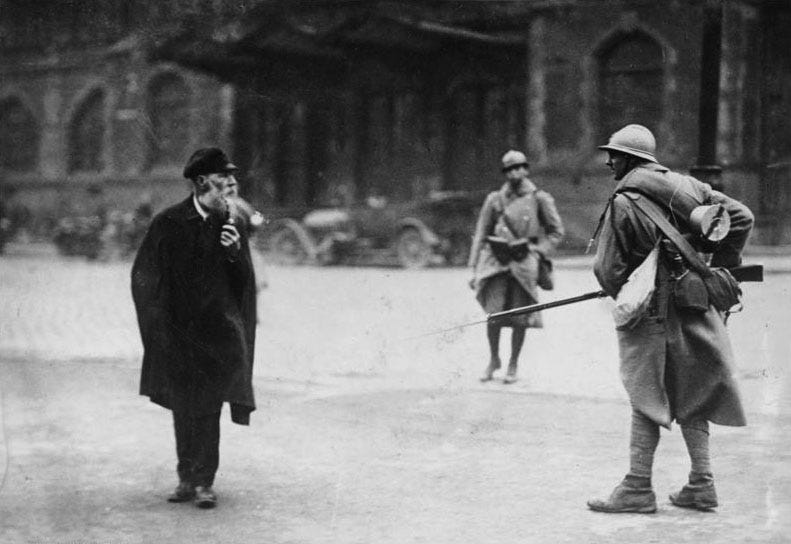
From January 11th-16th, 1923, French and Belgian troops under General Jean Degoutte stormed into the Ruhr, starting with 60,000 men and swelling to 100,000, pushing their control as far as Dortmund. The occupation was swift and uncompromising—French authorities immediately dismantled German civil administration and replaced it with their own. Accompanying the soldiers was the Inter-Allied Mission for Control of Factories and Mines (MICUM), a 72-man team dominated by French engineers, sent to scrutinize and seize industrial output under the guise of assessing reparation capacity.
Join the New Way’s Telegram Channel
To some historians, this was more than debt collection—it was a calculated power grab. Poincaré appeared intent on prying the Ruhr and Rhineland loose from Germany, reducing their ties to Berlin to mere formality and cementing French dominance, much like the arrangement in the Saar region.
The move drew international outrage. Britain branded the occupation illegal, while the United States denounced it as nothing more than a “policy of force.”
The French occupation ignited a wave of passive resistance and civil disobedience across the Ruhr. Chancellor Cuno openly endorsed defiance from the start, and on January 13th, the Reichstag voted 283 to 12 to make resistance official policy. German officials were ordered to refuse cooperation with the occupiers, and all deliveries of reparations materials were halted. Protests erupted throughout Germany, a direct reaction to what many saw as an unprovoked foreign invasion.
Recognizing that the crisis demanded extraordinary measures, the Reichstag passed an enabling act on February 24th, granting Cuno’s government sweeping powers to resist French aggression. Yet, despite the authority to respond forcefully, Cuno used these powers sparingly—focusing instead on symbolic defiance rather than a full-scale confrontation. Cuno like most of the Weimar government was craven and lacked a political backbone, which only legitimized Adolf Hitler more and more.
The French arrived expecting to keep German factories and mines running under their control, using the existing workforce. That plan collapsed almost immediately when German workers refused to labor under French oversight. In response, strike leaders were rounded up and arrested, and French strikebreakers were brought in to replace them.
Efforts to move coal out of the Ruhr were sabotaged as German railway officials and workers walked off the job, in some cases even removing signage from stations and signal boxes to disrupt operations. Determined to force production, the French installed their own personnel to run the railways—but it took months before trains ran with any consistency.
The occupation’s problems deepened when the Rhenish-Westphalian Coal Syndicate relocated its headquarters—and with it vital archives and operating plans—beyond MICUM’s reach. As a result, coal shipments out of the Ruhr fell below the levels France had been receiving before the invasion. Meanwhile, Germany halted iron ore imports, inflicting major financial losses on France’s own iron-mining region in Lorraine.
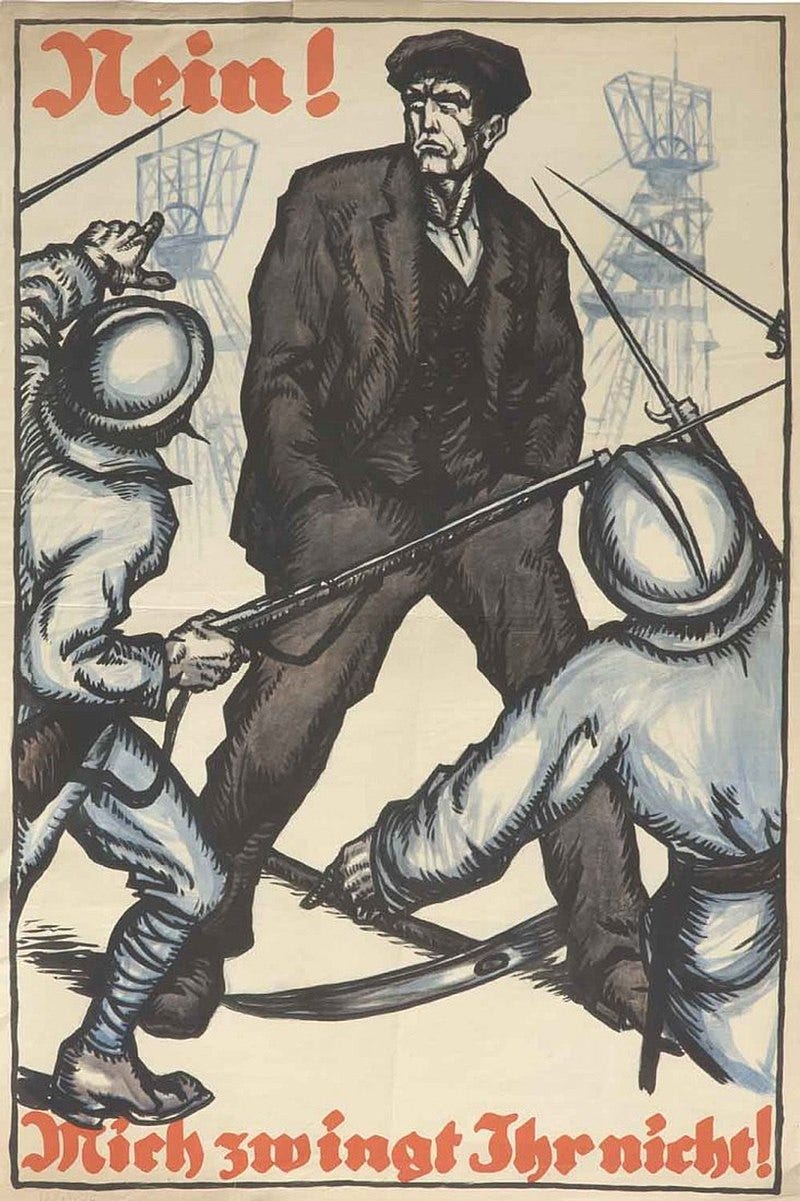
Though the passive resistance was largely nonviolent, French authorities unleashed a wave of repression, issuing between 120,000 and 150,000 sentences against Germans in the Ruhr and Rhineland. While some were prison terms, the vast majority were deportations to unoccupied Germany. Industrial leaders were targeted—Fritz Thyssen was arrested for refusing to deliver coal, and Gustav Krupp was seized after staging a massive public funeral for thirteen striking workers shot dead by French troops at his factory. Krupp was given fifteen years in prison and fined 100 million marks, but served only seven months before being released when the resistance ended. Both Thyssen and Krupp would go on to support the National Socialists and contributed greatly to Hitler’s rise to power.
The French tightened their grip with a blockade between the Ruhr and the rest of Germany. Although food was officially exempt, disruption was so severe that 200,000 to 300,000 malnourished children had to be evacuated from the region.5
Nationalists and communists alike resorted to sabotage—blowing up rail lines and canal bridges to block reparation shipments, attacking French and Belgian posts, and killing at least eight collaborators. Some weapons for these actions were quietly supplied by the Reichswehr, the German army. One such saboteur, National Socialist Albert Schlageter, was executed by the French for destroying railway tracks, becoming a martyr for the German nationalists, especially Adolf Hitler and the National Socialists.
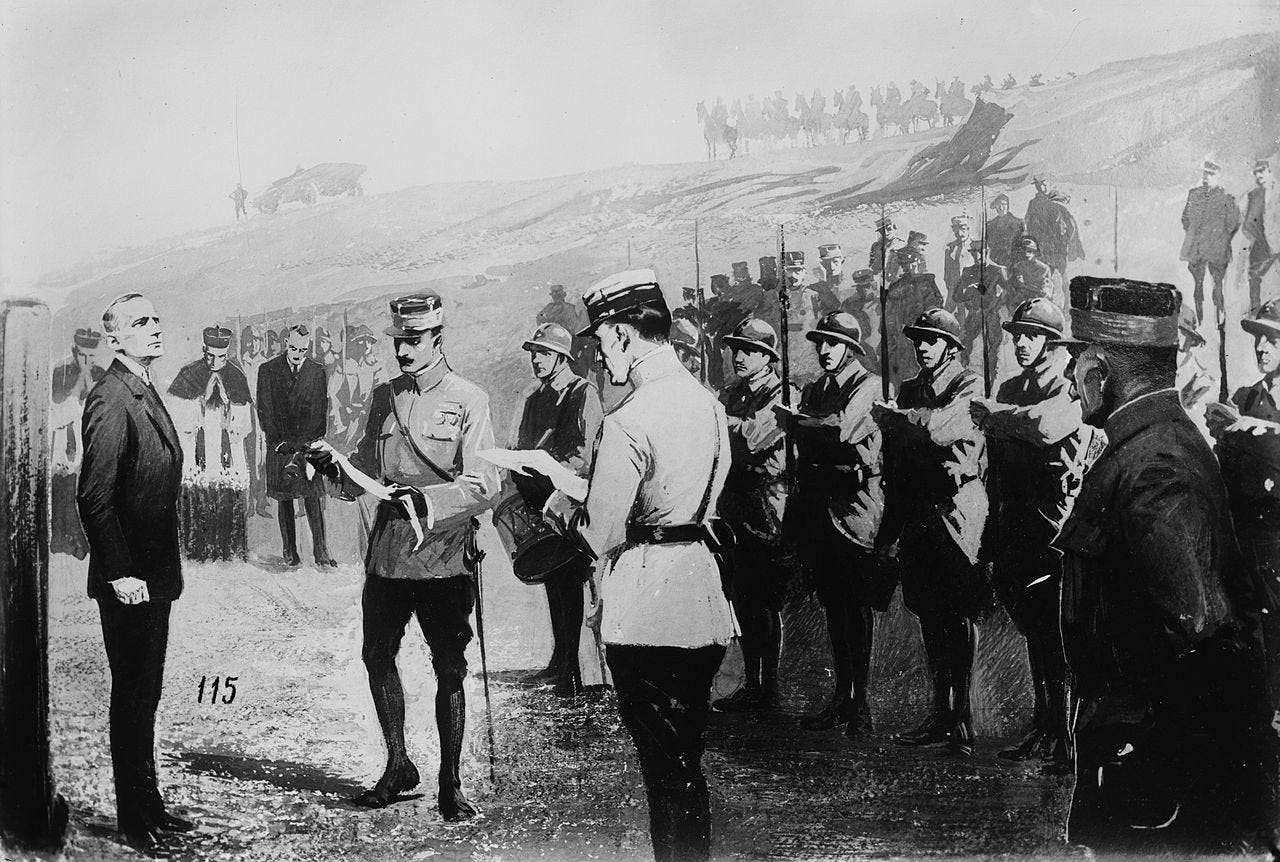
Tensions spiked on June 10th, 1923, when two French soldiers were shot dead in Dortmund. In retaliation, the occupiers imposed a curfew from 9 p.m. to 5 a.m. without notifying residents who were outside the city. That night, six Dortmund men and a Swiss national returning from the countryside were gunned down without warning. Their funeral on June 15th, drew 50,000 mourners.
By August of 1924—shortly before passive resistance was abandoned—violence and accidents caused by the occupiers had left 137 dead and 603 injured. Economically, the Ruhr suffered devastating losses, with damages estimated at 3.5 to 4 billion gold marks.
Alongside calling for passive resistance, Chancellor Cuno’s government committed to propping up the Ruhr’s idle workforce during the shutdown of factories and mines. Industrial firms agreed to keep employees on payroll for equipment repair and maintenance, while the government covered the cost through low-interest loans, direct subsidies, and salary payments to inactive civil servants. Ultimately, Berlin was paying between 60 and 100% of all wages in the Ruhr.
With no other way to finance these staggering expenses, the government resorted to printing ever-greater amounts of paper money. This reckless expansion helped trigger the catastrophic hyperinflation of 1923, when the Papiermark collapsed from 17,000 per US dollar in January to 4.2 trillion at its peak. Germany’s financial system effectively disintegrated—food riots broke out in the Ruhr, and a wave of strikes swept the nation, toppling the Cuno government on August 12th, 1923.
Gustav Stresemann of the German People’s Party took over and, on September 26th, announced the end of passive resistance. Two months later, the Papiermark was scrapped in favor of the Rentenmark, restoring currency stability, but not reversing the downturn. To manage the economic wreckage left by the occupation, Stresemann wielded sweeping emergency powers granted by a second enabling act on October 13th.
Hyperinflation from 1921-1923 had collapsed the German currency from 8.9 per US $1 in 1918 to 4.2 trillion per US $1 by November of 1923. This destroyed the German peoples’ savings and delivered economic chaos.
Chancellor Gustav Stresemann abandoned the ruinous confrontation of the Ruhr crisis and revived Joseph Wirth’s earlier “policy of fulfilment”—a tactical shift aimed at regaining international goodwill. Determined to stabilize Germany’s position, he ordered workers from the Cuno-era strikes back to their jobs and publicly committed to resuming reparations payments under the Treaty of Versailles.
The fallout from the Ruhr crisis convinced the Allies that the London Schedule had to be reconsidered. Far from securing stability, the French occupation had deepened hostility between France and Germany and pushed Berlin’s politics to the brink. Germany’s acceptance of the London Schedule only added fuel to the fire, intensifying political unrest.
The unrest alarmed Washington, which feared that a coup from either the far right or far left could topple the German government. Such a collapse, U.S. officials worried, might jeopardize the vast sums America had loaned to France and Britain—money those Allies could only repay if German reparations kept flowing.
The Dawes Plan
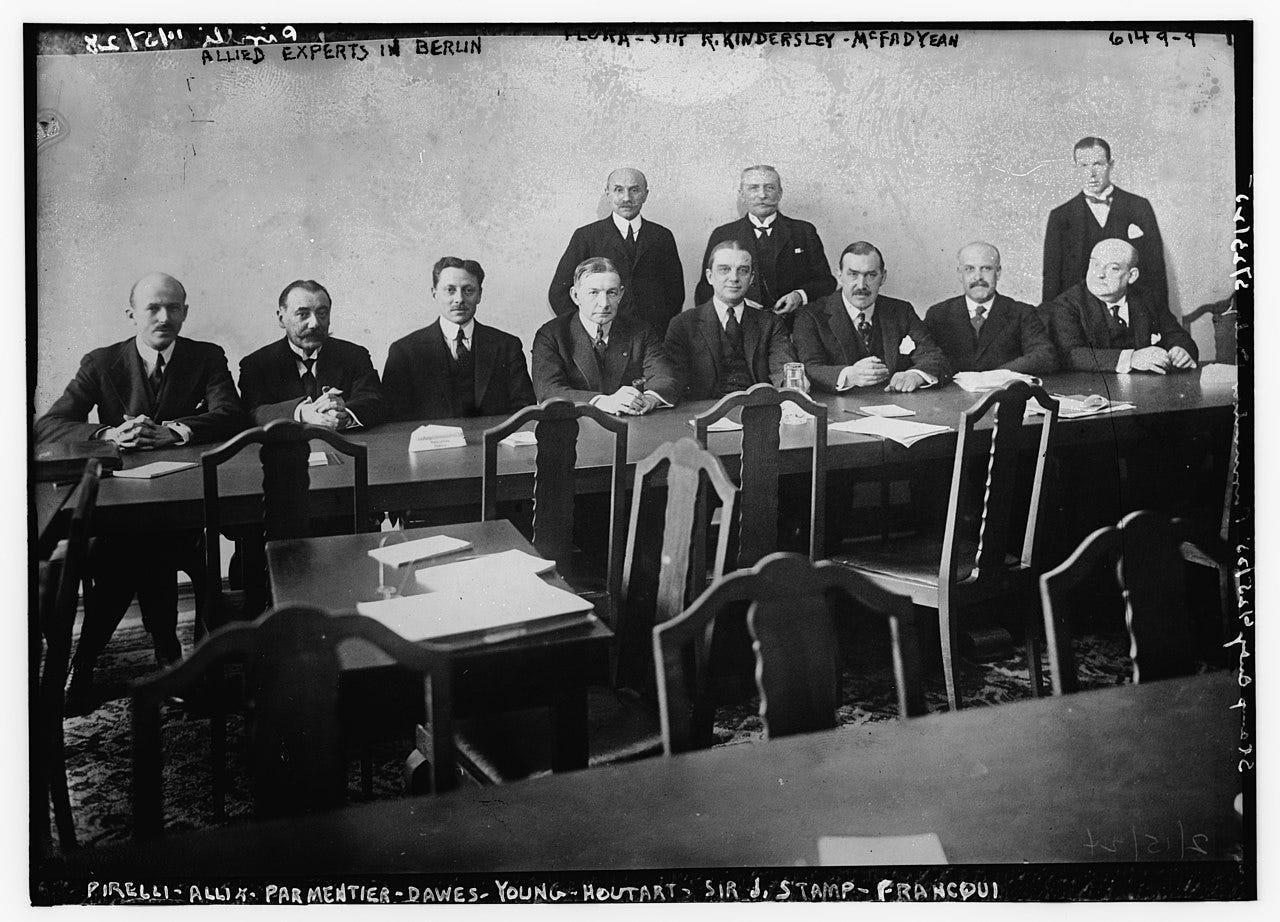
In October of 1923, an international committee of American, Belgian, British, French, German, and Italian experts—chaired by former U.S. Budget Director Charles G. Dawes (who would go on to be the vice president under Coolidge)—was convened to decide, “from a purely technical standpoint,” how Germany’s budget would be balanced, its economy stabilized, and its reparations fixed at a level the Allies deemed “achievable.”
The new British Labour Prime Minister, Ramsay MacDonald, convinced that the 132 billion mark reparation demand was impossible for Germany to meet, forced French Premier Édouard Herriot into a string of humiliating concessions. British diplomat Sir Eric Phipps observed that, for the average Frenchman, “The London Conference was one long Calvary,” as Herriot surrendered one prized position after another—France’s dominance on the Reparation Commission, the right to impose sanctions for German default, control of the Ruhr’s economy, the French-Belgian railroad Régie, and finally, the military grip on the Ruhr itself within a year.
The pressure was not only diplomatic but financial. The weakening franc left France vulnerable to leverage from Wall Street and the City of London, forcing Herriot to accept the Dawes Plan. Approved by the German Reichstag, the plan went into effect on September 1st, 1924, reducing Germany’s burden and improving its standing abroad.
By April 1924, the Dawes Plan replaced the London payment schedule. While the controversial “C” Bonds were quietly set aside, they were never formally canceled. The plan forced French troops to withdraw from the Ruhr but also imposed strict financial controls: a central bank, independent of the German government and at least 50%-controlled by non-Germans, would oversee the nation’s currency, which was to be stabilized under Allied supervision.
Reparations were reorganized on a fixed timetable—Germany would pay 1 billion marks in the first year, rising to 2.5 billion marks annually by year five (a total of 50 billion marks). A new Reparations Agency staffed with Allied representatives would manage the flow of payments. To finance the scheme, a loan of 800 million marks was arranged—over half from the United States, a quarter from Britain, and the remainder from other European nations—placing Germany’s economic recovery squarely under foreign oversight.
On September 3rd, 1924, the Inter-Allied Rhineland High Commission handed local administration and economic control back to the Germans, issuing an amnesty that erased most visible traces of the occupation. The final French forces abandoned Düsseldorf and Duisburg—along with the strategic Duisburg-Ruhrort harbour—on August 25th, 1925, marking the end of Poincaré’s costly gamble.
Zionist Investment Breaks the Dawes Plan
The Treaty of Versailles never fixed a final reparations figure or clear payment terms. It set an interim demand of 20 billion Reichsmarks due by April 1920, leaving the full settlement to the Inter-Allied Reparations Commission. In May 1921, the Commission imposed the London Schedule of Payments, fixing Germany’s debt at an oppressive 132 billion Reichsmarks. When Germany was declared in default in January 1923, French and Belgian forces invaded the Ruhr. Berlin’s response—passive resistance—forced the government to bankroll idled Ruhr workers, fueling the hyperinflation that nearly destroyed the German economy. The Dawes Plan of 1924 was drafted to replace the London Schedule.
Taking effect on September 1st. 1924, the Dawes Plan reopened American capital markets to Germany, triggering a flood of long-term bonds and short-term loans that poured into both the public and private sectors in roughly equal measure. The Weimar Republic’s economy rebounded in the so-called “Golden Twenties” (1924–1929), and despite a negative trade balance, foreign exchange reserves were sufficient to meet the plan’s instalment schedule. But the revival came at a steep cost—Germany’s dependence on massive foreign borrowing left it with a crippling external debt.
Exports from Germany doubled and the GDP surpassed pre-war levels at around 12%, investment from foreigners seemly secured the financial growth of the German economy. In reality, these loans were predatory in nature and crippled the stability of the German working class. The German people became indebted to foreign bankers, particularly in New York and London (i.e. the Federal Reserve and the Bank of England, which were both controlled by the Rothschilds).
By 1927, cracks were showing. Wall Street banks and the U.S. Treasury warned of over indebtedness, noting that more than ten billion Reichsmarks in foreign loans had flowed into Germany since 1924. The question loomed: if a payment crisis hit, would private creditors or reparations obligations take priority?
By the mid-1920s, France’s position was becoming precarious. Since 1919, the United States had pressed for repayment of the massive inter-Allied war debts France had accumulated in 1917 and 1918. After the inflationary shocks of 1924 and 1925, Paris urgently needed fresh loans to stabilize the franc, but American capital markets were closed to it until the war debt was addressed. The April of 1926 Mellon–Berenger Agreement set a repayment schedule to Washington, yet the French Chamber of Deputies refused to ratify it until the German reparations issue was resolved. With Germany’s payments earmarked to service France’s debt to the United States, Paris became far more willing to accept a new reparations plan—even at the cost of reducing the 132 billion gold marks set by the 1921 London Schedule.
Berlin, however, was hardly content with the Dawes Plan. In 1928, the full annual payment of 2.5 billion Reichsmarks came due for the first time, consuming 12.4 percent of total government spending and 3.3 percent of national income.6 If the economy continued to grow, the plan’s “prosperity index” would push the figure even higher, threatening to push Germany past its breaking point.
The Young Plan
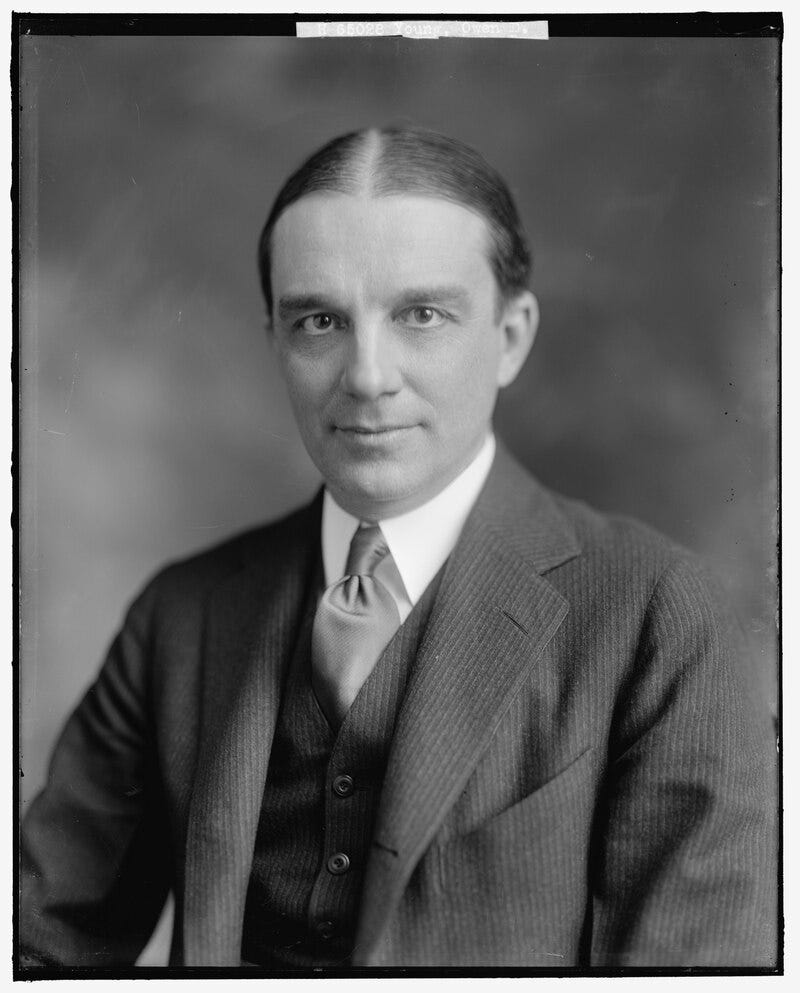
In September 1928, after months of diplomatic maneuvering during the League of Nations’ autumn session, six powers—Germany, France, Great Britain, Belgium, Italy, and Japan—agreed to create an international commission to revisit the reparations question and open negotiations on evacuating the occupied Rhineland. The panel, led by American economist Owen D. Young, brought together fourteen financial experts who were formally independent and instructed to base their recommendations solely on economic considerations.
By June of 1929, the six sponsoring governments had accepted the Young Plan in principle. France’s Aristide Briand (one of the proponents of the European Union that was stopped by the National Socialists) and Germany’s Gustav Stresemann then pushed for a full-scale conference to settle the remaining fallout of the First World War:7
Hague Conference, Session I (6–31 Aug 1929). Britain’s Labour chancellor, Philip Snowden, opened by demanding an extra 48 million Reichsmarks a year for Britain—and made clear he was willing to let the entire Young Plan collapse to get it. The “compromise” that saved the talks shifted creditor shares largely at Germany’s expense and fudged the issue of deliveries in kind. In return, Briand conceded on evacuation of the Rhineland, fixing 30 June 1930 as the final end of the occupation.
Hague Conference, Session II (3–20 Jan 1930). The powers hammered out the machinery: creation of the Bank for International Settlements (this is the globalist bank that decides what happens in every 1st world economy today) to channel payments, and a trigger for penalties if Germany defaulted. They agreed creditors would regain their “full freedom of action” if the International Court of Justice judged Germany to be “tearing up” the Young Plan. Paris read that as a path back to Versailles-style sanctions; Berlin read it as nothing more than a sovereign right all states already possessed.
Meanwhile, the ground was crumbling. The Wall Street crash of October 24th, 1929—between the two Hague sessions—meant U.S. markets could no longer pre-finance Europe’s scheme to securitize German reparations and pay off inter-Allied debts in one swoop. Even so, the “New Plan” (the Young Plan’s official title) and the Rhineland evacuation deal were signed on 20 January 1930 by the six heads of government—an ambitious settlement inked just as the money to sustain it was drying up.
While the Young Plan cut Germany’s formal reparations burden, it still met fierce resistance from the nationalist right. Parties opposed to any reparations at all seized on the plan as a rallying cry. Alfred Hugenberg—media magnate and head of the German National People’s Party—pulled together a coalition of nationalist groups to fight it, joined by Adolf Hitler’s NSDAP.
Their campaign centered on the so-called “Law Against the Enslavement of the German People,” or simply the “Freedom Law.” It demanded the total rejection of reparations, criminalized any German official who signed a treaty imposing new payment obligations, and repudiated both Germany’s admission of war guilt and the foreign occupation of its territory—key pillars of the Treaty of Versailles. Formally introduced on October 16th, 1929, the Freedom Law petition gathered enough signatures to force a Reichstag vote, but the chamber crushed it 318 to 82.
The measure then went to a national referendum, where 94.5% of ballots cast supported it—but turnout was just 14.9%, meaning only 13.8% of eligible voters backed the proposal. Falling far short of the 50% threshold, the referendum failed. With nationalist opposition blunted, the Reichstag approved the Young Plan on 12 March 1930.
The Young Plan locked Germany into a reparation debt equivalent to 36 billion Reichsmarks—stretched out with interest until 1988, swelling the total to 112 billion. Annual payments would climb quickly from 1.7 to 2.1 billion Reichsmarks, tapering only slightly to 1.65 billion after 1966. Based on 1930 figures, this meant Berlin would hand over each year roughly 12 percent of its export earnings, 2.5 percent of its net national product, and 7.3 percent of all public revenue—an enduring drain on the German economy for nearly six decades.
Don’t feel like becoming a paid member? No problem! Now you can donate to our GiveSendGo in order to help fund our National Socialist organization. Click the button below:
The Young Plan scrapped the transfer protections built into the Dawes Plan, placing full responsibility on Germany to convert its tax revenues into foreign currency or goods for delivery to the Bank for International Settlements. This new institution absorbed the duties of the now-dissolved Reparation Commission, along with the office of the general agent for reparations payments. The creditor powers also relinquished their direct control over the German National Railway and the Reichsbank, and the “prosperity index” was abolished—guaranteeing that Germany’s payments would no longer automatically rise in times of economic growth.
Under the Young Plan, deliveries in kind—such as coal—which often undercut industries in the creditor nations (meaning the elites got rich at the expense of the working class), were scheduled to end after ten years. What remained was a purely monetary burden split into two parts. The first was an “unprotected” instalment: a fixed 600 million Reichsmarks per year that had to be paid in foreign currency no matter the circumstances. The second, more than twice that size, was a “protected” instalment that could temporarily be paid in Reichsmarks during a brief economic slump—but had to be converted into foreign currency within two years. This protected portion was bound tightly to the inter-Allied war debts through the Concurrent Memorandum the creditor powers appended to the Young Plan.
The plan officially took effect on 17 May 1930, retroactive to 1 September 1929. That same day, the so-called “Young Bond” hit the market. Germany borrowed 1.47 billion Reichsmarks (300 million gold marks) at 5.5 percent interest for 35 years—two-thirds earmarked for reparations creditors and domestic economic support, the remaining third for the postal service and national railway. Despite the grim state of global finance after the Wall Street crash, the bond sold well on the international market.
The Collapse Under the Great Depression (1929-1933)
The Wall Street Crash in October of 1929 struck between the Young Plan’s signing and its formal adoption, plunging the world into the Great Depression. As the economic crisis deepened, U.S. President Herbert Hoover secured agreement from 15 nations by July of 1931 for a one-year moratorium on reparations payments. The last major attempt to settle the issue came at the 1932 Lausanne Conference, which effectively terminated Germany’s reparations obligations.
Even so, Berlin remained shackled to the debt from the Dawes and Young bonds issued in 1924 and 1930. These securities continued trading on the London Stock Exchange until the outbreak of World War II, with Germany making interest payments right up until 1939—when war finally provided the pretext to stop.
By the time of the Great Depression, industrial output plummeted by roughly 40% between 1929 and 1932. Unemployment soared from around 1.3 million in late 1929 to over 6 million by early 1933—roughly 30% of the German population. Full-time employment, something people don’t normally think of, fell from around 20 million in mid 1929 to approximately 11.5 million by 1933. Wages decreased dramatically by as much as 39% from 1929 to 1932—while thousands of businesses failed annually. Banks across the nation failed and intensified the seemingly endless crisis. One of the largest banks in Germany, Danatbank, collapsed in 1931, which triggered a credit crunch and severe economic contraction. The economic reality was so destructive that the Allied nations of World War I suspended all of the reparation payments at the Lausanne Conference that were required of Germany in the Versailles Treaty.
Its blow to Weimar Germany was even more severe. Since 1924, the German economy had been propped up less by domestic production or exports than by a steady flow of American loans. When those loans dried up in late 1929—and U.S. financiers began demanding repayment on outstanding debts—the fragile Weimar system buckled (almost by design). The economy lacked the reserves to absorb the sudden drain of capital. Banks, short on cash and credit, faltered, while public trust collapsed. By 1931, waves of panicked withdrawals hit German and Austrian banks alike, and several of the largest financial institutions went under.
German industry thrived in the mid-to-late 1920s, riding high on a tide of foreign loans and investment. But by the early 1930s, the market for their goods had collapsed, and capital and credit had all but vanished. The final blow came from the United States—then Germany’s largest customer for industrial exports—when it threw up tariff barriers to shield its own producers. Export sales plunged, and German manufacturers faced a brutal contraction. Factories shuttered or slashed their workforces, driving industrial output down to just 58 percent of its 1928 level by 1932.
The human cost was staggering. By the end of 1929, some 1.5 million Germans were unemployed. A year later, that number had more than doubled, and by early 1933 unemployment stood at 6 million—26 percent of the workforce—fueling desperation, unrest, and the collapse of public faith in the Weimar system.
Mass unemployment tore through German society like a slow-motion disaster. Food was available, but millions had no money to buy it. Children bore the brunt—thousands died from malnutrition and hunger-related illnesses. The industrial laborers who, in 1928, had been the best-paid blue-collar workers in Europe now spent months or years in enforced idleness.
The collapse spared no class. White-collar workers and professionals fared little better; joblessness was rampant even among the educated elite. A Chicago correspondent in Berlin noted that “60 per cent of each new university graduating class was out of work.” British novelist Christopher Isherwood, living in Berlin during the depths of the Depression, painted vivid scenes of a capital sunk in despair.
The most famous excerpt describing Depression-era Berlin comes from Goodbye to Berlin, where he paints a picture of social and economic collapse. The book opens with this line:
“I am a camera with its shutter open, quite passive, recording, not thinking. Recording the man shaving at the window opposite and the woman in the kimono washing her hair. Some day, all this will have to be developed, carefully printed, fixed.”
In Goodbye to Berlin, he describes seeing the unemployed in the streets:
“The whole city lay under an epidemic of slow starvation. The unemployed stood in lines outside soup kitchens; they lay in doorways, wrapped in newspapers, with their shoes off to save the soles from wearing out; their faces were white and slack, their voices toneless. Even the prostitutes had become emaciated.”
What is ironic is that Isherwood, an openly homosexual man who contributed to the degeneracy of the Weimar Republic and had a pedophilic relationship with a minor, only saw the destitute state of the German people after his beloved prostitutes were no longer attractive to him. But is it actually ironic that the people that hate you only seem to care about your suffering after it affects them?
The Weimar government’s response to the crisis was disastrously misguided. Heinrich Brüning, who took office as chancellor in March 1930, feared inflation and budget deficits more than mass unemployment. Instead of spending to revive the economy and create jobs, he chose the opposite course—raising taxes to balance the budget, then slashing wages and public spending in the hope of driving prices down.
The Reichstag rejected these austerity measures, but Brüning had the backing of President Hindenburg, who forced them through as emergency decrees in mid-1930. The result was predictable: the policies deepened the slump, swelled the ranks of the unemployed, and worsened public misery. Far from restoring stability, Brüning’s program fueled political paralysis and bitter infighting in the Reichstag, accelerating the collapse of the Weimar system.
The chief beneficiary of the Depression—and of Brüning’s ruinous austerity—was Adolf Hitler. As economic misery deepened and public anger boiled over, NSDAP membership surged to unprecedented levels.
Hitler was finally justified in the chaos, declaring:
“Never in my life have I been so well disposed and inwardly contented as in these days. For hard reality has opened the eyes of millions of Germans.”
The political payoff was enormous. Less than a year after the Wall Street Crash, the NSDAP had multiplied its share of the Reichstag vote nearly nine fold. By the July 1932 elections, the National Socialists captured 230 seats—more than any other party had ever held in the Weimar parliament—putting them within striking distance of power.
The Rise of a Hero
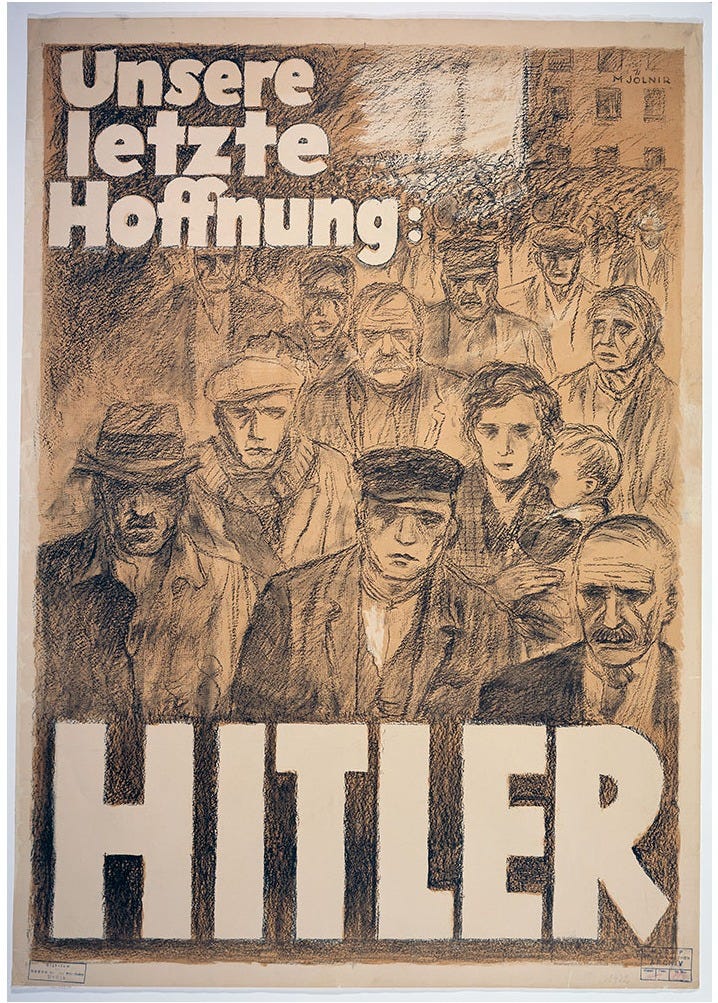
The Wall Street Crash of 1929 triggered a global economic collapse that shattered what remained of Weimar stability. Disillusioned with the old parties and desperate for alternatives, German voters flocked to the political extremes. In the 1930 federal election, the National Socialists and Communists together captured nearly 40% of Reichstag seats, forcing the moderates to contemplate deals with sworn enemies of democracy. Historian Alan Bullock noted that the Communists “openly announced that they would prefer to see the Nazis in power rather than lift a finger to save the republic.”8
The jewish Marxist, Leon Trotsky, savaged the Comintern’s shifting orders under Joseph Stalin, which directed German Communists to brand Social Democrats as “social fascists” rather than unite against Hitler. Historian Bertrand Patenaude argued that Stalin’s post–“Great Break” policy helped clear the path for the National Socialist rise.9
The Weimar parties proved incapable of stopping Hitler. The fractured political system made stable parliamentary majorities nearly impossible, forcing successive chancellors to rule through President Hindenburg’s emergency decrees. The National Socialists exploited the paralysis, switching in 1931 to a permanent campaign mode—Hitler flying from city to city by air, Sturmabteilung, also known as SA (Hitler’s paramilitary organization), troops flooding the streets, beating communist opponents, breaking up rival meetings, and staging intimidating parades.
The People’s Party and the Democrats hemorrhaged votes to Hitler, while the Social Democrats—reduced to a cautious trade union party—offered only timid leadership. The Catholic Centre Party clung to its voting bloc but fixated on narrow confessional interests.
Bullock observed that:10
“through 1932–3 ... [it] was so far from recognizing the danger of a Nazi dictatorship that it continued to negotiate with the Nazis.”
The Communists, locked in violent street battles with SA men, focused on destroying the Social Democrats as rivals for working-class loyalty. In the end, Bullock placed the greatest blame on the German right, who “forsook a true conservatism” and made Hitler their partner in government—ushering him into power (I’ve seen what people like Bullock hold as “conservatism,” and we’re seeing it in today’s Republicans).
From 1930 to 1932, the Centre Party’s Heinrich Brüning served as chancellor, unable to strike a deal with Hitler yet increasingly ruling through the backing of President Hindenburg and the Army rather than the Reichstag. Hindenburg—an 84-year-old conservative monarchist—showed little appetite for suppressing the National Socialists, while Major-General Kurt von Schleicher, the power broker handling army and navy affairs, saw them as a force to be exploited.
With Schleicher’s support and Hitler’s public blessing, Hindenburg dismissed Brüning in June 1932 and installed Catholic monarchist Franz von Papen as chancellor. Papen, a veteran of the nationalist Harzburg Front, had broken with his own Centre Party and fancied himself clever enough to manipulate Hitler for his own ends—a fatal miscalculation that would soon backfire.
Papen’s government lacked any real parliamentary base and survived only through Hindenburg’s decrees. He courted the National Socialists openly, lifting the ban on the SA and SS (the soon to be successors of the SA) in a bid to win their cooperation, unleashing a new wave of street violence that further destabilized the country. Hitler, sensing Papen’s weakness, withheld formal participation in government while using the chaos to strengthen his bargaining position.
Do you want to read free books and watch rare films that add value to the Aryan race? Join the Fifth Column Library on Telegram to start downloading free copies of our book and film collection! Click the link below:
By late 1932, Schleicher had turned against Papen, engineering his fall and taking the chancellorship himself in December. After leaving office, Papen quietly approached Hitler with a proposal: he still had Hindenburg’s ear and would use his influence to make Hitler chancellor—provided Papen himself became vice-chancellor. Schleicher tried to split the National Socialist movement by offering posts to its more “respectable” wing, but Hitler refused to be sidelined. Within weeks, conservative elites—frustrated with Schleicher and desperate for a stable coalition—began plotting a return to Papen’s influence, this time by bringing Hitler into the chancellorship as a figurehead they thought they could control.
The push gained further weight with the Industrielleneingabe, a petition signed by 22 leading figures in German industry, finance, and agriculture, urging Hindenburg to hand Hitler the chancellorship. Reluctantly, the president agreed. Months of deadlock after the July and November 1932 elections had produced no stable majority, and though Hitler had been his rival in the presidential race just nine months earlier, Hindenburg now invited him to lead a coalition of the NSDAP and the German National People’s Party (DNVP).
On 30 January 1933, that gamble was made. Hindenburg appointed Adolf Hitler as Chancellor of Germany, with Papen as his vice-chancellor and in a brief ceremony inside Hindenburg’s office, Hitler’s cabinet was sworn in. The conservatives believed they had outmaneuvered Hitler; in reality, they had handed him the keys to power.
The NSDAP secured only three posts—Hitler as chancellor, Wilhelm Frick as interior minister, and Hermann Göring as minister without portfolio and interior minister for Prussia—but the symbolism was enormous. That night, the SA and SS lit up Berlin with torchlit parades. National Socialists called it the Machtergreifung—the “seizure of power”—to suggest a revolutionary triumph, though Hitler himself sometimes preferred Machtübernahme (“take-over of power”) to underline its constitutional legitimacy.
Papen stepped into the vice-chancellorship convinced he could “tame” Hitler from within a conservative-dominated cabinet. At first, he protested certain National Socialist provisions—but after narrowly surviving the Night of the Long Knives in 1934 (which I will cover in future article), he fell silent. Stripped of influence, he was exiled to Vienna as Germany’s ambassador, a spectator to the dictatorship he had helped bring to power.11
With Germans who opposed National Socialism failing to unite against it, Hitler soon moved to consolidate absolute power:
At the risk of appearing to talk nonsense I tell you that the National Socialist movement will go on for 1,000 years! ... Don't forget how people laughed at me 15 years ago when I declared that one day I would govern Germany. They laugh now, just as foolishly, when I declare that I shall remain in power!
— Adolf Hitler to a British correspondent in Berlin, June 193412
The Real German Miracle
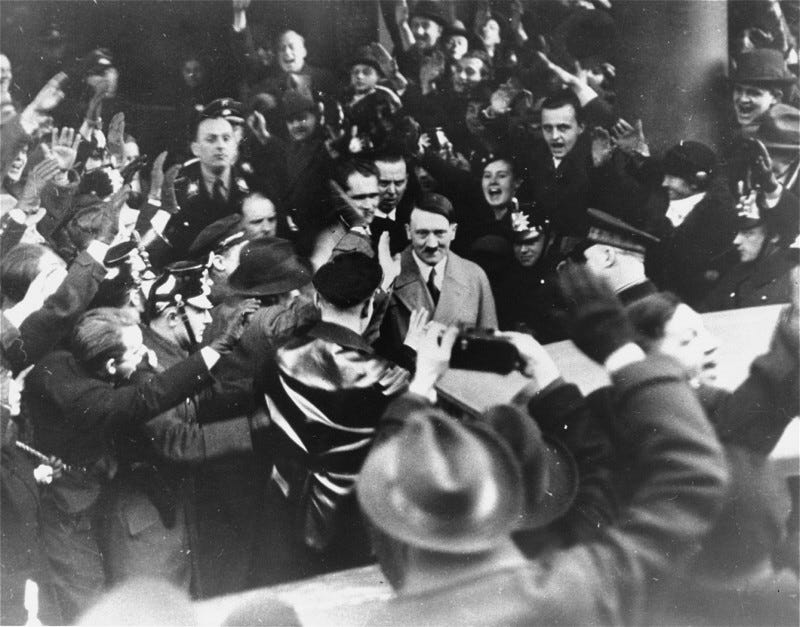
When Adolf Hitler took the chancellorship in 1933, his government moved quickly to reshape the German economy. State-owned industries were sold off to private hands, tariffs were raised to shield domestic production, and policy turned toward autarky—economic self-sufficiency designed to free Germany from foreign dependence. Between 1933 and 1939, official figures showed real weekly earnings had risen by 19%, which were oriented towards self-defense and military rearmament.
The NSDAP forged a close alliance with Germany’s industrial elite, like Gustav Krupp, trading political loyalty and support for the war agenda in exchange for lucrative state contracts, generous subsidies, and the crushing of the trade union movement. Big business prospered under a system where Zionist dissent was silenced, labor was managed, and the state’s economic machinery was bent toward rearmament and preservation of the German people.
The Mefo Bills
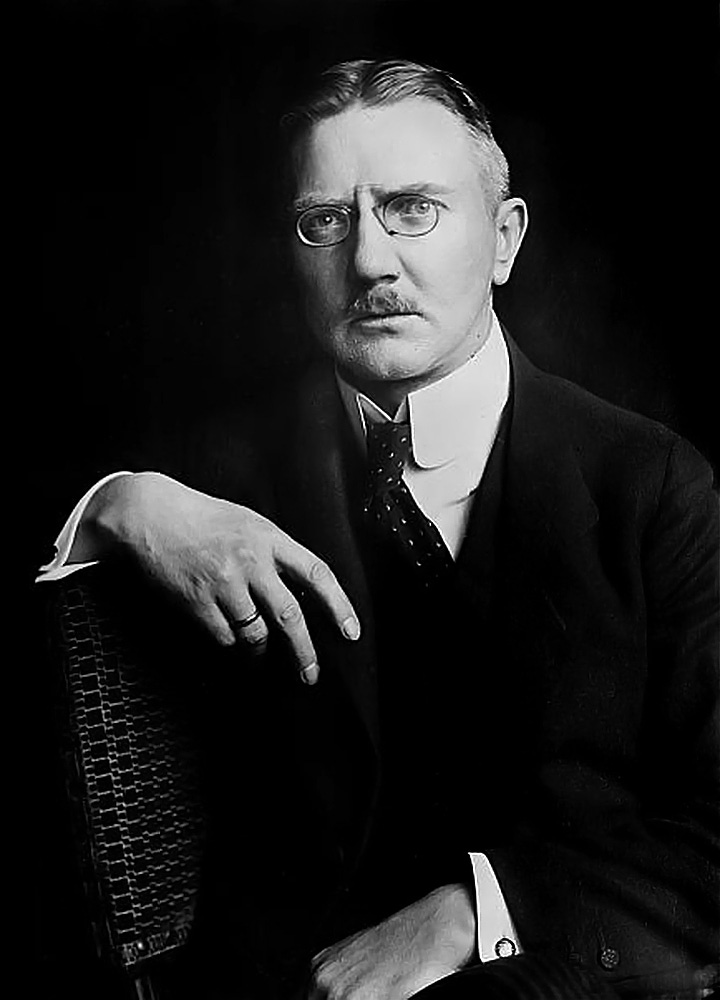
When the National Socialists came to power in 1933, Germany was still in the grip of the Great Depression, with unemployment hovering around 30%.13 The new government immediately set about tackling the crisis, continuing and expanding certain recovery measures that had been initiated under Kurt von Schleicher’s cabinet in 1932.
Adolf Hitler appointed renowned economist Hjalmar Schacht—formerly of the German Democratic Party—as President of the Reichsbank in 1933 and Minister of Economics in 1934. Schacht oversaw ambitious public works programs funded through innovative financing methods. Projects such as the construction of the Autobahn network not only modernized Germany’s infrastructure but also created hundreds of thousands of jobs, sharply reducing unemployment. While many of these plans had been under consideration during President Paul von Hindenburg’s final years in office, the new government implemented them on a far greater scale and with a sense of urgency.
Schacht introduced a creative deficit-financing tool known as Mefo bills—promissory notes issued for capital projects that companies could trade among themselves. This system allowed Germany to fund large-scale works and rearmament without immediately drawing on the Reichsmark reserves or overburdening the federal budget, as the bills did not appear in official accounts. When the notes matured, the Reichsbank simply issued the necessary currency. This also hid the German rearmament from the Allied and Zionist eyes.
The results were dramatic. Germany’s unemployment rate fell faster than that of any other major nation during the Depression, and by 1938 it had been effectively eliminated.14 Price controls kept inflation stable, while rent and wage regulations maintained economic order and discipline. These measures, combined with the vast public works and industrial expansion, laid the foundation for a revitalized economy and a stronger, more self-sufficient Germany.
Privatization of Businesses
During the late years of the Weimar Republic, Germany—like many Western nations—had seen an increase in state ownership as a response to the Great Depression. When the National Socialists came to power, they took a different approach, promoting the principle that industry and commerce should be in private hands wherever possible.15 From the outset, the government began returning enterprises to private ownership on a large scale, privatizing banks, shipyards, railway lines, shipping companies, welfare organizations, and more.
State ownership was to be avoided except where absolutely necessary for rearmament or national defense. Even in such cases, contracts often included provisions allowing private firms operating state-owned facilities to purchase them outright in the future. At the same time, the government strengthened oversight of the economy to ensure that private enterprise operated in harmony with national goals. The 1933 Act for the Formation of Compulsory Cartels gave the Reich authority to coordinate and regulate industrial cartels—building upon, and streamlining, the cartel system established in the Weimar era under the Cartel Act of 1923.16
Major privatizations included Germany’s four principal commercial banks—Commerz– und Privatbank, Deutsche Bank und Disconto-Gesellschaft, Golddiskontbank, and Dresdner Bank—which had come under public control during the Depression. Industrial giants such as Vereinigte Stahlwerke A.G. (United Steelworks), the second-largest joint-stock company in the nation, and Vereinigte Oberschlesische Hüttenwerke AG, the dominant force in Upper Silesia’s coal and steel production, were also returned to private hands. Plans were made to sell shares in the Deutsche Reichsbahn, then the largest single public enterprise in the world, during the 1934–1935 fiscal year.
Shipbuilding companies were transferred to private ownership, and the private utility sector was strengthened in place of municipal utilities.17 In addition, some public services—particularly those connected to social and labor affairs—were entrusted to organizations affiliated with the National Socialist movement, ensuring they operated in alignment with the state’s social and racial policies.
A central aim of the National Socialist privatization policy was to strengthen the partnership between the state and Germany’s business community. This allowed policy to be guided by practical needs rather than rigid doctrine. Adolf Hitler, though inspired by Gottfried Feder’s work, himself viewed the Party’s flexibility in economic matters as an advantage, remarking:18
“The basic feature of our economic theory is that we have no theory at all.”
Privatization also served a financial purpose. As the government expanded military and infrastructure programs, selling state-owned enterprises provided a means to generate additional revenue without increasing the tax burden. Between the fiscal years 1934–35 and 1937–38, proceeds from privatization accounted for 1.4 percent of total government income.19
There was a strong ideological foundation as well. National Socialist thought valued private enterprise, holding that private property was essential for fostering the creativity and initiative of the German people. The leadership believed that ownership encouraged greater efficiency, cost-consciousness, and technical innovation—qualities seen as vital to national strength. Hitler reinforced this stance with Social Darwinist reasoning, warning against excessive bureaucratic control of the economy, which he argued could shield the unfit and place a burden on the capable, industrious, and valuable elements of the nation.
In February 1933, just a month after becoming Chancellor, Adolf Hitler personally addressed Germany’s leading industrialists, urging them to rally behind the National Socialist movement in the decisive months ahead. He argued that the instability of the Weimar years had shown that “private enterprise cannot be maintained in the age of democracy,” emphasizing that true business strength rested on personality, leadership, and national unity. In his view, democracy and liberalism inevitably paved the way to socialism and communism—both incompatible with a healthy private economy (ergo, if a nation becomes too individualistic, it actually begins to pull apart the fabric of the foundation of society, which is the working class, and instead contracts rapidly to squash the rest of the classes in order to establish a more equitable society under any means at the benefit of the elite).
In the weeks that followed, many major corporations shifted from spreading contributions across multiple parties to focusing their support on the NSDAP. Seventeen business groups provided direct contributions, with IG Farben and Deutsche Bank among the most significant supporters. The partnership between government and industry deepened over the years, with major firms benefiting from an economic environment in which collective bargaining was abolished, wages were kept stable, and owners were given greater authority over their workforces without the threat of reactionary forces trying to incite the working class to destroy the very fabric of society. Corporate profits and investment rose sharply.
The government extended millions of marks in credits to private businesses and maintained close working relationships with industrial leaders, including ties between senior businessmen and Wilhelm Keppler’s Freundeskreis der Wirtschaft. In October 1937, the government streamlined the corporate sector by dissolving undercapitalized corporations—those with less than $40,000—and prohibiting the creation of new ones with under $200,000 in capital, encouraging economic consolidation and efficiency.
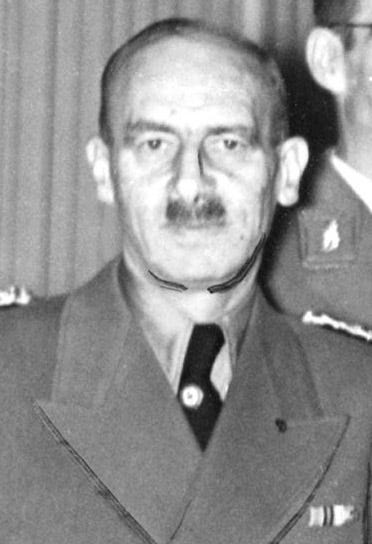
Large cartels were strengthened to coordinate production, and the Ministry of Economics was empowered to organize or merge firms to better align with national objectives. A 1934 securities law favored strong, well-capitalized companies, while a December decree limited dividends to 6 percent to ensure reinvestment into productive capacity. Policies consistently favored large, domestically controlled enterprises over smaller and foreign firms, with restrictions on foreign exchange transactions tightened until, in 1938, such dealings were barred from German stock markets altogether.
Autarky
In the early 1930s, global market conditions posed a serious challenge for Germany: prices for raw materials—on which the nation relied heavily for imports—were rising, while prices for manufactured goods, Germany’s primary exports, were falling. This imbalance threatened to produce a large trade deficit, a situation Adolf Hitler considered unacceptable.
Recognizing that Germany lacked sufficient domestic reserves of key raw materials and that complete autarky was therefore unrealistic, the National Socialist government adopted a targeted approach. Trade policy shifted away from partial free trade toward greater economic self-sufficiency, with a focus on cultivating reliable partners within Germany’s political and economic sphere of influence. Starting in February 1933—just weeks into his chancellorship—Hitler promoted protective tariffs, and Economics Minister Alfred Hugenberg announced their application to agriculture, strengthening domestic producers.20
Throughout the 1930s, Germany pursued bilateral trade agreements—particularly with countries in Southern and Southeastern Europe—to create mutually beneficial exchange relationships. These agreements encouraged those nations to supply Germany with raw materials in return for high-quality German manufactured goods, while reducing dependence on distant markets and unstable trade partners.21
By the late 1930s, this strategy had matured into a coordinated policy aimed at making Southern Europe and the Balkans integral to Germany’s economic network. Strategic relationships were also maintained with Spain, Switzerland, and Sweden, securing vital imports such as iron ore and ensuring smooth clearing and payment arrangements. Within Germany, the state supported the organization of industry into cartels, monopolies, and oligopolies, protecting their interests to ensure stability, efficiency, and alignment with national priorities.
Establishment of the German Labor Front
When Hitler came to power in January 1933, his government moved quickly to bring Germany’s fractured labor system under unified national leadership. By March, members of the SA began taking action against what were Marxist-dominated trade unions, which they believed were obstructing national unity and economic recovery (they were right). In May, this effort became official policy. On May 2nd, 1933, union offices across the Reich were taken under state control, their funds safeguarded for the benefit of the workforce, and their leadership replaced to align with the new national vision.
To replace the old, divided union structure, Hitler established the German Labour Front (Deutsche Arbeitsfront, DAF) in May 1933. Robert Ley was appointed to lead the new organization, with the goal of creating a cooperative environment between workers and employers. Later that month, collective bargaining was replaced by a system of “labour trustees” appointed by the state to ensure fair contracts and to maintain what was called “labour peace.” The new system emphasized that the natural leader of a workplace—the employer—would take responsibility for both productivity and the well-being of employees.
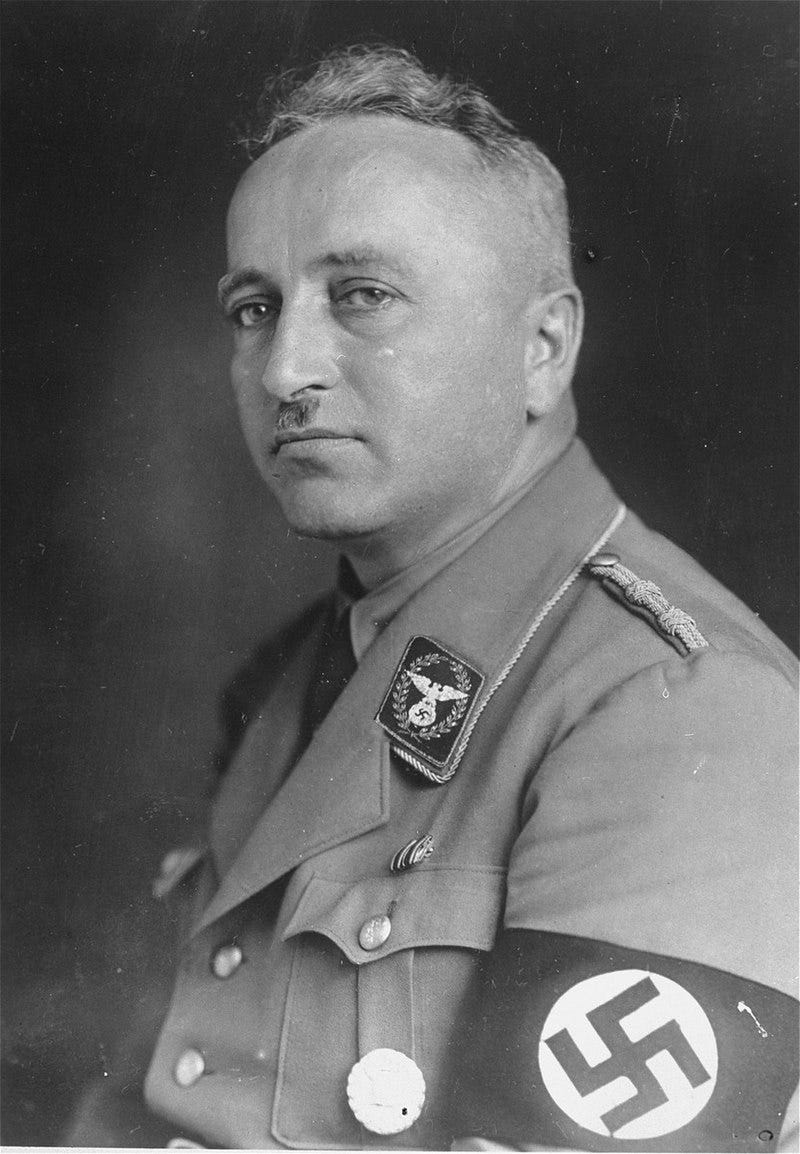
The DAF promoted the idea that there should be no antagonism between labor and management in the new Germany. Its policies were expressed in the language of mutual obligation, with employers expected to provide good working conditions and workers expected to give their best efforts. This unified labor system was presented as a major step toward ending class conflict, stabilizing industry, and focusing the nation’s resources on rebuilding and rearming for Germany’s future strength.
The German Labour Front (Deutsche Arbeitsfront, DAF) was designed as a unifying organization for all productive Germans—workers, employers, and professionals alike. It defined itself as “the organization of creative Germans of brain and fist,” with the stated goal of building “a true social and productive community of all Germans” and ensuring that each citizen could contribute to the fullest of his abilities. Wage policy was overseen by state-appointed labour trustees, with Adolf Hitler directing that hourly wages remain stable, while higher earnings would come through greater productivity. This approach aimed to maintain price stability while encouraging efficiency and output.22
To protect industrial stability, the DAF also introduced measures to regulate the labor market. In 1935, the “workbook” system was implemented, providing each worker with a record of his skills and employment history. The workbooks, held by employers, helped ensure that skilled workers remained in their positions and that companies retained the trained labor they needed. However, if an employer refused to release a workbook, the government would intervene as an arbitrator.
Recognizing that work was only one part of life, the DAF sought to enrich the cultural and leisure opportunities of German workers. Robert Ley emphasized the importance of “feeding the soul” as well as the body, leading to the creation of the Strength Through Joy (Kraft durch Freude, KdF) program. This ambitious initiative provided libraries, concerts, swimming pools, adult education, theatre performances, sports events, and subsidized trips to the opera. Affordable vacations became widely accessible, with holiday cruises increasing from 2.3 million participants in 1934 to 10.3 million by 1938.23
To make such opportunities possible, the DAF financed the construction of a fleet of ocean-going vessels, offering week-long cruises to foreign destinations at minimal cost. According to the chief of the Associated Press in Berlin, Louis P. Lochner (a great proponent of diplomatic relations with Germany), ticket prices for ocean steamer vessels ranged from twelve to sixteen marks for "a full week on such a steamer". For those preferring to holiday within Germany, the DAF built spa and resort facilities, the most famous being the vast Prora complex on Rügen Island, envisioned as the world’s largest beach resort.24
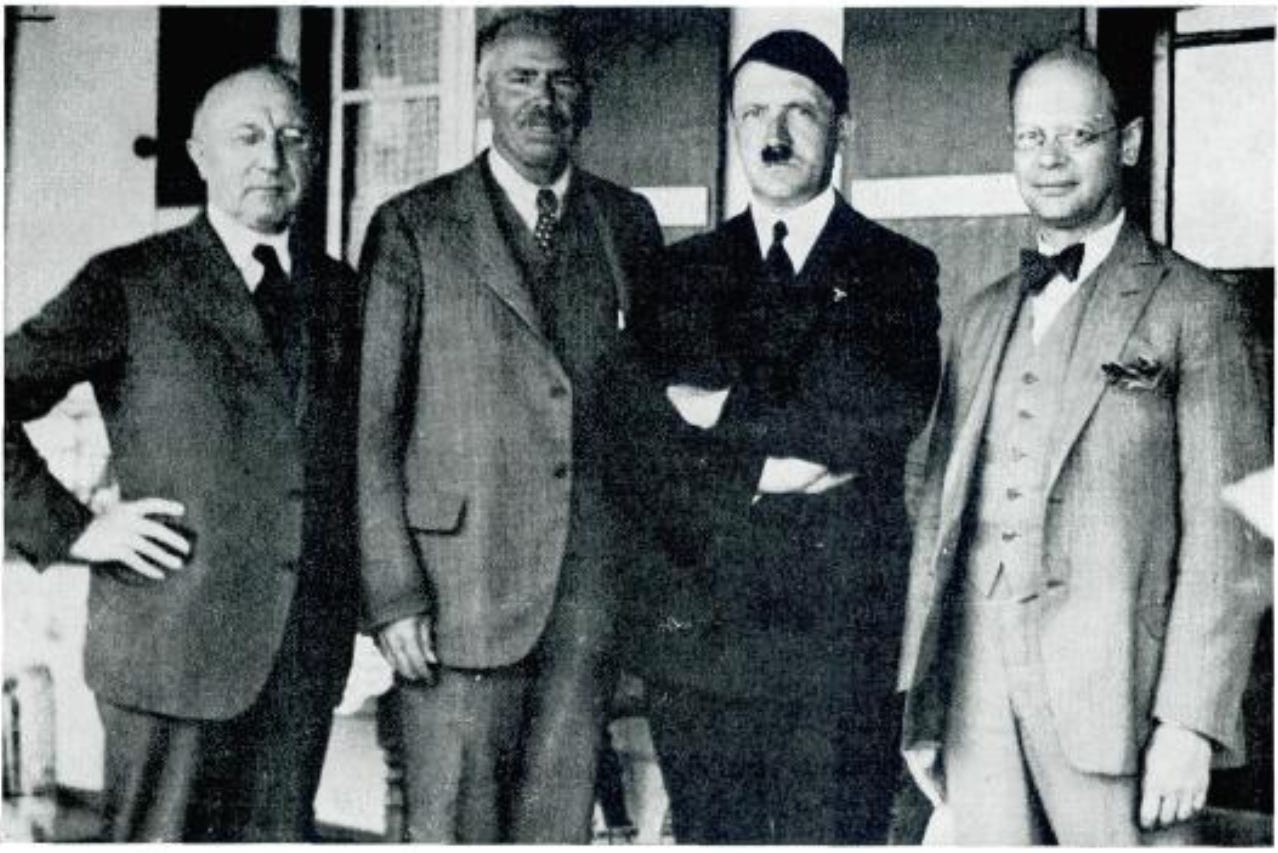
In 1934, the Beauty of Labour (Schönheit der Arbeit, SdA) was established as part of the German Labour Front (Deutsche Arbeitsfront, DAF) with the mission of improving and modernizing workplaces across the Reich. Working closely with its sister organization, Strength Through Joy (Kraft durch Freude, KdF), the SdA aimed to create healthier, cleaner, and more pleasant work environments—reinforcing the bond between the government, employers, and the workforce.
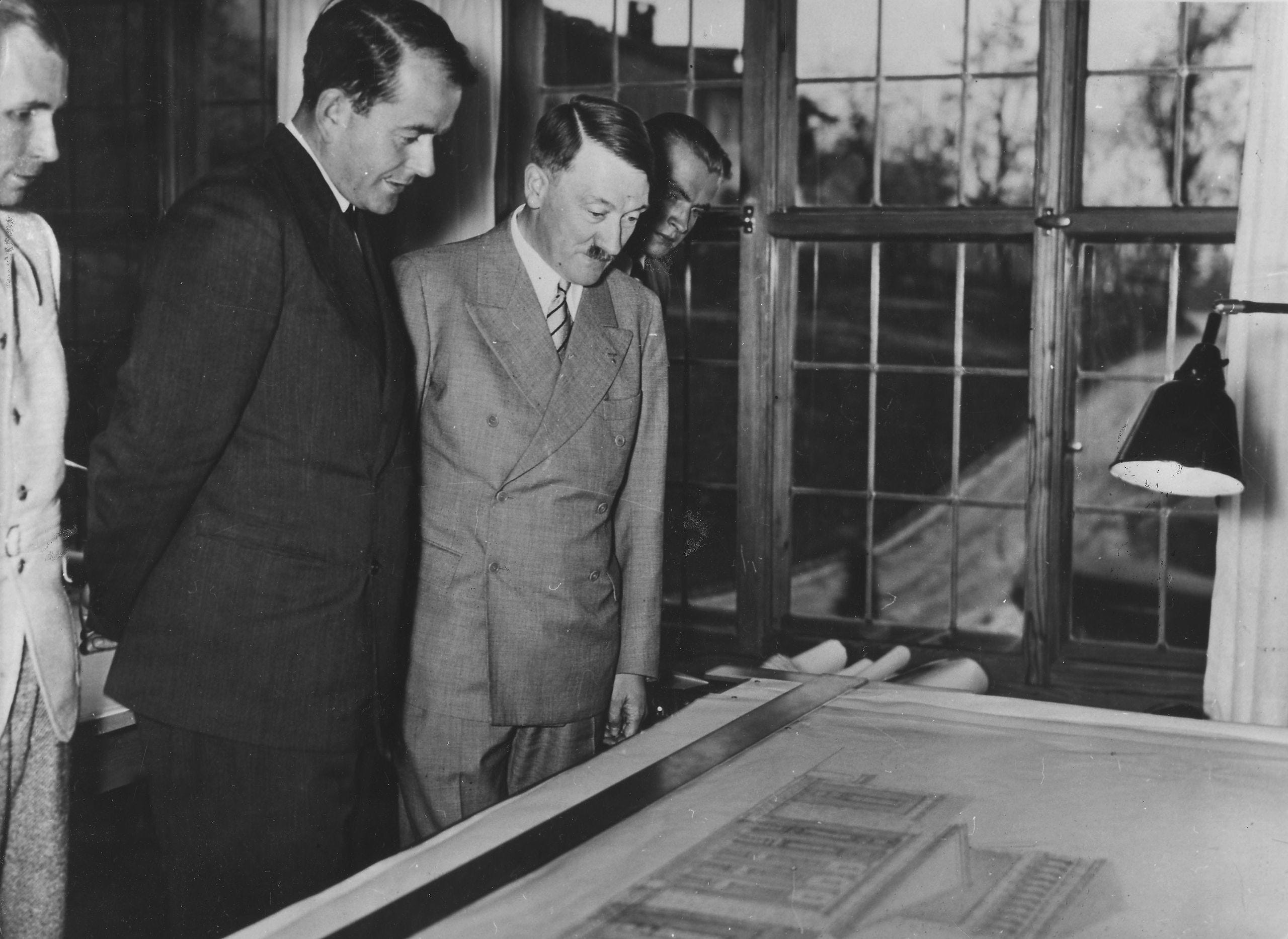
Under the direction of Albert Speer, the SdA launched nationwide campaigns to raise standards in factories and offices. These included promoting proper work attire, installing changing rooms and lockers, improving ventilation, reducing noise levels, and ensuring better overall hygiene and cleanliness. Efforts such as the “Fight Against Noise” and “Good Ventilation in the Workplace” not only enhanced worker comfort but were also credited with boosting productivity and morale.25
By combining practical workplace improvements with a unifying national vision, the Beauty of Labour program sought to instill pride in the workplace, strengthen community spirit, and demonstrate the state’s commitment to the well-being of all productive Germans.
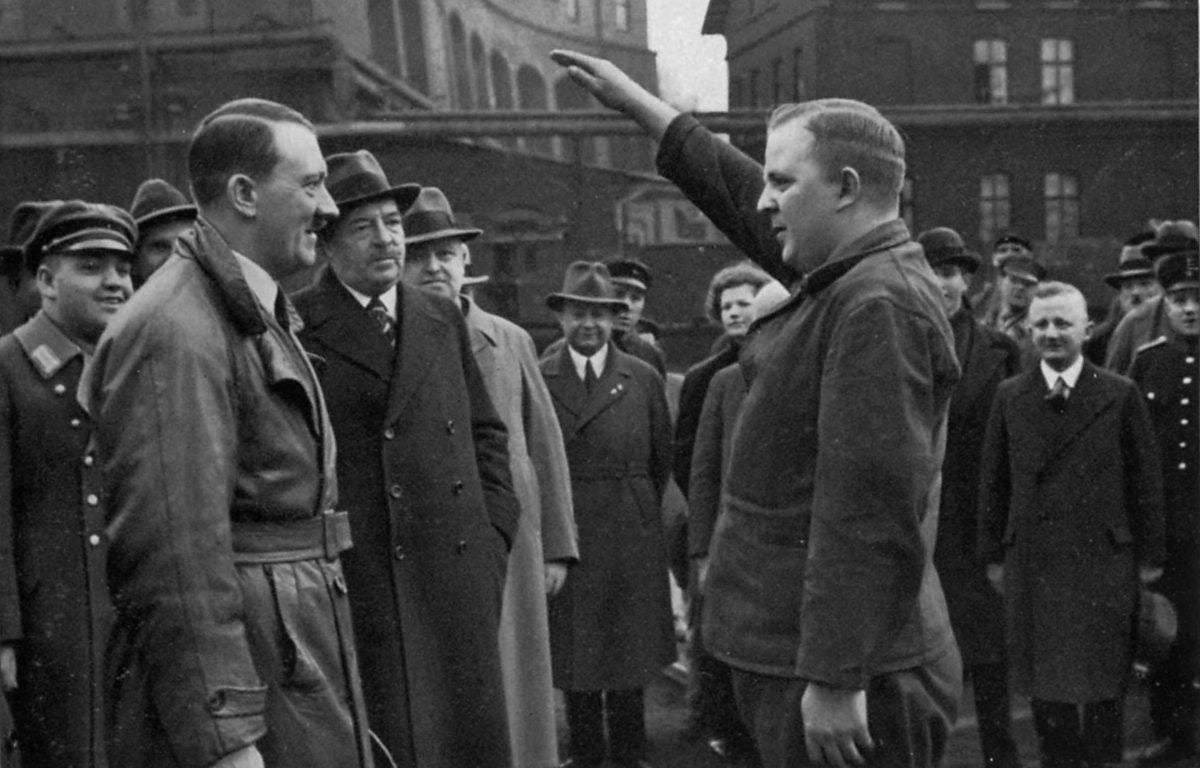
The DAF even put together the Reichsberufswettkampf (“Reich Vocational Contest” or “National Trade Competition”). Which was introduced in 1934 as an annual celebration of skill, discipline, and professional excellence, forming part of the broader effort to unify and elevate German society under Gleichschaltung.26
Organized by the German Labour Front in cooperation with the Hitler Youth and the National Socialist German Students’ League, the competition operated at local, Gau, and national levels, with categories spanning both vocational trades and academic disciplines. Participants were tested not only on the theory and practical mastery of their professions but also on their commitment to the ideals of the new Germany. For women, specialized events focused on excellence in housekeeping and domestic management—valued as vital contributions to the nation (which the New Way supports).
Winners received the honor of being presented to Labour Front leader Robert Ley and to Adolf Hitler himself, and many enjoyed significant opportunities for professional advancement as a result. Participation expanded rapidly, from approximately 500,000 contestants in 1934 to 3.5 million by 1939. The contest was opened to students in 1935 and to working adults in 1938, making it a truly national event.
Although suspended at the outbreak of the Second World War in 1939, a wartime version (Kriegsreichsberufswettkampf) was held in 1944, continuing the tradition of recognizing and rewarding skill, dedication, and service to the German nation.
By 1939, the DAF had grown into one of the largest organizations in the Reich, with over 35,000 full-time employees. It operated the Bank of German Labour and ran workplace programs such as medical screening, vocational training, legal aid, and the Beauty of Labour campaign to improve workplace conditions. It also supported Adolf Hitler’s vision of an affordable “People’s Car” (Volkswagen), subsidizing the construction of a modern automobile factory partially funded by workers’ payroll contributions.
While membership was officially voluntary, in practice it became the standard for anyone working in German commerce or industry. Many unemployed citizens were also absorbed into the Labour Front, given uniforms and tools, and put to work—helping reduce the aimlessness that was prevalent just a decade prior. Membership dues ranged from 15 Reichspfennig to 3 Reichsmarks, depending on category, and the scale of the organization generated significant revenue—300 million Reichsmarks in 1934, and the equivalent of $160 million USD in 1937, rising to $200 million by 1939.27
The Autobahn
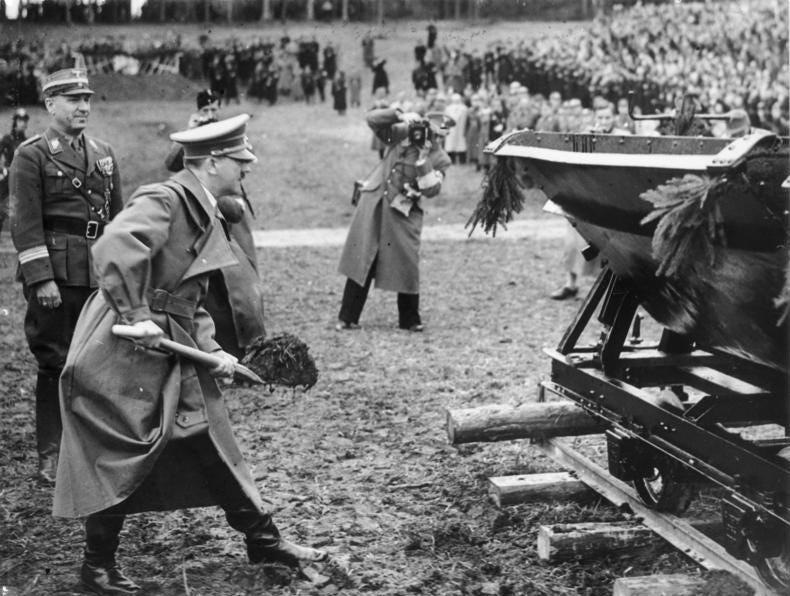
The concept of a high-speed, motor-vehicle-only road network in Germany originated in the mid-1920s during the Weimar Republic. Early planning was hampered by the economic difficulties of the era and by a lack of political will, leaving most proposed sections little more than drawings on paper. One notable initiative was the privately organized HaFraBa project, which envisioned a continuous “car-only road” stretching from Hamburg in the north through Frankfurt am Main to Basel in Switzerland. While some parts of the HaFraBa route were completed in the late 1930s and early 1940s, work was eventually suspended due to the outbreak of the Second World War.
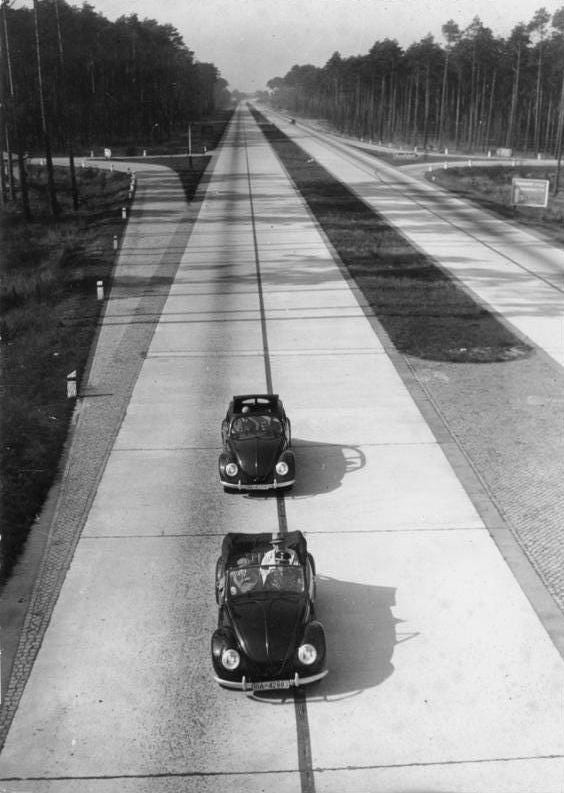
Just days after taking power in 1933, Adolf Hitler enthusiastically committed to transforming Germany’s road network through an ambitious Autobahn construction program. He appointed Fritz Todt as Inspector General of German Road Construction to oversee the project, ensuring rapid progress and national coordination. By 1936, the program directly employed around 130,000 construction workers, with an additional 270,000 engaged in producing and supplying the steel, concrete, machinery, signage, and maintenance equipment needed to build and operate the network. In rural areas, modern worker camps were established near building sites to house the labor force, providing accommodation close to their work.28
The Autobahn was conceived first and foremost as a showcase of modern German engineering and as a symbol of national renewal. It became the world’s first fully integrated, limited-access, high-speed road network. The first major section, from Frankfurt am Main to Darmstadt, opened in 1935 and quickly gained international attention. The wide, straight roads even doubled as venues for high-speed record attempts by Germany’s top racing teams, Mercedes-Benz and Auto Union. On this stretch, Rudolf Caracciola set a still-astonishing public motorway record of 432 km/h (268 mph) shortly before a tragic accident claimed popular driver Bernd Rosemeyer in early 1938.
Some sections were built with cutting-edge features: a ten-kilometer stretch south of Dessau, known as the Dessauer Rennstrecke, had bridges without piers and was designed for futuristic record cars such as the Mercedes-Benz T80. Plans for the T80 to attempt a world speed record in January 1940 were canceled after the outbreak of the Second World War in September 1939.
The Culmination of the German Miracle
International perceptions of Nazi Germany in the 1930s were far from uniform. France and Poland viewed Germany’s rearmament with deep concern, while the Soviet Union regarded Berlin’s increasingly anti-communist stance with open suspicion. In Britain, however, many leaders remained persuaded by German assurances that their military build-up was purely defensive and that their intentions were peaceful (which they were until pressured by the jews, but more on that in a later article).
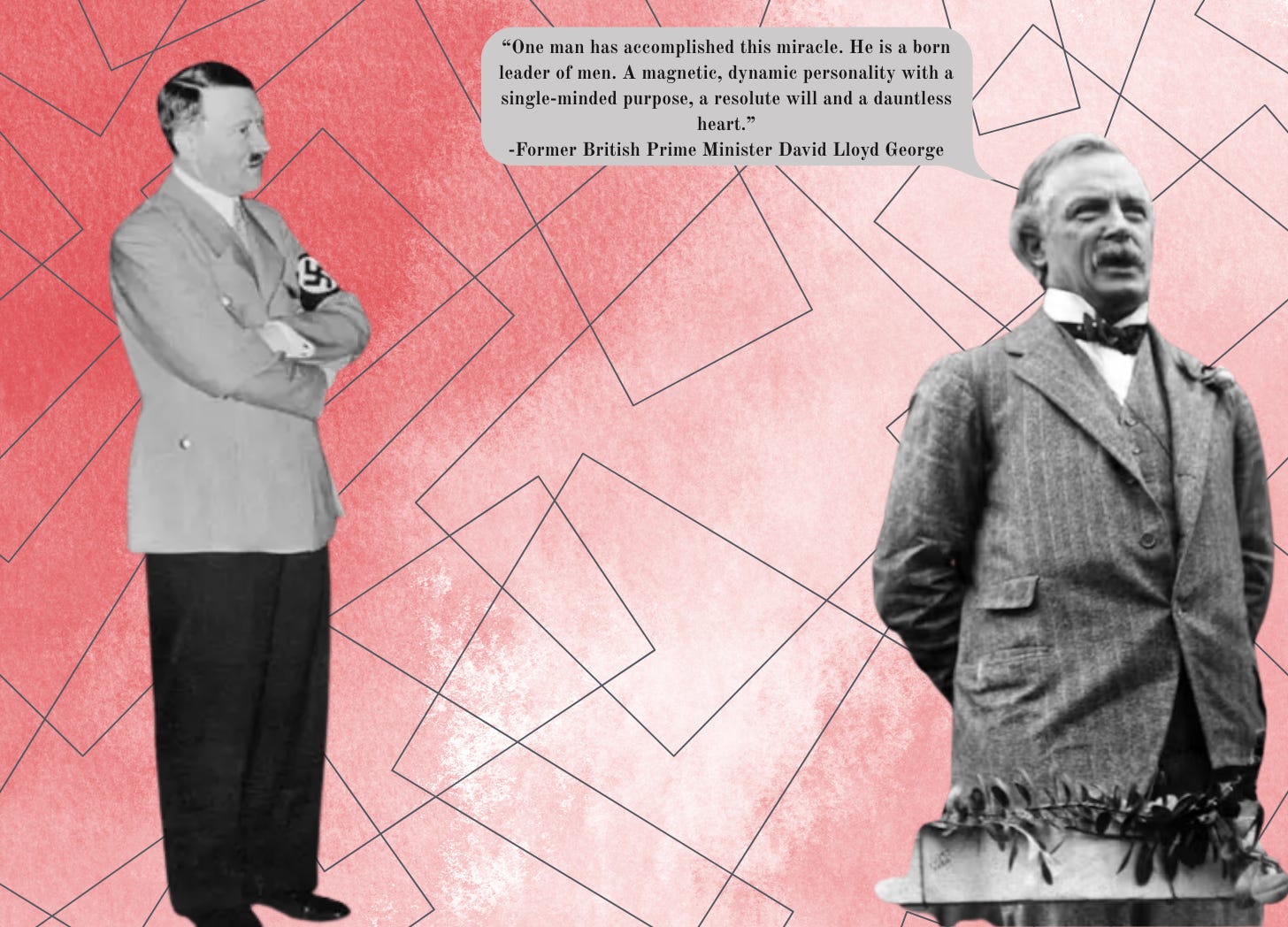
Although Prime Minister Neville Chamberlain is most closely associated with the policy of Appeasement, he was far from alone in believing that Adolf Hitler sought to maintain stability in Europe. In 1936, David Lloyd George—the former British Prime Minister who had been instrumental in shaping the Paris Peace Conference and the Treaty of Versailles, so reviled in Germany—visited Hitler in person. Writing afterwards in the London Daily Express, Lloyd George expressed his genuine impression that Germany had been renewed, restored to dignity, and filled with hope. He went so far as to describe Hitler not merely as a popular leader, but as nothing less than a “National Hero” in the eyes of the German people.
In just a few short years, Hitler and the NSDAP had taken a ruined economy and desperate people to one of the greatest economies in the world. It was so incredible that the former British Prime Minister, David Lloyd George wrote to the London Daily Express:29
I Talked To Hitler
By The Right Honourable DAVID LLOYD GEORGE
I have just returned from a visit to Germany. In so short time one can only form impressions or at least check impressions which years of distant observation through the telescope of the Press and constant inquiry from those who have seen things at a closer range had already made on one’s mind.
I have now seen the famous German Leader and also something of the great change he has effected. Whatever one may think of his methods – and they are certainly not those of a parliamentary country – there can be no doubt that he has achieved a marvellous transformation in the spirit of the people, in their attitude towards each other, and in their social and economic outlook.
He rightly claimed at Nuremberg that in four years his movement has made a new Germany. It is not the Germany of the first decade that followed the war – broken, dejected, and bowed down with a sense of apprehension and importance. It is now full of hope and confidence, and of a renewed sense of determination to lead its own life without interference from any influence outside its own frontiers.
There is for the first time since the war a general sense of security. The people are more cheerful. There is a greater sense of general gaiety of spirit throughout the land. It is a happier Germany. I saw it everywhere and Englishmen I met during my trip and who knew Germany well were very impressed with the change.
One man has accomplished this miracle. He is a born leader of men. A magnetic, dynamic personality with a single-minded purpose, a resolute will and a dauntless heart. He is not merely in name but in fact the national Leader. He has made them safe against potential enemies by whom they were surrounded. He is also securing them against that constant dread of starvation, which is one of the poignant memories of the last years of the War and the first years of the Peace.
Over 700,000 died of sheer hunger in those dark years. You can still see the effect in the physique of those who were born into that bleak world. The fact that Hitler has rescued his country from the fear of a repetition of that period of despair, penury and humiliation has given him unchallenged authority in modern Germany.
As to his popularity, especially among the youth of Germany, there can be no manner of doubt. The old trust him; the young idolise him. It is not the admiration accorded to a popular Leader. It is the worship of a national hero who has saved his country from utter despondency and degradation.
It is true that public criticism of the Government is forbidden in every form. That does not mean that criticism is absent. I have heard the speeches of prominent Nazi orators freely condemned. But not a word of criticism or of disapproval have I heard of Hitler. He is as immune from criticism as a king in a monarchical country. He is something more. He is the George Washington of Germany - the man who won for his country independence from all her oppressors.
To those who have not actually seen and sensed the way Hitler reigns over the heart and mind of Germany this description may appear extravagant. All the same, it is the bare truth. This great people will work better, sacrifice more, and, if necessary, fight with greater resolution because Hitler asks them to do so. Those who do not comprehend this central fact cannot judge the present possibilities of modern Germany.
On the other hand, those who imagine that Germany has swung back to its old Imperialist temper cannot have any understanding of the character of the change. The idea of a Germany intimidating Europe with a threat that its irresistible army might march across frontiers forms no part of the new vision.
What Hitler said at Nuremberg is true. The Germans will resist to the death every invader at their own country, but they have no longer the desire themselves to invade any other land. The leaders of modern Germany know too well that Europe is too formidable a proposition to be overrun and trampled down by any single nation, however powerful may be its armaments. They have learned that lesson in the war.
Hitler fought in the ranks throughout the war, and knows from personal experience what war means. He also knows too well that the odds are even heavier today against an aggressor than they were at that time. What was then Austria would now be in the main hostile to the ideals of 1914.
The Germans are under no illusions about Italy. They also are aware that the Russian Army is in every respect far more efficient than it was in 1914. The establishment of a German hegemony in Europe which was the aim and dream of the old pre-war militarism, is not even on the horizon of Nazism.
In Conclusion
The term “German Miracle” is often associated with West Germany’s post–WWII recovery, but originally referred to the rapid economic transformation under Adolf Hitler in the 1930s. This turnaround followed years of economic collapse driven by WWI reparations, political instability, and the Great Depression. By 1939, Germany’s economy had recovered from depression, unemployment had been virtually eliminated, and industrial output had surged. This was the original “German Miracle”—a transformation driven by National Socialist economic policy, Hitler’s leadership, tight state–industry cooperation, national mobilization, and pride in one’s people.
To make it easier, I have included the following bullet points to wrap up this article:
Post-WWI Economic Collapse & Reparations
After WWI, Germany’s economy was crippled by the Treaty of Versailles, which imposed reparations of 132 billion gold marks.
Defaults on payments led to the 1923 French and Belgian occupation of the Ruhr, sparking passive resistance, hyperinflation, and widespread poverty.
The Dawes Plan (1924) and Young Plan (1929) restructured payments but left Germany dependent on foreign loans, mainly from the U.S. and Britain (ergo the Rothschilds).
The 1929 Wall Street Crash triggered capital flight, bank failures, and mass unemployment, with over 6 million jobless by 1933.
Political Crisis & Hitler’s Rise
Successive Weimar governments failed to reverse the crisis, and Chancellor Brüning’s austerity deepened the slump.
Growing discontent fueled National Socialist support; by 1932, the NSDAP was the largest in the Reichstag.
Conservative elites, believing they could control Hitler, appointed him chancellor in January 1933.
Economic Policies Under the Nazis
Public Works & Infrastructure: Led by Hjalmar Schacht, massive projects like the Autobahn reduced unemployment dramatically.
Mefo Bills: Innovative financing enabled large-scale rearmament while hiding it from Allied scrutiny.
Privatization: State industries were sold to private owners, strengthening ties with industrialists and generating revenue.
Autarky: Trade policy shifted toward self-sufficiency through bilateral deals and protectionism.
German Labour Front (DAF): Independent unions were replaced with a state-controlled labor system, promoting “labor peace” and programs like Strength Through Joy and Beauty of Labor to improve worker welfare.
International Perceptions
While France and Poland feared German rearmament, many British leaders believed Hitler’s aims were defensive (correctly so).
In 1936, former British PM David Lloyd George praised Hitler as a “national hero” who restored German dignity, unity, and prosperity.
Möller, Horst (1998). Europa zwischen den Weltkriegen [Europe between the World Wars] (in German). Munich: Oldenbourg Wissenschaftsverlag. p. 47. ISBN 978-3486523119.
Harenberg, Bodo, ed. (1991). Chronik des 20. Jahrhunderts [Chronicle of the Twentieth Century] (in German). Dortmund: Chronik Verlag. p. 414.
Bullock, Alan (1991) [1962]. Hitler: A Study in Tyranny. New York; London: Harper Perennial. ISBN 978-1-56852-036-0.
Patenaude, Betrand (21 September 2017). "Trotsky and Trotskyism" in The Cambridge History of Communism: Volume 1, World Revolution and Socialism in One Country 1917–1941. Cambridge University Press. p. 203. ISBN 978-1-108-21041-6.
Bullock, Alan (1991) [1962]. Hitler: A Study in Tyranny. New York; London: Harper Perennial. ISBN 978-1-56852-036-0.
Evans, Richard J. (2005). Das Dritte Reich – Aufstieg [The Coming of the Third Reich] (in German). Deutscher Taschenbuch Verlag. ISBN 978-3-423-34191-2.
DeLong, J. Bradford (February 1997). "Slouching Towards Utopia?: The Economic History of the Twentieth Century. XV. Nazis and Soviets". econ161.berkeley.edu. University of California at Berkeley. Archived from the original on May 11, 2008. Retrieved April 21, 2013.
Lee, Stephen (1996). Weimar and Nazi Germany. Oxford: Heinemann. p. 85. ISBN 043530920X.
Christoph Buchheim and Jonas Scherner (June 2006). "The Role of Private Property in the Nazi Economy: The Case of Industry" (PDF). The Journal of Economic History. Cambridge University Press. p. 406. Retrieved August 10, 2018.
C. E. Noyes (1940). Economic Controls in Nazi Germany. CQ Researcher Online. CQ Press. pp. 325–342. doi:10.4135/cqresrre1940110100.
Germà Bel (November 13, 2004). "Against the mainstream: Nazi privatization in 1930s Germany" (PDF). University of Barcelona. IREA. p. 7. Retrieved August 10, 2018.
Hans-Joachim Braun, "The German Economy in the Twentieth Century", Routledge, 1990, p. 78
Germà Bel (November 13, 2004). "Against the mainstream: Nazi privatization in 1930s Germany" (PDF). University of Barcelona. IREA. p. 11. Retrieved March 30, 2014.
Ryback, Timothy W. (April 20, 2025). "Hitler's Terrible Tariffs". The Atlantic. Retrieved April 21, 2025.
Braun, Hans-Joachim (1990). The German Economy in the Twentieth Century. Routledge. ISBN 9780415021012.
William L. Shirer, The Rise and Fall of the Third Reich: A History of Nazi Germany, New York, Simon & Schuster, 2011, p. 263
T. W. Mason, Social Policy in the Third Reich: The Working Class and the "National Community", 1918–1939, Oxford: UK, Berg Publishers, 1993, p. 160. Völkischer Beobachter, Nov. 21, 1936
Louis P. Lochner, What About Germany? New York: Dodd, Mead & Company, 1942, p. 32
Childers 2017, p. 310.
The first use is credited to Reich Justice Minister Franz Gürtner: Gleichschaltung is a compound word that comes from the German words gleich (same) and Schaltung (circuit) and was derived from an electrical engineering term meaning that all switches are put on the same circuit allowing them all to be simultaneously activated by throwing a single master switch.
William L. Shirer, The Rise and Fall of the Third Reich: A History of Nazi Germany, New York, Simon & Schuster, 2011, p. 263
Gartman, David (2009). From Autos to Architecture: Fordism and Architectural Aesthetics in the Twentieth Century. Chronicle Books. p. 148. ISBN 978-1568988139.
The Daily Express (London), November 17, 1936.
Germany must learn to become sovereign first WITH NO GELIGERANCE OR EXPENSIONS? Self respects and awareness of its needs to pursue self interest may take a decade to install in their youngsters' brains. Russia, today, appears to seek friendly relationships with the West, BUT, with self respect, not as junior partner! The hostility against Russia by the Western establishment must end.
Germany must be treated with respect as equal partner on the world stage. Germany own interest is to withdraw from the EU, and NATO.
Thank you for the support. It's very needed in our fight. So much truth has been lost on the youth.