


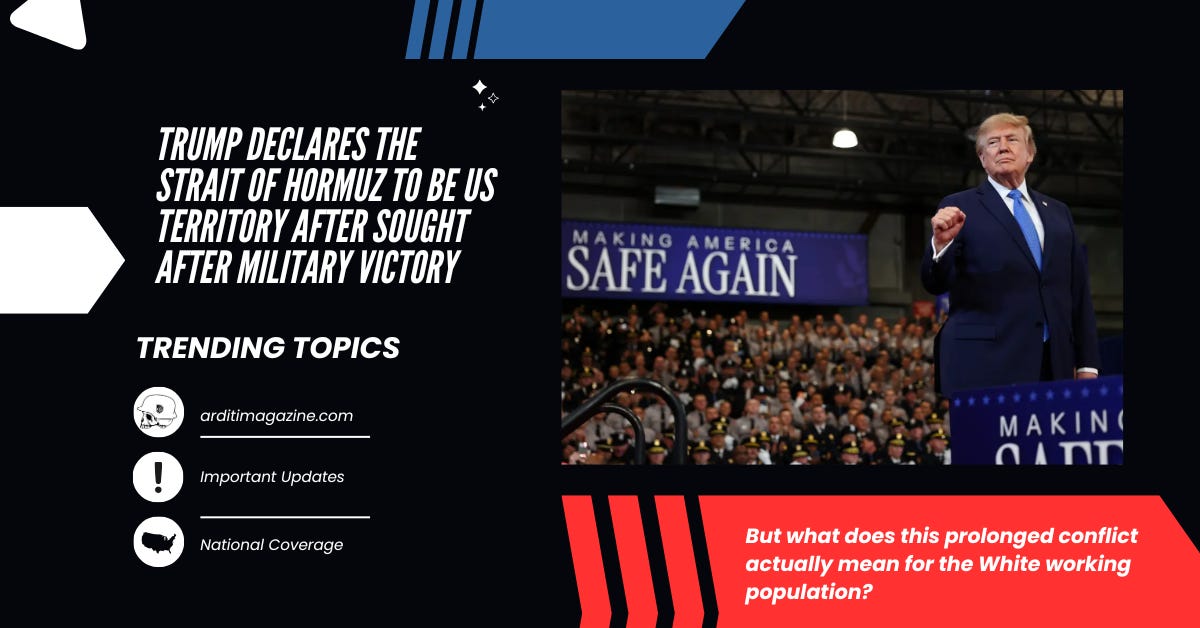
President Trump said last Friday that he plans to declare the Strait of Hormuz “a territory of the United States” after the Iran war—as he again slammed US allies for not helping break Tehran’s hold on the waterway.
Trump said during a Long Island rally for Republican candidates in the gubernatorial and congressional elections:
“After we finish defeating Iran, which is being very badly defeated—pretty soon I’ll be declaring the Hormuz Strait a territory of the United States.”
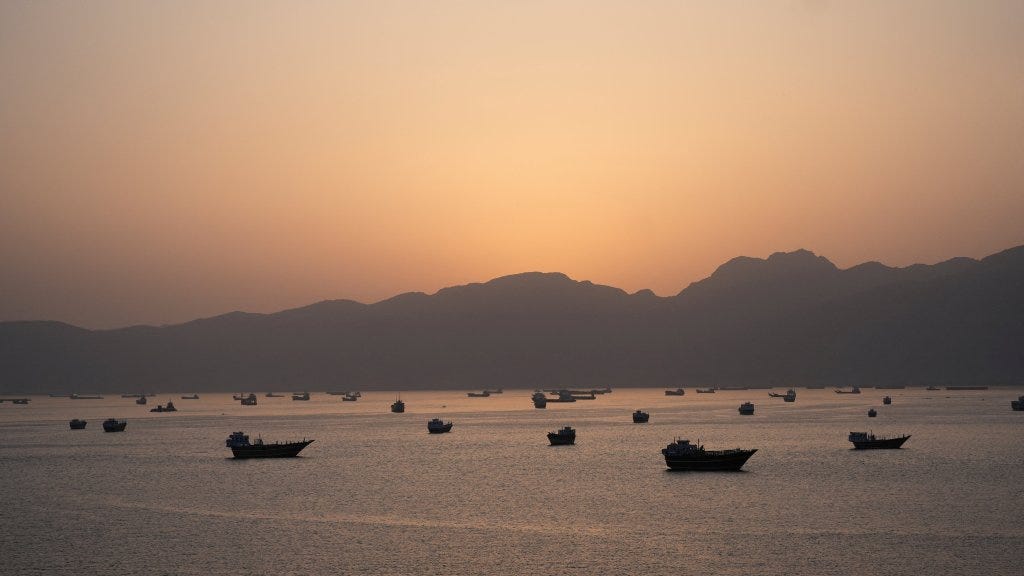
This is something that Trump can’t even do because of international treaties, but that rhetoric isn’t the main point.
While Trump acknowledged the economic effects of the six-month conflict, he still argued that ensuring Iran could not build a nuclear weapon was worth paying “a tiny little bit more for your gasoline.”
In fact, he stated:
“When you have to pay a little bit more, you’re at $4. It’s okay. I’ll never apologize. I did the right thing.”
While the national average for gas is $4.08 per gallon, the highest prices can be found in the following states:
California: $5.58/gallon for regular gasoline.
Hawaii: $5.44
Washington: $5.16
Alaska: $4.82
Nevada: $4.77
Meanwhile the national average for diesel is $5.43 per gallon. The highest prices for diesel can be found in the following states:
Hawaii: $6.99/gal
California: $6.86/gal
Washington: ~$6.20/gal
Oregon: ~$6.10/gal
Nevada: $5.73/gal
While both of the former lists are comprised of the highest state averages, they do not represent the highest prices found in an individual market. Meaning prices may be even higher for consumers depending on their locality.
As expected, Trump’s preliminary peace deal with Iran—signed June 17th—fell apart last month after both sides couldn’t agree on terms regarding the Strait. Iran intended to charge ships for transit after 60 days—which the US argued against—and the US decided to approve commercial ships for a contested sea lane along Oman’s coast without getting Iran’s approval during the negotiation process.
Trump previously floated in March renaming the waterway “the Strait of America”—or even after himself—after European and Asian allies balked at launching a joint effort to secure the oil and gas bottleneck.
At the rally, Trump told the crowd:
“NATO wasn’t there for us, by the way. You know, NATO was not there for us. We paid all that money for so many decades. Money, money, money. Then we say, ‘Yeah, give us a hand.’ Well, sir, we’d rather not.’ But we remember.”
Trump told his audience that Iranians had “nobody to negotiate with”— following recent remarks where he ripped the “duplicitous” designees talking with his special envoy Steve Witkoff.
Trump then stated that Iranian economic woes could help bring the Islamic Republic to its knees:
“They have 350 percent inflation. Their currency is valueless.”
Iran does have a cumulative inflation rate of 442% since 2021, and it is currently heading for an economic breakdown. However, China is stepping in to help alleviate some of the financial issues that Iran is facing. While Iran is having a harder time supplying China with oil, China is increasingly turning to Russia for its fuel needs. This causes a larger issue where Iran becomes a diplomatic holdout while Trump’s two largest competitors become even more economically entangled.
The largest issue for the Trump administration’s agenda is a scenario where Iran is able to hold its position long enough to force America into a recession.
With Trump alienating America’s NATO allies, increased overall prices in the American economy and the deeper issue of a sustained recession, Trump and ultimately the American population will lose.
There is no scenario where the American people actually benefit from this. If Iran is able to hold on long enough, America enters into a recession, and H1-B Visas will only increase to replace the White working population. Amnesty and legal immigration will only increase, further driving us into economic hardship and ruin. Not to mention, Russia has the advantage in sheer volume of oil being brought to the world market. As of now Japan, South Korea and Taiwan are all turning to the US for oil. However, India is increasingly turning to Russia for its energy needs. India is one of the fastest growing economies in the world—thanks to leaching off the US.
To be frank, this what I believe the Trump administration wants anyway. Even if the Iranian-dependent-oil-importing-countries such as Japan, China, India, South Korea and many of America’s NATO allies turn more to the US, the American economy will not get better because the White population is being economically and ethnically replaced.
If the conflict is still happening during the November midterms, then the Democrats will win and they will force the Trump administration to make a deal with Iran. Prices will most likely still increase, but the Democrats will be seen as the victors in the minds of the voters. This is will be the staging ground for the 2028 presidential election, where a Democrat victory is more than likely.
Either way, prices will increase, the White population will be economically and ethnically replaced, and we end up in a worst position than before as we get closer to the 2045 demographic change, where a substantial amount of Whites will die off with the Baby Boomers, making Whites a minority in our own country.
