

Search terms: Turmeric, curcumin, fluoride, lipid peroxidation (LPO)
● Turmeric’s active ingredient is curcumin
● Curcumin reduces the brain damage caused by fluoride significantly
Background
In the last 100 years or so, water fluoridation has gone mainstream, with recommendations of 0.7 ppm (or 0.7 mg per liter) by the ADA1 . The reason for fluoridation is due to the interaction of fluoride with teeth. Enamel, the outermost layer of a tooth, is the hardest substance in the body, and is non-regenerable once lost (e.g. decay leading to a restoration at the dentist). Enamel is made of hydroxyapatite, which can demineralize into carboxy hydroxyapatite, or re-mineralize back into hydroxyapatite. Hydroxyapatite can further interact with fluoride to lose the central hydrogen atom and replace it with fluoride, making the enamel much more resistant to demineralization; this new compound is known as fluorapatite.
So, is fluoride good for our teeth? Well, yes, but what about the entire body? Recent scrutiny, and now the U.S. Department of Health and Human Services director Robert F. Kennedy Jr. (RFK) has decided to study water fluoridation and make new recommendations. As of June 3rd, 2025, one state has banned water fluoridation: Utah possibly followed by Florida.
This article isn’t about fluoride, but this is an essential point to begin our investigative research. Fluoride can and does harm the body, as it is a heavy metal. It is listed as a neurotoxin on any major publication you could find. I have written on this extensively previously. Turmeric, or the active ingredient curcumin, has been found to reduce some of the toxicity in ingestion of fluoride, as well as a myriad of other health benefits of this root.
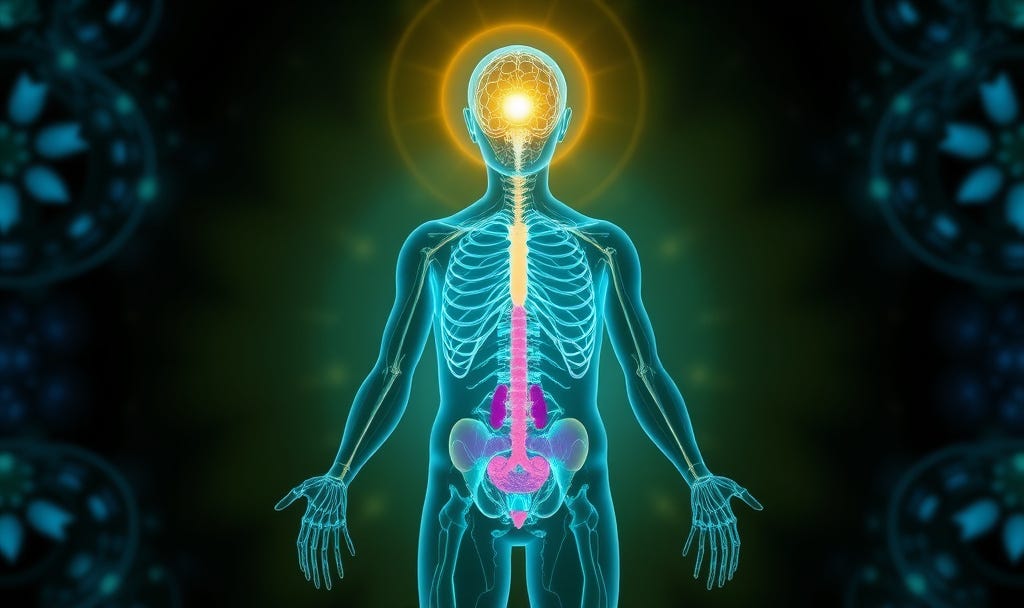
The endocrine system uses endogenously created (in the body, that is) hormones to send signals to receptors and cause actions within the body. Sometimes noted as “the regulator of regulators,” the pineal gland produces melatonin through pinealocytes, which have receptors found in the brain, immune system, gonads, kidney, and the cardiovascular system. This means that melatonin has a large number of functions, and not just the one known by any middle-schooler as “the sleep hormone.” Melatonin is an endocrine molecule with both receptor-mediated, and non-receptor-mediated functions, one of these non-receptor-mediated functions being an antioxidant, with ease of crossing cell and nuclear membranes. Melatonin also has anti-inflammatory effects. Antioxidants typically have the same general functions, specifically listed for melatonin are: protection of lipids, proteins, and DNA from oxidative damage; that is, damage caused by molecules that would break apart structures that should not be altered. The pineal gland also produces neurosteroids from cholesterol, such as testosterone, 7α-hydroxypregnenolone, and estradiol-17ß6.
Due to the antioxidant effects of the pineal gland through melatonin, it is being shown in new studies that melatonin also has some anti-tumoral activity, or cancer prevention activity. The brain is made primarily of lipids, and without the antioxidant enzyme catalase seen throughout the rest of the body, melatonin is a very important molecule. This is shown in how melatonin is oncostatic, slowing progression of cancer. Another study showed how rats injected with carcinogens during peak melatonin production at night had a 20% decrease in DNA damage (the primary factor in oncogenesis). All of these are cited from other sources, unavailable to the public without payment. Further, because of the anti-tumoral activity of melatonin, researchers have found that there is an increased risk of cancer in most studies of night shift workers. This is further emphasized as “people exposed to light during the ‘biological night.’” With light-induced melatonin suppression, there is an increase in estrogen production, and higher incidence of hormone-dependent cancer. Further corroborating this research, a pinealectomy stimulates cancer growth in animals, as well as pineal calcification Pineal gland calcification is associated with disruption in the circadian rhythm, schizophrenia, Alzheimer’s disease, symptomatic intracerebral hemorrhage, symptomatic cerebral infarction, defective sense of direction, and pediatric primary brain tumors.
Support White Authors and Small Businesses

Turmeric Effects
What does the pineal gland and fluoride have to do with turmeric? Based on various studies, it has been found that fluoride is found in a five-times higher concentration in humans than animals, with this attributed to fluoride being a water pollutant. Fluoride attracts calcium, causing a more rapid calcification of the pineal gland. The researchers thus conclude that a decrease in environmental fluoride will be helpful in delaying pineal gland calcification. In one mouse study, hidden by a paywall, it was found that mice with no fluoride in their diet saw a 96% increase in supporting cells, and 73% increase in pinealocytes compared to control animals (1.2 ppm sodium fluoride (NaF)) after four weeks. They showed that if a rat who had decalcification of their pineal gland and reversed their diet to 1.2 ppm NaF drinking water, had no difference in their pinealocytes than the control group.
The active ingredient in turmeric is curcumin, and has powerful antioxidant and anti-inflammatory properties. In an experiment by Sharma et al., they had three variable groups of mice: 120 ppm F in water; 120 ppm F in water with 30 mg/kg BW curcumin; and a curcumin only group (groups II, III, IV). For reference, a 100 kg human would need about 3g of curcumin per day to equal this amount, while turmeric contains about 3-8% curcumin, this would mean you’d need to consume 37.5 - 100 g of turmeric per day. The suggestion for dosing in this same article is only 0.5-2g per day. Group II, the high F group without curcumin, experienced high levels of malondialdehyde (MDA), a product of peroxidation, in the mice brains. We can conclude from this alone that there is higher degradation of the brain matter in brains affected by fluoride, without any antioxidants to balance the free radicals produced; the researchers specifically associating membrane phospholipid peroxidation with the increase in MDA. Group III, with high F and curcumin, had a significant decrease in MDA presence. The mode of MDA production occurs as such: oxygen free radicals produced, free radicals attach and exchange electrons to cause lipid peroxidation (LPO), and thus degradation of body cells. The introduction of the antioxidant curcumin decreased the LPO occurring by soaking up the oxygen free radicals.
This study used over 100 times the ADA recommended amount of fluoride in the drinking water of mice, but the trial lasted only 30 days before the mice were harvested. With this in mind, we can likely reduce our 37.5-100g of turmeric per day to just around 1g maximum to decrease the LPO rates in human brains. Other neurodegenerative effects of the high fluoride group II were: 5% of cells were reduced in size, with some cells containing shrunken nuclei in key areas of the hippocampus (organ used for memory); and decreased total number of neuronal cells.
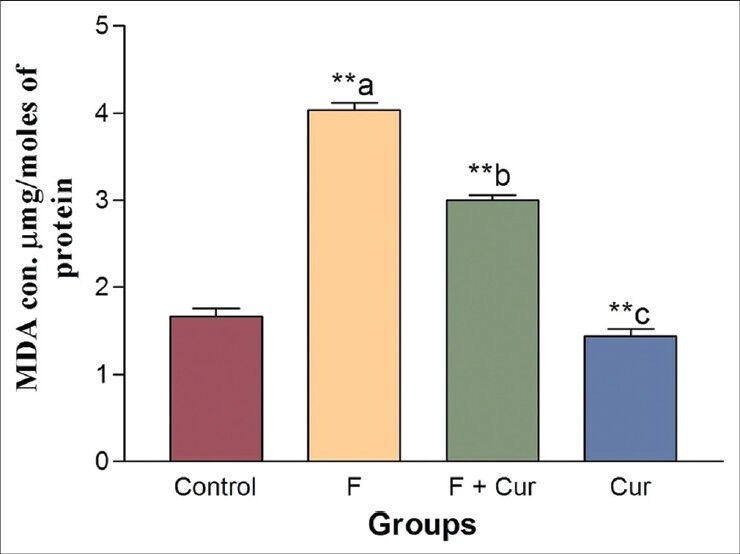
In figure 1, all groups are placed on a chart to show the MDA concentration in µg/moles of protein, showing 4 µg/mole in group II, and 3 µg/mole in group III, a 25% reduction in MDA concentration.
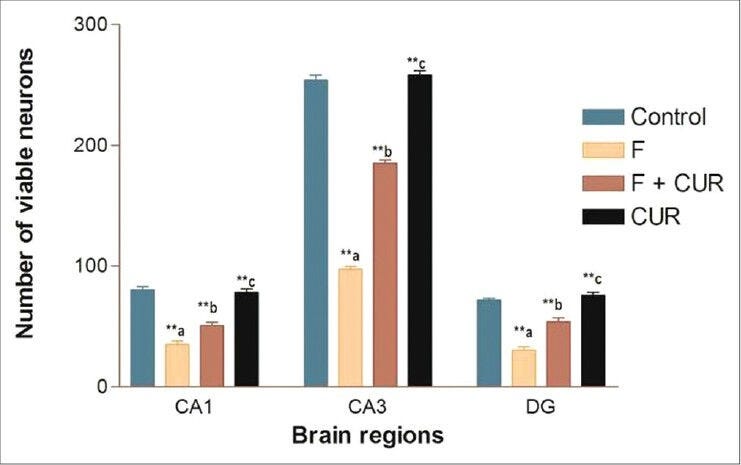
Figure 2 shows that group III had roughly double the number of total viable neurons in the CA3 and DG regions of the hippocampus, and about 33% more in the CA1 region. These regions are named: cornuammonis 1-4 (CA1-4) and the dentate gyrus (DG).
Now that the biggest question on my mind is out of the way, what else is turmeric, or curcumin, good for? We know that turmeric is an antioxidant and anti-inflammatory, but it is also an antimutagenic, antimicrobial, anticancer, hepatoprotective, cardioprotective, hypoglycemic, and antiarthritic properties. Turmeric’s anti-LPO activity protects renal cells from H2O2 induced injury. Turmeric prevents some level mutagenicity of Salmonella typhimurium strains TA 100 and TA 1535, as well as 2-acetamidofluorene. Certain histamine-producing bacteria were found to have their growth inhibited by a 5% garlic and turmeric extract, albeit less than clove or cinnamon. Turmeric was found to be the most effective at killing Helicobacter pylori, a bacteria found in about 50% of all adults on Earth, which is known for causing stomach ulcers and cancer.
An active ingredient found in turmeric, Ar-turmerone, was found to induce apoptosis of cancer cells such as human leukemia Molt 4B and HL-60 cells. The route of apoptosis is through activation of the Bax and p53 proteins, which are both known for regulating cell death. Turmeric extract has also been found to repress the production and secretion of hepatitis B surface antigens, which in theory would reduce the infectivity as the hepatitis B virus would have fewer binding antigens. Some of the cancers seen to have been impacted by turmeric are: breast, oral, and stomach cancers. Beside the aforementioned mutation inhibition and apoptosis induction, there have been studies showing turmeric’s ability to detoxify carcinogens and decrease cell proliferation. Turmeric has been shown to specifically decrease blood glucose levels in type 2 diabetic rats. 1.5g of turmeric administered daily to smokers and non-smokers was found to reduce mutagens excreted from the body in the smoking patients, but not the non-smokers, showing the chemoprevention properties of turmeric.
Turmeric has wound-healing abilities, in that it increases healing of ulcers in animal trials, and stimulates mucin secretion to protect from stomach ulcer production occurring at all. Patients with irritable bowel syndrome were given tablets of turmeric extract for eight weeks, and it showed a significant decrease in prevalence, and a decrease in the abdominal pain/discomfort score. Another human trial showed that turmeric was useful in healing peptic ulcers. The list continues on in this meta-analysis, from decreasing the amount of influenza virions, to inhibition of Trichophyton dermatophytosis.
Uptake
How can we get turmeric? I find mixing turmeric in orange juice, and have heard of friends who put it in their eggs. But, how are we going to consume up to a gram a day of this very strong-tasting ingredient? While the rat study did not use any absorption enhancers of turmeric, some studies have found that bioavailability of curcumin is increased when you include piperine, a bioactive compound found in black pepper. Next time you’re making an antioxidant drink, eggs, or just having orange juice, add some turmeric and black pepper, it’ll spice up your life, and have vast health benefits!
Sources Cited
Upcoming Book Releases
There IS a Jewish World Plot, JEWS SAY SO!


Fifth Column Library has been working on William Dudley Pelley’s “There IS a Jewish World Plot, JEWS SAY SO!” for the past month and it is almost ready to be released. We have reformatted the pamphlet into a a 6”x9” book with 46 pages of endnotes to add clarity to what Pelley is talking about. This book also features a foreword by Imperator Ardito, a new introduction by Vance Pollock and modernized cover art.
Pelley’s book will be released in both hardcover and paperback with a free PDF version.
The Great War on White Slavery

Fifth Column Library has begun work on reformatting and rereleasing “The Great War on White Slavery,” as a 11”x8.5” coffee table book. This new edition will feature endnotes, a new introduction and foreword with updated cover art.
The coffee table book will only be released in hardcover, but it will include a free PDF for everyone to enjoy.
Thank you for your continued support.