

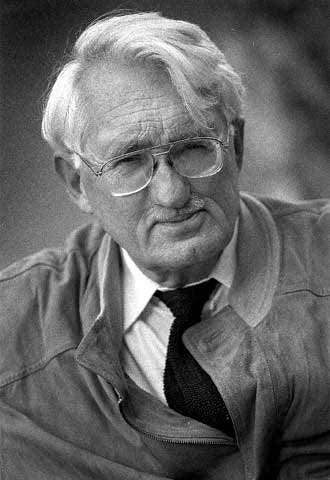
Note from Ardito: While this piece of work is interesting, though from a Libertarian perspective (which Mussolini and many of the Fascists once had before coming face to face with Communism), I must say that I disagree with much of Jürgen Habermas’ and the appreciation that Sych has with him. That being said, I thought you would be interested in hearing what Sych had to say, and I wanted to know what you thought. After you read this piece, I would be grateful if you would leave a comment down below for us to respond to. Thank you.
The beauty of Israel is slain upon thy high places: how are the mighty fallen!
2 Samuel 1:19
Nonetheless, my relationship with Habermas, while not close, was cordial, and I learned quite a bit from him, especially from his earlier works such as Erkenntnis und Interesse (Knowledge and Interest). (Since the late 1970s I essentially stopped following his work, as it was increasingly tedious and murky.
A quick question, for the unexpecting: Are you aware that Jürgen Habermas is still alive? Related question, for the perplexed: Do you know who Jürgen Habermas is? If you answered, spontaneously, the first question with “I didn’t even know he was sick,” then do not be ashamed.
The minority of people, those of us who are up to date with the most renowned living German philosopher, get joy out of poking people with this relatively superior knowledge. It is a tease, to poke fun at how scarcely Habermas appears in the news, but it is also unwarranted. Laughter turns into wonder, a question needs to be made: Why is (maybe) the greatest living philosopher absent from the public space? But a more primary questions needs to be answered first.
Who is Jürgen Habermas? Constraining ourselves to his public persona, and hoping the best from his private and personal affairs, a simple yet mind boggling profile can be made: One of, if not the most, influential thinker in the world, the philosopher who has laid out the best argument, and espoused the deepest understanding, of the democratic system (or god) that rules us and expresses the ideals closest to such a social order, or at least what they ought to be; Habermas is the greatest, as well as latest, thinker of the left.1 Before the current state of interstate anarchy took entirely over, some years ago, when historians finally write of our age, the joyful 2010s might consider Angela Merkel to be the European leading politician, and Habermas the intellectual who articulates this social order, despite their comparatively minor public disagreements.

Support Aryan businesses by purchasing “Arditi Issue No. I: Those Who Dare”. Featuring 7 new articles and 5 illustrations, this magazine is packed with the blood, sweat, and tears of our Aryan brothers and sisters. If you would like to purchase a digital copy which includes 80 pages of content, click the link down below.
If someone of the neoconservative right were to write a piece about Habermas, he would definitely square him as a “Cultural Marxist.”2 “We too often forget that not only is there ‘a soul of goodness in things evil,’ but very generally also, a soul of truth in things erroneous,” said Herbert Spencer, this perfectly encapsulates the value of the expression, “Cultural Marxism”: There is with many ex-communists and ex-socialists, such as Habermas, a certain milieu and general acquaintance with Karl Marx, a decided effort to justify their heterodoxies or, somehow simply rescue their Marxist philosophy from their rejection of it.3 A better word for this would be vestigial Marxism a vestige of Marxism or something of the sort, but either way, Habermas was a member, the last one standing, of the renowned (and reviled) Frankfurt School. That said, politically, Habermas’s membership on the left is of a moderate varied, he showed (moderate) criticism of the 1968 student revolts, he supported NATO intervention in Kosovo, opposed it in Iraq and, since the start of the genocide in Gaza after October 7th, he has supported Israel, despite considering some Israeli measures uncalled and unethical.
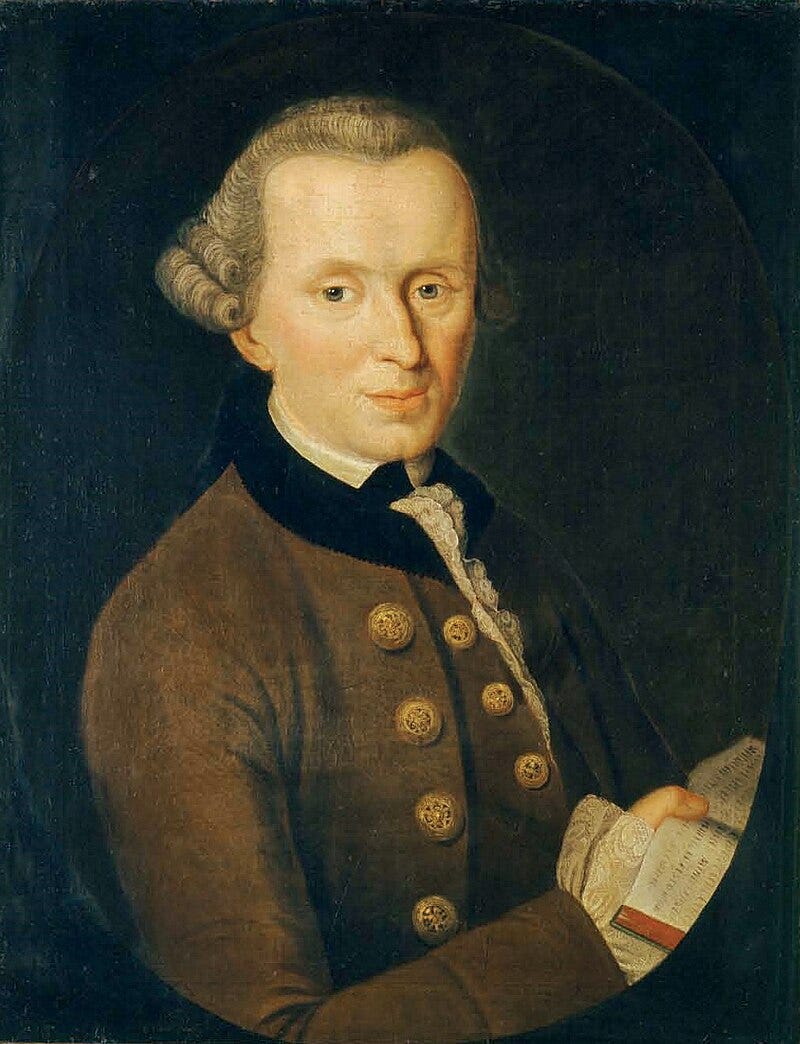
What are the allegiances of Jürgen Habermas? Habermas aligns himself with the West, by which he understands and includes the Enlightenment, rationalism and a commitment to the development of Immanuel Kant’s philosophy. The word which Habermas might use to label his philosophy, among others, would be “critical rationalism.” Habermas does however, as his profile repeatedly indicates, not commit fully to such a rationalism: he considers the Enlightenment unfinished, and its critique in need of its own critique, that is, one which is not terminal. While committed to Immanuel Kant, Habermas considers that the philosophy of the Königsberg philosopher is transcendental, considering “reason” something absolute, akin to a god of sorts. Habermas, in turns, considers it necessary to abandon this transcendental understanding of reason, taken as an absolute, and turn critical philosophy towards language and society… towards communication.
The Two Turns of Habermasian Philosophy
There are two philosophical turns that guide Habermasian philosophy. On the one hand, is the pragmatic turn of philosophy, which comes by the hand of American philosophers such as Peirce, or the educator John Dewey.


Pragmatism considers that reason cannot be separated from life, which in turn, entails action, rooting reasoning and theory in praxis, socially understood, avoids the pits that reasoning can often led to, and makes the philosopher safely land, at least once in a while.
On the other hand is the linguistic turn, towards which philosophers such as Ludwig Wittgenstein, but also hermeneuticians like Georg Gadamer or Martin Heidegger influence. Habermas, taking this turn, considers traditional philosophy mistaken, because it considers language as a representation of reality, to its contrary, he considers language to be essentially communication… rooted in action, by this turn, by understanding language, the tool of theory, embedded in society, Habermas reaches the true pinnacle of his philosophy, his belief, the closest thing to a god that can be found in his pages… Or an idol.


The Influence of Jürgen Habermas
I have known of Habermas since the time that I discovered philosophy. When I first approached this Science, going beyond the word that had been thrown around from time to time (eluding my comprehension), Habermas seemed to be the inheritor of this long tradition, the representative of philosophy, alike presidents and kings are of nations.4 Spontaneously he became the face of philosophy for me, just by the general consensus I seemed to grasp that he was the most respectable of the contemporary philosophers. While portrayed as the face of philosophy, I did not take a special interest in him, he seemed to say generally sensible things concerning democracy and rationality, the nuances of his thought were beyond me.5 Distinctly I recall that already then the question formed in my mind: Why is he not present in our public life? He seemed so absent from the public space, from conversation, he felt distant to me, it left me perplexed that the representative of a tradition traced back to Plato (to Classical Antiquity!) could not be more invisible to the Western man.6 I could not understand why he was so absent, nor, more importantly, why I felt him to be so absent. As I have come to understand it, this feeling of absence on the side of Habermas is not unwarranted, unreal, it is a precocious, still confused, grasp of the way that Jürgen Habermas does philosophy. Habermas did not seem part of the present not because of some sentimental spontaneity on my part, no, to the contrary, it was a feature of his way of doing philosophy… of his style.
It is not his influence upon the contemporary academy that is found lacking, Habermas bears weight on our culture, specially on German culture. Idealizing philosophers, in this case Habermas, is not at issue here. Youth tendentiously looks down on elders, of that tendency the increasing discontent against the baby boomers by generation Z is one manifestation. To be sure, Habermas is not a boomer (he was part of the Silent generation, 1928-1945), but he came of age after the Second World War, and was part of a group instrumental in making Germany what it currently is. There is no mechanism psychic making me fatally disappointed at Habermas (I did not expect him to be the reincarnation of Plato). And because I am not disappointed by Habermas, I don’t find him lacking. Habermas would be lacking if there was, on the part of his audience and listeners, some personal relationship, but there is none. To use the phrases of sociology, I understand that Habermas is doing his social function, he is playing the role he himself is entirely meant to play, not because of some grand plan, as rational animals don’t make such intelligent designs. It is not his influence upon the contemporary academy, on public intellectuals, on German, European or Western society, on the World that I find lacking, because I have no bond with him beyond his public persona, and he is living up to its design… its style.
The Impressive Influence of “Weak” Philosophy
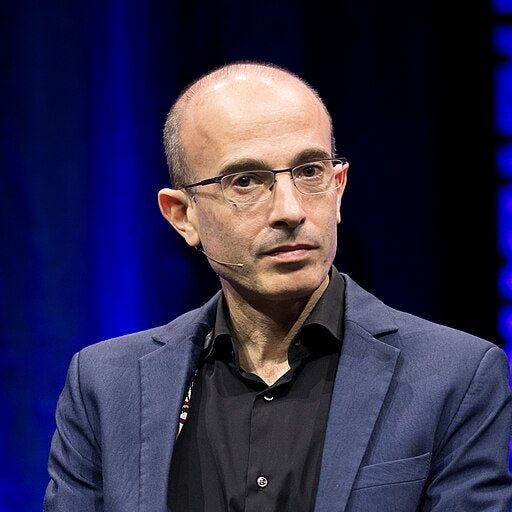
When it comes to influence, Habermas can only but impress, not disappoint. While mainstream right-left wing media might talk incessantly of George Soros or Rupert Murdoch, the authority of Habermas is unmatched. Intellectually, best sellers such as Yuval Noah Harari are of course exactly inferior, being a important feature of Habermas that he has become renowned before the grave, fame that the likes of Nietzsche never enjoyed. If his influence is great, with the greatness that academic philosophers can dream of having, why whine about his presence? A question answers a question: Have any of those reading this article been more or less interested in Habermas, after the start of the war between Israel and Palestine? A shorter add on: Did you actually know that his stance on the ongoing war/s? It is patent that Habermas, having the means to influence and lead intellectuals and even some laymen, fades into the dark, not dead, but forgotten, a fate more dreaded than the grave itself.
The philosophy of Jürgen Habermas is a weak philosophy. That is its style, its framework, the logic underpinning it.7 “Weak” is not an insult, not as the word is used here. “Weak” is not here intended as the mental, physical or moral lack of strength of a character. Habermas is not called a cripple. “Weak” does neither mean that the philosophy of Habermas is bad, or that Habermas is a bad philosopher. Weak is taken here formally, with a distinct and rigorous grasp of the essence of his philosophy, I am saying that the essence of the philosophy of Jürgen Habermas is weakness.
In what sense is Habermasian philosophy weak? In a philosophical sense, and what is philosophical weakness? A usual start is with analogies, for other concepts that might be used to convey a similar meaning are “minimal”, “bare” or “stripped down” philosophy; in other words, any concept that conveys the least amount, or the scarcity of philosophy. But weakness is not a quantity, there is not a number of philosophical weakness, be it ordinal or cardinal. Weakness is of course a quality, weakness is a defect, a privation of something. Philosophical weakness is a defect,8 but a qualified defect, that is, while there is a defect of philosophy, there is still philosophy. While words are useful, an analogy from political economy might be useful: Philosophical weakness is the least amount of philosophy possible compatible with producing some form of philosophy. Ultimately, philosophical weakness is a mode, a way, a style of doing philosophy, of being philosophical. If you pay attention to this paragraph, the word philosophy, and others of that root, are used, it would be useful to define what Habermas and I understand philosophy to be. The task is quite simple: Philosophy is metaphysics, the science of reality itself, so we might conclude in a simple manner: A weak philosophy is a philosophy that is weakly metaphysical,9 it tries to have the least amount of metaphysics possible, compatible with some semblance of philosophy being left.
There is a different word for weak philosophy, a word which Habermas himself uses frequently: Post-metaphysical philosophy. One fashion prevalent is the usage of the prefix “post”, as in “postmodernism”, “post-Marxism”, “post-leftism”, “post-truth”, and Habermas always has an eye for the zeitgeist. More importantly, he has an eye for its essence. Habermas considers post-metaphysical to be the apt philosophy for the age, a philosophy that avoids considering itself “transcendental,” free and independent from the constraints of culture, history, society, natural science, language… a philosophy free from the reality of our limited openness to reality itself. Habermasian philosophy is the best expression of weak philosophy, because weak philosophy has been over the last decades the prevailing style of philosophy, and Habermas is one of if not the greatest contemporary philosophers. Claims are to be proven, the boldest all the more, so a look at two well regarded forms of philosophy might be instructive: Naturalism and Hermeneutics.
Naturalism
For Habermas, naturalism is the elephant in the room when it comes to contemporary philosophy, and it is all the more the elephant in Anglo-Saxon philosophy.
An apt expression of the naturalist philosophy is given by a different contemporary philosopher, Edward Feser:
“There are those who decry it (metaphysics) in the name of the scientistic or naturalist position that science alone plausibly gives us objective knowledge, and that metaphysics worthy of considerations can only be that which is implicit in science.”10

According to philosophical naturalism, and its more vulgar but essentially related folk expression, scientism, philosophy has to be constrained:
“The advocate of scientism will insist that unless metaphysics is ‘naturalized’ by making it nothing more than science’s bookkeeping department, then the only thing left for it to be is a kind of “conceptual analysis.”11
The consequence of naturalism becoming an authority, acknowledged at universities and its departments is that philosophers take up the role of policemen and civil guard of the scientific worldview. The work of the naturalistic philosopher is then, first and foremost, to make sure that scientists themselves do not go outside the defined boundaries not of science but of scientistic, or rather, physicalist philosophy. That naturalism is a weak form of philosophy, even, a weaker than weakness philosophy, philosophy in shambles, explains itself.12
Hermeneutics
The opposite of a mistake is not truth, but another mistake. While naturalism a form of weak philosophy, its opposite is also squarely a form of weak philosophy. On the other side of contemporary culture is the side of “art”, of “sentiment”… of interpretation. Traditionally “hermeneutics” was the art of interpreting and thus understanding a written text, such an art was paramount for the study of Sacred Scripture, to differentiate what God truly meant from our wishes poured into the text. From this old tradition of philology, philosophers increasingly have developed an entire theory and method of interpretation and, afterwards, a philosophy read in the light of interpretation. The great hermeneutic philosopher is Hans-George Gadamer and, to a lesser extent, Martin Heidegger, a known follower of such a philosophy beyond the departments of philosophy is Donald McCloskey. Most philosophers consider hermeneutics and naturalism entirely unrelated, in truth, they are both relativistic philosophies, they have a familiar semblance.
A great tale of the rise of hermeneutics was given by Hans Hermann Hoppe:
“Associated with names such as hermeneutics, rhetoric, ultra-subjectivism, and deconstructionism, an academic movement of sorts is underway that is trying to revive the old message of nihilism—that there is no such thing as truth—and which ascribes the failure of positivism not to its relativism, but to the fact that it is not relativistic enough in continuing to allow for empirical (hypothetical) truths rather than for no truths at all.”13
Hermeneutics implies a rejection of a universally valid theory of knowledge, or epistemology, similarly, naturalism implies a rejection of metaphysics, of transcendental scientific knowledge of reality. Both philosophies are relativistic, and both can be described as nihilistic, or close enough, or not nihilistic enough. However, such commonalities are doctrinal, not of spirit, because relativism is perennial and age old, it has always been around. What makes naturalism and hermeneutics not just another form of relativism, nihilism or skepticism, what differentiates them even from original positivism, historicism or some other XIX century philosophy is their style: Both are weak philosophies.
In other words, if it turned out that a certain weak philosopher, naturalist or hermeneutician, ended up being a nihilist he would not make a big fuss about it. For a weak philosopher, nihilism, relativism, religious fundamentalism, hyper-rationalism or any other bundle of ideas becomes another fact, another issue. Habermas himself showed once this striking toughness that weak philosophy has its capacity to withhold problems or issues, old and new.
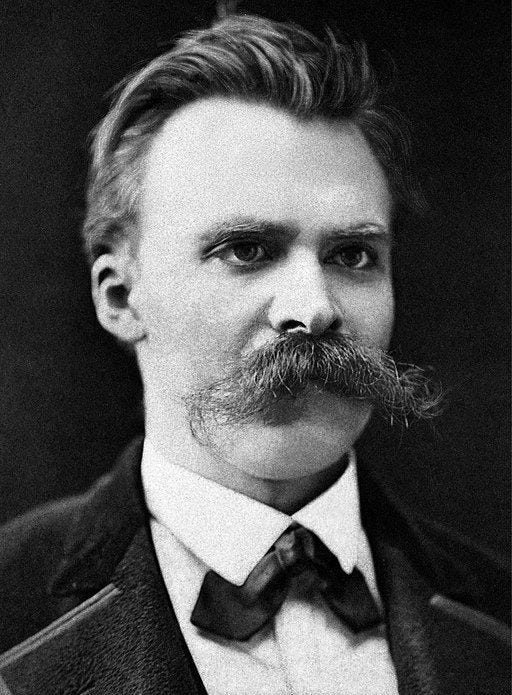
A central question of contemporary philosophy, and of Western people is “The Death of God”. Some might call it a problem, and it has many faces and interpretations, it was famously expressed by Friedrich Nietzsche.
The Secularization of the West
Behind such a question is a historical event: The secularization of the West, a process by which religion was made private, and became absent from public life. Optimistic philosophies might interpret this change as progress, pessimistic philosophies as a step back, Nietzsche himself not fitting in either camp would consider it a dramatic question. How does the weak philosopher treat such a question?
Finally, might Habermas himself speak:
“I think it would be a mistake to radicalize the question of whether an ambivalent modernity will achieve stability on the basis of the secular resources of communicative reason alone into a critique of reason.”14
Putting aside the careful, almost too careful, wording of Habermas, the aware reader is struck by how nonchalant Habermas is shown to be here. The secularization of society, ultimately, the “death of God,” is an undramatic problem the philosopher has to reflect upon. Such an approach is breath-taking to attentive readers, some would consider it bold, they would be mistaken. Here, again, weak philosophy, that Habermas calls “post-metaphysical” is simply showing its humble procedure another time, it avoids grandiose speeches and unnecessary drama, it sees open questions, unanswered often, as the normal state of affairs. It is humble and humbling philosophy… almost too humbling.
Relativism
Weak philosophy has to be distinguished from relativism. Relativism means that all truths are ultimately related to man, the measure of all things, who in turn is not an absolute principle of rationality, but rather, an animal limited by his perspective. For the relativist there is no transcendent truth beyond the constraining limits of his perspective, not known ones that is, or relevant one’s for philosophers, except as a limiting or tentative “end point” which can never be reached. Weak philosophy is not relativistic, it sees this doctrine as making too much fuss, for the weak philosopher, the relativist has still not come to terms with the end of dogmatic philosophy. From the perspective of the weak philosopher, the relativist is still preoccupied with fighting against dogmatic beliefs, the relativist is still too concerned with making sure that the only absolute principle is that everything is relative. The relativists still lives in a dogmatic mindset, it keeps this mindset because it mainly cares about rejecting dogma, relativism is mere rejection of dogma, not a step beyond it. And would not weak philosophy be a mere rejection of relativism?
Habermas is not a relativist, he believes there are unethical as well as ethical courses of action, courses which can be rationally ascertained, or as weak philosophy would frame it, “intersubjectivity played out”. Habermas does not agree with Nietzsche’s claim that God is dead, Habermas says, instead of such grandiose claims, that God might be dead. Among some of the ethical concerns of Habermas, are the need for an ideal situation of communication, a moment or situation where speakers find themselves in perfect agreement and understanding. Also, following the Frankfurt School, Habermas offers concerns and critical criticism of the bewildering expansion of technology and markets, that gradually replace the living communities of speakers with monetary and mechanical activities. That said, for Habermas, the problem is that technology and capital are a different interest from politics and the public space, which are in turn, another interest. For Habermas, the great demarcation between the different realms of man, of technology, politics and emancipation, is how interesting we discover them to be. I am being sarcastic, unfairly so, and I am misrepresenting Habermasian philosophy.
In Conclusion
The philosophy of Habermas might seem nonchalant tout court. From the “death of God” to the fourth or fifth phase of the industrial revolution, it would be mistaken to consider weak philosophy a cynical call for apathy and a rejection of deeply felt, objectively rooted, concerns. While it might seem like a paradox, weak philosophy has strong commitments, while it might seem like a paradox it is not a semblance, for it actually is a paradox: Weak philosophy, despite its defective attachment to the metaphysical quest of philosophy, has stronger attachments that makes one forget this philosophy is one of weakness.
Looked at closely, all the elements of vulnerability and seeming apathy at play here, are an effect of disattachment: To attach oneself stronger to a more central belief or principle, peripheral attachments need to be weakened or downright abandoned.
The question remains, what are the values of Habermasian philosophy? Two values which are one: Re-education and democracy. But ultimately, re-education is only a means, ultimately, Habermas believes in one thing: Democracy.
The reader might gather that Habermas is not a particularly pious fellow, as all men though, he makes exceptions for his religious indifference. When it comes to democracy, Habermas has the zeal of a preacher, of a bleeding heart believer, of a man of God. That zeal of Habermas, theological in its grandeur, also turns towards the enemies of his valued belief. To put the Habermasian commitment to democracy into perspective the National Socialist period of Germany from 1933 to 1945, must be taken into account.
For Habermas, the existence of Adolf Hitler and the Third Reich are the closest he comes to a religious turning point, in his zeal against this period of history he makes national socialism religious in stature. Hitler is not a god, of course, he is an idol in a godless world. Habermas finds Hitler lurking behind every corner, maybe a remnant of some arcane Christian superstition in devils. However, Habermas not only finds Hitler behind every corner, but behind every German.
The reason that Habermas committed to weak or “post-metaphysical” philosophy was one reasonable concern of his: Habermas feared that a strong philosophy could bring back episodes such as the Third Reich, that it could bring back Hitler and such philosophical accolades like Martin Heidegger or Carl Schmitt. Despite not being religious, Habermas was of protestant ancestry, and protestant religion is one where belief in original sin and human sinfulness is deeply rooted and rans deep in the veins. The feeling of responsibility, the urge to counteract the German fall into “cosmic bigotry” has a striking semblance to the Christian, but remarkedly Protestant, sense of remorse, guilt and holy or unholy self contempt. The malicious psychologist might intrude upon the mindset of Habermas, and make the bold assertion that such primeval Protestant belief becomes, when one loses faith, sublimated, and from fight against sin it turns to fight against Fascism. The Christian God is one of mercy, when he is gone, remorse is what remains.
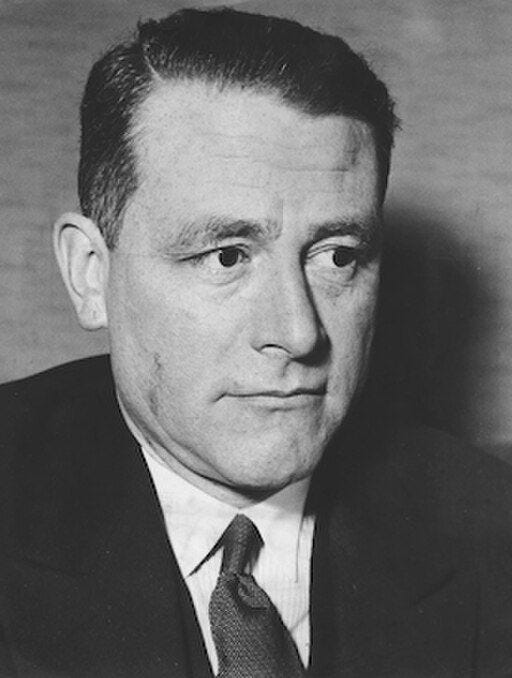
The philosophy of Habermas is one I don’t find lacking and I think Habermas has done his duty in German fashion, too the point, but I think he might have overdone it. He has worked dutifully, too dutifully I would say. Weak philosophy is not a lacking philosophy, it is a mistaken path, with sympathy historical and diligence we might learn from it, for error is preferable to confusion when it comes to finding the truth. The lesson of Habermas, the absent philosopher, is valuable at this moment when the Jews, maligned as they were in the youth of Habermas, march to war against the Persians, a useful lesson to remorseful Caucasians of the West. Everyone west of Istanbul (Constantinople) and north of Gibraltar knows that, in their lifetime, Fascism has been the “worst evil politically imaginable,” and “bigotry” the mother of all things evil.
In that age, now declining, of weak philosophy, belief in democracy and ghost-hunting specters of Fascism is what happens in most ages: Rarely do people follow ideas to their ultimate conclusion, even if they might be the zeitgeist. In this sense, Habermas has been the philosopher of the hour, for he has given the most coherent, consequent and cohesive synthesis of that age; to such an extent has Habermas committed to the values of democracy, the ideal of equality, that he has not played himself up to be some philosophical king or monarch, instead, he has humbly avoided becoming the center of attention, maybe, with excessive humility. Habermas has lived through the entirety of German history after 1945, and he has lived through and also leaded the transformation and reshaping of German society, here an important truth: Through history almost no place or time has known of such an ambitious effort to re-educate the entire population as is the case of West Germany in the cold war, and the entire country unified afterwards (for better or for worse). This effort of re-education to install a democratic mindset of spirit and zeal is the unique feat of our age. An age of unprecedented bureaucratic and managerial expansion, where law has truly become the mandate of the masses, and of their humble administrative servants. In his philosophy all the great trends of Germany, of Europe and the West writ, large become one synthesis or one vision. Habermas has been the embodiment of a philosopher living in a democracy, and the fact that no one takes interest in him, democrats among others, signals the end of a certain social order. At the core of his philosophy, traces of history can be found invaluable: His entire philosophy is the philosophy of de-Nazification, or at least aspires to be so. Habermas is still alive, and I hope he has good years ahead of him, and already looks at the work of his life fondly, but the historian cannot avoid to make the pertinent question: What is the core of the philosophy of Habermas? A fight against Fascism, and that is its only idea, the remnant, it is what is left when philosophy is weak.
The author reminded himself that many legions of leftist would throw up at the idea that Habermas was a man of the left, the author thought, amongst others, of Marxists of strict observance, of all stripes. The word left here is used, of course, for reasons of economy and practicality, the word “social democrat” might have been used, but it was too long and dry, the word “progressive” had too much of a vague sense, as well as an American taste; leftist was the best option, which said enough without saying too much, being wide enough. All that said, for those who never betrayed more traditionally left wing positions, or those few who now talk of the “post-left” the word left here is short hand for “the left wing of the ruling intellectual and political consensus”. The author considers that Jürgen Habermas is definitely closer to someone like Milton Friedman than he is to Rosa Luxemburg, when he considers Habermas a social democrat, he knows that contemporary social democracy has nothing to do with original social democracy, that it officially changed with the Godesberger Programm of 1959. Finally, as a note to the note, those who are not acquainted with the fascinating history of social democracy, would do good by a cursory reading of this often neglected chapter of history.
The writer is thinking of such darlings of the stature of Jordan Peterson, Ben Shapiro or Michal Knowles, the main guard and vanguard of American Republican party-mechanics. He is also including in the spectrum of neocons some late comer such as James Lindsay. As a rule of thumb, those that people often call neoliberals, or people who call themselves classical liberal, are simply called neoconservatives, it makes life easier and things clear.
Someone who expresses this kind of Milieu much better than Habermas is the French father of structuralism Claude Levi Strauss. The French anthropologist claimed that he always read from Marx before writing, and insisted again and again that he was a Marxist. If he was a Marxist is up for debate, what is not for debate is his deeply felt need, psychically, to identify himself with Marxism. Claude Levi Strauss is a great example of this vestigial Marxism.
While Habermas might accept the comparison with presidents, he would consider being assimilated to monarchs odious.
The author, condescending some personal knowledge to the digital ocean, wanted to add this note: Temperamentally contrarian, I chose not to acquaint myself with his thought, not at that moment, I preferred the classics and the medieval Christian philosophers. The first book of philosophy I read, one of my most vivid memories, was Nicomachean Ethics, picked at a public library, as a rule of thumb, I have always read older authors before I read newer ones. I consider myself equally enthralled to the philosophy of Aristotle now as I was then, when adolescent.
Spending some time on the web; and studying man realistically, makes one aware that public intellectuals are rarely exceptional; living makes the young philosopher aware that must people are not theoretically bent, it teaches that the rarity of a philosophical bent is a blessing.
I have explained before, in other pieces, what I mean by style, just a quick reminder. Style is not meant in a subjective or personal sense, by it is meant the framework, the structure that makes the ideas of a philosopher, intelligible. One can ask “what did Aristotle think?” and this would be an account of his core doctrines, it would be history of philosophy; but one could also ask “how did Aristotle think?” and this would be his style, it would lead us to the history of ideas. An example of such a study can be found in my two piece series, responses to John Arcto, Against Karl Popper (and II part)
Scholastic philosophy has a way with words and their game that is not always understood currently, and thus, can lead to equivocation. Defect or privation is not meant here in a moral sense, to be a lack of moral good, an evil, there is nothing “evil” in philosophical detectability. On the other hand, it is nothing physical, as in lacking an arm and therefore being defective. A defect, or privation, is meant here as the absence of a quality that would be proper. In other words, philosophy is meant to be, well philosophical, but the philosophy of Habermas is not philosophical to the extent that it could be, it is constrained or, in other words, defectively philosophical.
Metaphysics is a kind of word philosophers love to throw around, the problem is that philosophy has never been particularly democratic when it comes to definitions, and being a generally dogmatic tribe, we despise compromise. Metaphysics can be used pejoratively, taking it simply to mean “speculative”, referring to thinking that never touches grass. For others, maybe the reader, metaphysics might have a “touchy” “new age” feeling, it might sound like some form of questioning about the meaning of life or existence, often found in prescientific societies. Classically, as the writer takes it, and people so different as Plato, Aristotle, Saint Agustin, Saint Thomas Aquinas, Leibnitz or Kant would take it, it means “First Science”, “Science of Being”. Classically metaphysics is wisdom, but “wisdom” is understood in a precise sense, as knowledge of the “first causes”, the principles of reality itself. Metaphysics is then, traditionally the science of the principles of reality, that transcends the other sciences, such as physics, while it also is the foundation of all other scientific enquiries, and in a way, of all other activities and even rationality itself.
Scholastic Metaphysics, A Contemporary Introduction, Edward Feser, 2014, 9-10.
Ibid, 25.
The most interesting naturalists are, contrary to what it may seem, not those who still give philosophy enough space to be a security force. To the contrary, the most interesting ones are the radical naturalists that consider the best course of action to downright substitute philosophy with (natural) science. Those kind of philosophers are even today a minority, a partial explanation being the need that philosophers still have to sustain themselves and therefore to earn a living. But such radical or consequent naturalists would not be weak philosophers, they would be “post-philosophers” rather than philosophers who are “post-metaphysical”. A brilliant such case is the much neglected Norbert Elias, a more known case would be Paul Feyerabend.
Austrian Rationalism in the Age of the Decline of Positivism, in “The Economics and Ethics of Private Property”, Hans Hermann Hoppe, 2006, 368-369. Hoppe’s brutal language talks here of nihilism, which is a belief, not a philosophical style, which weak philosophy. A nihilist can be a weak philosopher, but doesn’t have to be. Jurgen Habermas is not a nihilist, malicious critics might, however, consider an embrace of nihilism a kind of logical integrity on the side of Habermas.
Prepolitical foundations of the Constitutional State?, in “Between Naturalism and Religion”, 2008, 108. The writer would like to add a note concerning this quote. 19 of January 2004, Habermas and Joseph Ratzinger, who would go on to become a pope in 2005, had a public discussion about religion in a modern society. Habermas has shown a very uplifting and honest approach towards religion the last two or three decades, this discussion is one of the most important episodes of recent philosophy, one for the history books.
I only vaguely remember this guy so thanks for the in-depth analysis.
Many philosophers have SAID they are against relativism, and yet, it seems they subtly affirm it all the same. Habermas very much wants to be able to say "Fascism is definitely objectively bad" but independent of his subjectivity can he realistically make such a certain claim using his own philosophy?
If this current liberal order is his, then we may observe that his argument against fascism is indeed flimsy--evidenced by the current political situation trending reactionary.
To me, philosophy is much like studying clouds. We can make them, seed them, watch them, know what they mean in terms of human behavior (Opps! Looks like rain, better take my umbrella), but we cannot explain why some formations become Cat 3 or Cat 5 hurricanes, or explain why the storms bypass our predicted course or why every house but one is demolished. (Insurance companies are going broke even with caveats such as "Act of God.") Last night I tried to watch TV and all I got was a goofy Kentucky governor pontificating on how dangerous standing water is and what precautions his regime has taken, and what precautions the public should take, to protect human life and property. You might say, he's a strong governor for "caring" and delivering the science, or a weak one for not being able to keep the storms away. It doesn't matter. The storm will either weaken or not, people will either exercise good sense or not, no matter what anyone does. That's not nihilism, that's a fact. There. My bias out of the way.
The problem for philosophy in general is the problem of economics. They both want to be "scientific" but operate on certori paribus: all things being equal. Ancient philosophers, at least, understood people, cultures, I.Q.s, languages/meanings, resources, geography, morality, etc. are not equal.
Now what do we do? Marxists and Fascists, of course, believe people can be made equal, and forced to be virtuous by force of government if that government tells the right-speak noble lies to 1. subdue those who know their lying, 2. exercise independent thought, 3. kill off those who expect equality means they get what everybody else has including a college degree even if they're still stupid but own a piece of government paper that proclaims them a genius. (i.e. reality created by fiat.)
Successful Marxists/Fascists, like Hitler, Mao, and Stalin, are much feared and reviled, but their also admired, envied, and emulated when it come to achieving (and keeping) power over whatever resources they control. On the other hand, Capitalists turn into crony capitalists, disregard the downtrodden, and don't seem to give rat's ass about the lies they tell about "equal opportunity", free speech, rights of man, (you know, Enlightenment stuff.) Enter the last gasp of philosophy, the remedy of social democracy, a lie that's easily believed but that can turn deadly on a dime.
The de-Nazification of Germany into a social democracy is no such thing. It is the victory of Marxism over Fascism, but hidden under vocabulary (Christian Democratic Union Party) and fear of national identity .... in smart (but guilty of something or the other) white people. Her approach from 2005-2021 was to create "diversity" (using the term multiculturalism) and prove SHE wasn't a Fascist. No, she was an idiot and created more problems with that philosophy, which naturally, has spawned a reactionary/right-wing response. Eventually ipse dixit, multiculturalism doesn't work, because for all the blather that philosophy has spouted, people haven't gotten better or more moral or kinder, gentler, etc. They've gone over the edge into indecency and lunacy.
From your essay, I would say Habermas is hiding out from philosophic participation in this debacle. What can he say at 90 years old? (Oh, dear, we've been wrong for centuries.) Certainly not offer solutions to the destruction of Germany. Someone might be listening ... like the government. Like all governments listen now with the reality of technological advance. Add to that the continued secularization which leads to alienation which leads to discontent and violence, and Germany (and the EU) is in a pickle of its own philosophic making.
I say that because, in the modern world, there are billions of people who are not modern. They are barbarians with cell phones. Anyone over the age of fifty can tell you. The ONLY way to temporarily exist (because existence is contingent) peacefully with the barbarian nations is to arm your nation and your people for war. Modern gods maybe dead, but barbarian Allah is alive and as nutty as ever --- and they live in your country, next door, demanding all your wealth --- and you're giving it to them. Including your womenfolk. (Oh, crap. Really? Yes, really.) The EU and finally America, is aware of what must be done; people just don't like it. It isn't nice, clean, or modern. Fights for survival never are. Ask Habermas. He's looked at clouds from all sides now