


In the interest of highlighting what some of the greatest economists of the Aryan race have noticed about jews, I have decided to compile a list of what they had to say about them. Ranging from quotes about economics to social attitudes, this list covers some of the most important realizations regarding the jewish question.
Gottfried Feder (AD 1883-1941)
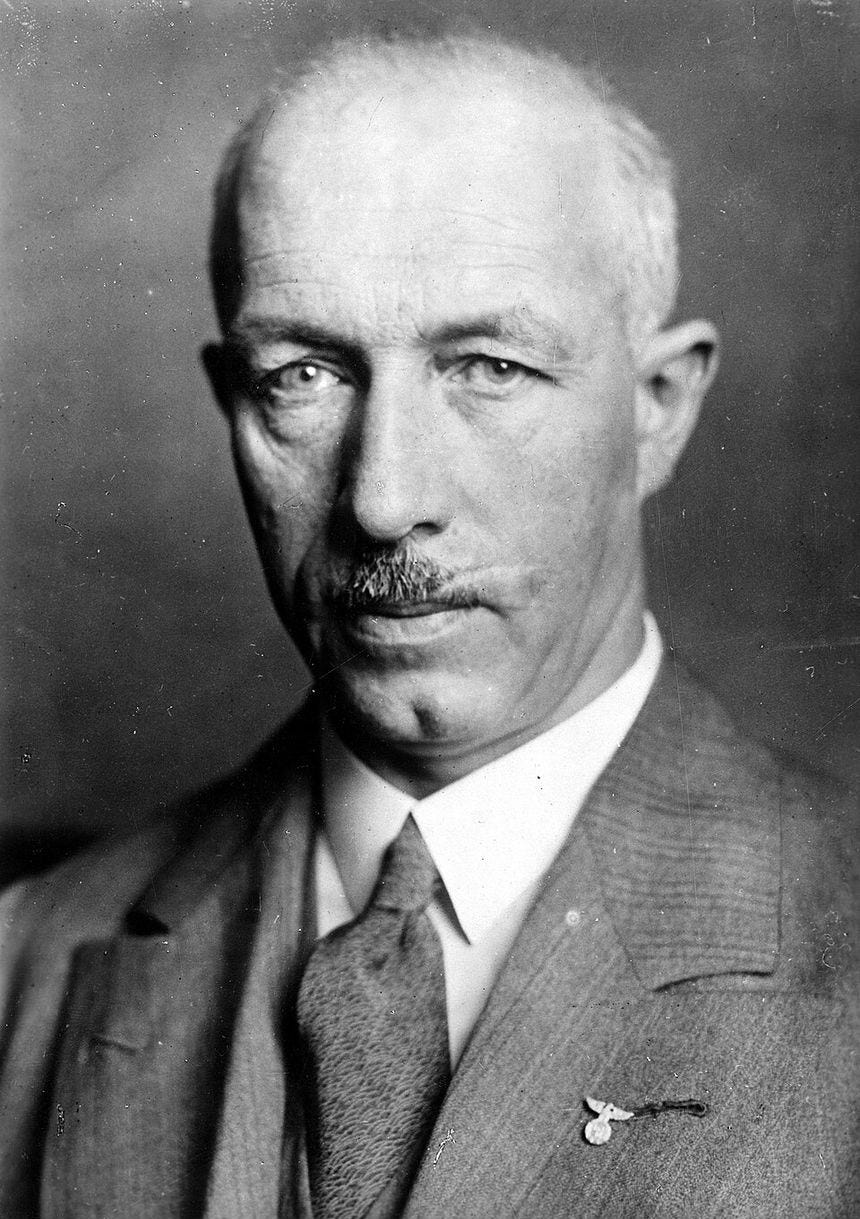
Gottfried Feder, was best known for his concept of “breaking the bondage of interest” (Brechung der Zinsknechtschaft) and developing the economic ideology of the National Socialist worldview. Although many of his early economic writings focused on finance, banking, and interest, his work became increasingly intertwined with National Socialism, especially after he met Adolf Hitler.
Here’s what he said about the jews in The German State on a National and Social Foundation (1923):
“The solution of the interest problem is the solution of the Jewish question. The solution of the interest problem in the sense of our explanations is the breaking of the Jewish world-rule, because it smashes the power of world Jewry — its financial power.”1
“Creative and productive work has become the slave and the cunningly rapacious, eternally mobile Jewish spirit of usury rules the world.”2
“The interest slavery of the nation means the rule of the bank and stock-exchange. The breaking of interest slavery is by far the greatest task of National Socialism.”3
Werner Sombart (AD 1863-1941)

Werner Sombart, was a German economist, sociologist, and economic historian whose work helped shape early twentieth-century debates about capitalism, socialism, and historical development. Unlike Feder, Sombart did not argue that jews corrupted capitalism, but were heavily involved in its development.
In his most well known work, The Jews and Modern Capitalism (1911), Sombart states:
“America in all its borders is a land of Jews. That is the result to which a study of the sources must inevitably lead, and it is pregnant with meaning.”4
“Nevertheless, I uphold my assertion that the United States (perhaps more than any other land) are filled to the brim with the Jewish spirit. … In the face of this fact, is there not some justification for the opinion that the United States owe their very existence to the Jews? And if this be so, how much more can it be asserted that Jewish influence made the United States just what they are—that is, American? For what we call Americanism is nothing else, if we may say so, than the Jewish spirit distilled.”5
“Before proceeding to the problem before us—the share of the Jews in the work of building up our modern capitalistic system—we must mention one other point of importance. … There were undoubtedly a thousand and one other causes that helped to make the economic system of our time what it is. Without the discovery of America and its silver treasures, without the mechanical inventions of technical science, without the ethnical peculiarities of modern European nations and their vicissitudes, capitalism would have been as impossible as without the Jews.”6
John Maynard Keynes (AD 1883-1946)
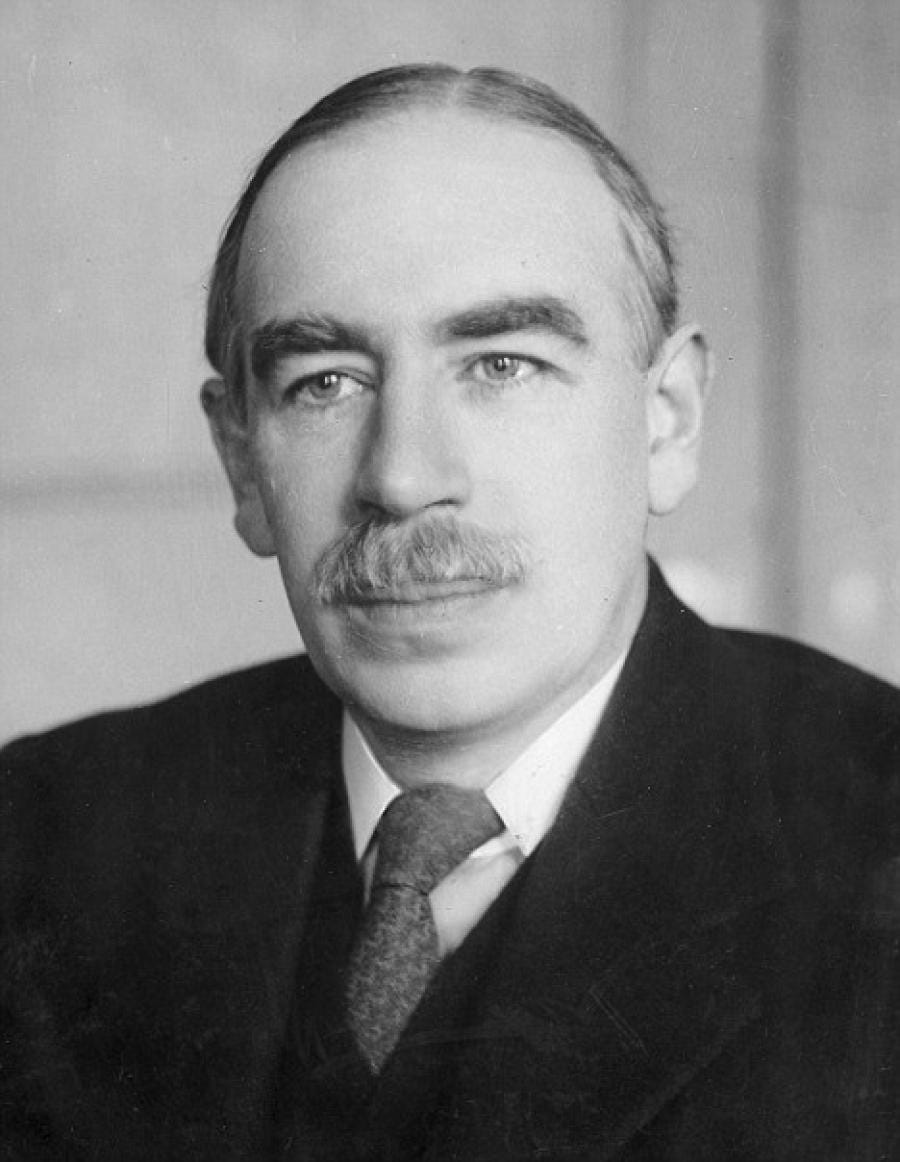
John Maynard Keynes, was an English economist whose ideas transformed modern macroeconomics and public policy. He became one of the most influential thinkers of the twentieth century through his analysis of unemployment, recessions, and the role of government in stabilizing economies. His work laid the foundation for what became known as Keynesian economics.
Here is what he wrote while he attending Eton College (c. AD 1900-1902):
“[Jews] have in them deep-rooted instincts that are antagonistic and therefore repulsive to the European, and their presence amongst us is a living example of the insurmountable difficulties that exist in merging race characteristics, in making cats love dogs.”7
Commenting on the Russian Revolution and communism, he wrote:8
“I do not mean that Russian Communism alters, or even seeks to alter, human nature, that it makes Jews less avaricious or Russians less extravagant than they were before.”
“In part, no doubt, it is the fruit of Red Revolution… In part, perhaps, it is the fruit of some beastliness in the Russian nature—or in the Russian and Jewish natures when, as now, they are allied together.”
On meeting Albert Einstein in 1926:
“He is a naughty Jew boy covered with ink—that kind of Jew—the kind which has its head above water, the sweet, tender imps who have not sublimated immortality into compound interest… Yet if I lived there, I felt I might turn anti-Semite. For the poor Prussian is too slow and heavy on his legs for the other kind of Jews, the ones who are not imps but serving devils, with small horns, pitch forks, and oily tails. It is not agreeable to see civilization so under the ugly thumbs of its impure Jews who have all the money and the power and the brains.”9
Alphonse Toussenel (AD 1803-1885)
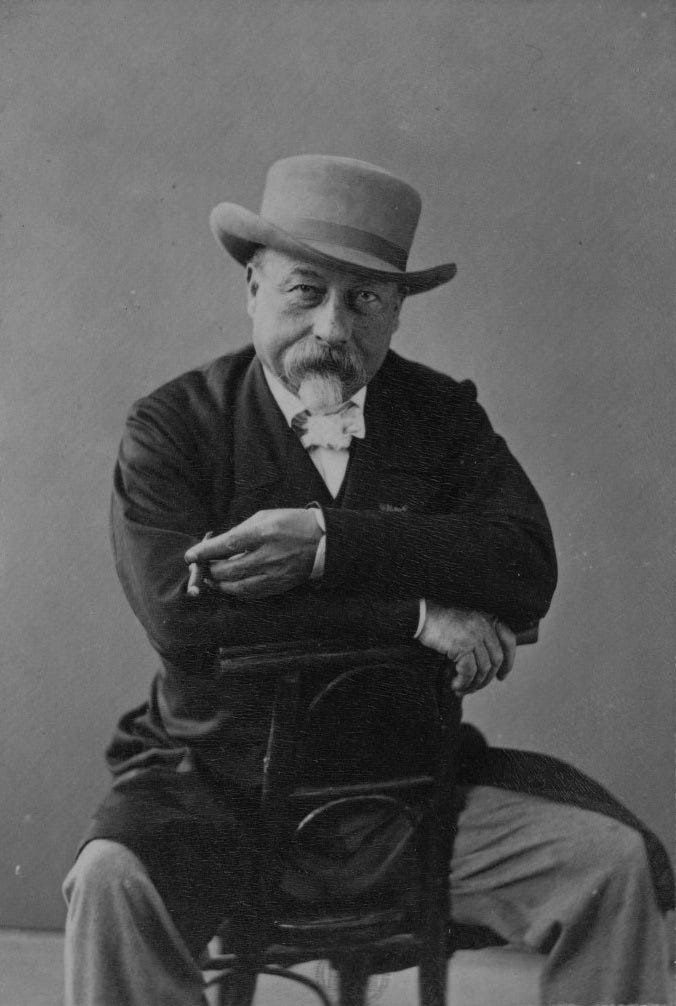
Alphonse Toussenel, was a French utopian socialist, journalist, writer, and naturalist. In The Jews, Kings of the Epoch (Les Juifs, rois de l’époque: 1845) he attacked what he saw as jewish control of French finance and commerce (particularly associated with the Rothschilds and railways), identifying jews as “usurers,” “parasites,” and the new feudal lords of money. He often used “Jew” as a synonym for banker, moneylender, or unproductive capitalist.
From The Jews, Kings of the Epoch:
“Europe is entailed to the domination of Israel. This universal domination, of which so many conquerors have dreamed, the Jews have in their hands.”10
“I call, as the people do, by this despised name of Jew, every dealer in money, every unproductive parasite living off the substance and the work of others. Jew, usurer, trader are for me synonyms.”11
Eugen Dühring (AD 1833-1921)
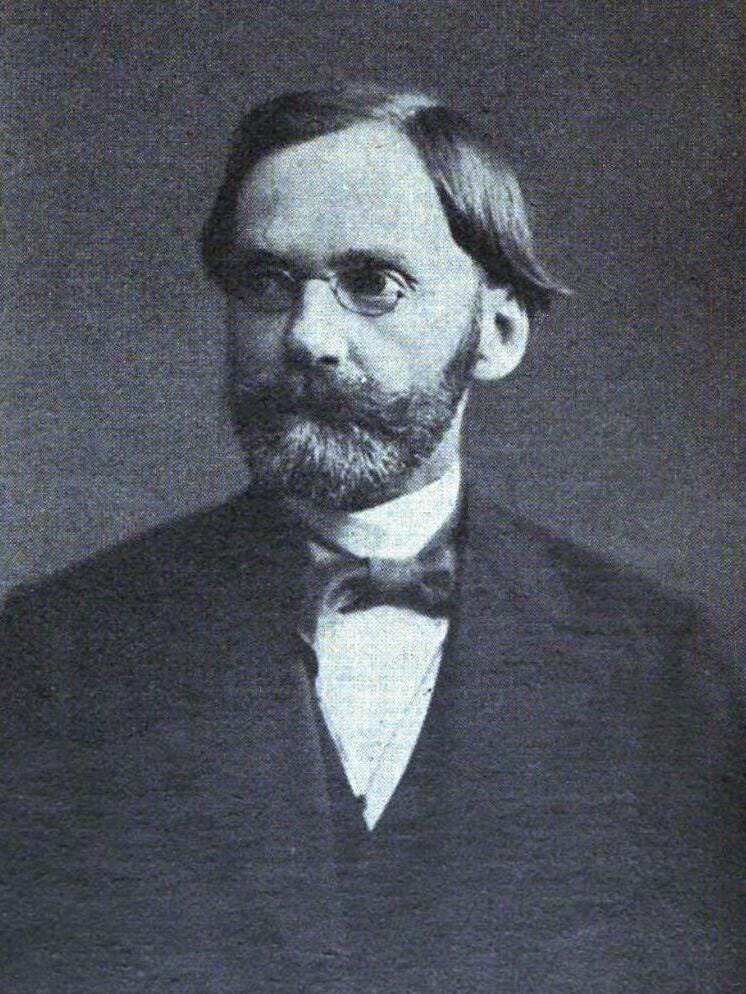
Eugen Dühring, a German philosopher, economist, and positivist, was one of the most radical early proponents of racial antisemitism. He treated the jewish question as a biological and racial problem rather than a religious one.
In his most famous work, The Jewish Question as a Racial, Moral and Cultural Question, he stated:
“The Jew creeps after the general corruption which he finds or scents somewhere in order to do with it as he does with everything—namely, to exploit it for himself and his chosen, self-seeking, mostly commercial goals and for his own sort of corruption. The Jew is therefore in his most proper place where he can become the parasite of a corruption already present or announcing itself. Where he feels most at home in the flesh of the peoples according to his nature, one should carefully examine whether it is still healthy.”12
“The Jews are … an inner Carthage, whose power the modern peoples must break if they themselves are not to suffer a destruction of their moral and material foundations at its hands.”13
Maffeo Pantaleoni (AD 1857–1924)
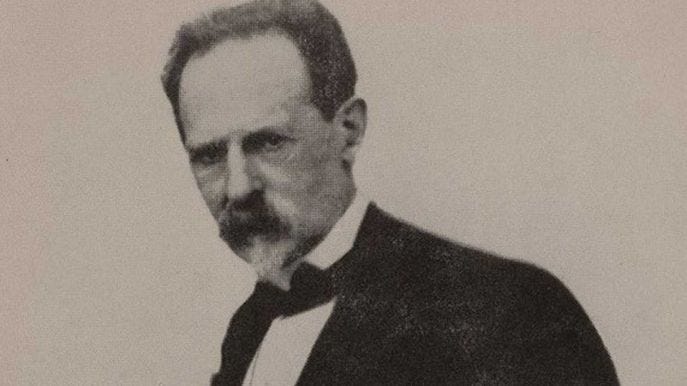
Maffeo Pantaleoni, was an Italian marginalist economist. His book Teoria della Traslazione dei Tributi (Theory of Tax Shifting) is a pioneering study of tax incidence. According to Nobel Prize winner James M. Buchanan, Pantaleoni can be considered as one of the intellectual forefathers of the modern public choice theory.
In an article about the Democratic-Socialist and Freemason, Leonida Bissolati, Pantaleoni mocked Bissolati by stating:
“If, moreover, the socialist is a professional, one is faced with an exploiter who, for his own benefit, takes advantage of the gullibility of others—a dealer in adulterated and poisonous goods, a piece of bourgeois filth—who extends to the Israelite banker, who hires inferior types, finances party newspapers (and also newspapers of other parties), does shady deals with the State through the connivance and participation of his extreme-left deputies, provokes strikes and boycotts of competing firms, moves in high society and is a lion there, is linked to an international gang of his fellows, has views that are equally broad and wicked, and speculates indifferently on war, on the White-slave trade, on emigrants, on the Madonna of Lourdes, on alcohol and on pornography.”14
In 1921, he remarked that Mussolini was at risk of falling into the hands of the jewish banking system and unwittingly going along with the Protocols of the Elders of Zion:
“Mussolini risks falling into the hands of the ‘Jewish bank’ and of following the dictates of the Protocols, of the ‘industrial sharks on the verge of bankruptcy and the lazy, corrupt workers who all collude to plunder, through the Government, its enterprises, its contracts and favors, those who by their own work and talent, and by the use of their own savings, earn an honest living.’”15
Pierre-Joseph Proudhon (AD 1809–1865)
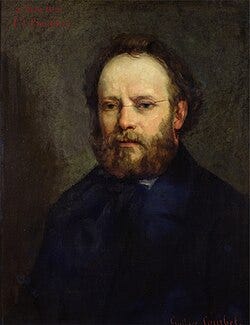
Pierre-Joseph Proudhon, was a French anarchist, socialist, philosopher, and economist who founded mutualist philosophy and is considered by many to be the “father of anarchism”. He expressed strongly antisemitic views in his private notebooks (Carnets) and some published works.
From his notebooks (Carnets, 1847):
“Jews. Write an article against this race that poisons everything by sticking its nose into everything without ever mixing with any other people. Demand its expulsion from France with the exception of those individuals married to French women. Abolish synagogues and not admit them to any employment. Finally, pursue the abolition of this religion. It’s not without cause that the Christians called them deicides. The Jew is the enemy of humankind. They must be sent back to Asia or be exterminated. H. Heine, A. Weill, and others are nothing but secret spies; Rothschild, Crémieux, Marx, Fould, wicked, bilious, envious, bitter, etc. etc. beings who hate us. The Jew must disappear by steel or by fusion or by expulsion. Tolerate the elderly who no longer have children. Work to be done—What the peoples of the Middle Ages hated instinctively I hate upon reflection and irrevocably. The hatred of the Jew like the hatred of the English should be our first article of political faith.”16
From Caesarism and Christianity (1860):
“The Jew is by temperament anti-producer, neither farmer nor industrialist, not even a real trader. He is always a fraudulent and parasitic middleman, who operates, in business as in philosophy, by fabrication, counterfeiting, and shady dealing. He knows only the rise and fall, the risks of transport, the uncertainties of the harvest, the hazards of supply and demand. His policy in economics is all negative, it’s the wrong principle. Satan, Ahriman, incarnated in the race of Shem.”17
Charles Fourier (AD 1772–1837)
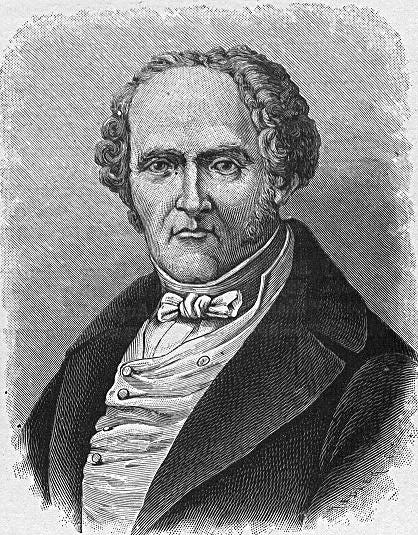
Charles Fourier, was a French philosopher, an influential early socialist thinker, and one of the founders of utopian socialism. Some of his views, held to be radical in his lifetime, have become mainstream in modern society. For instance, Fourier is credited with having originated the word feminism in 1837.
In his 1829 work, The New Industrial and Social World, he wrote:
“To these recent vices, all vices of circumstance, let us add the most shameful, the admission of the Jews to the right of citizenship. It was therefore not enough for the civilized to ensure the reign of deceit; the nations of usurers, the unproductive patriarchs, had to be called to the rescue.
The Jewish nation is not civilized; it is patriarchal, having no sovereign, secretly recognizing none, and believing all knavery praiseworthy when it concerns deceiving those who do not practice its religion. It does not proclaim its principles, but they are well enough known.
A graver wrong in this nation is that it devotes itself exclusively to traffic, to usury, and to mercantile depravity…
Every government having regard to good morals ought to repress the Jews, compel them to engage in productive labour, admit them only in the proportion of one to a hundred: one mercantile family to a hundred agricultural and manufacturing families; but our philosophic age heedlessly admits legions of Jews, all parasites, merchants, usurers, etc.”18
William Cobbett (AD 1763–1835)
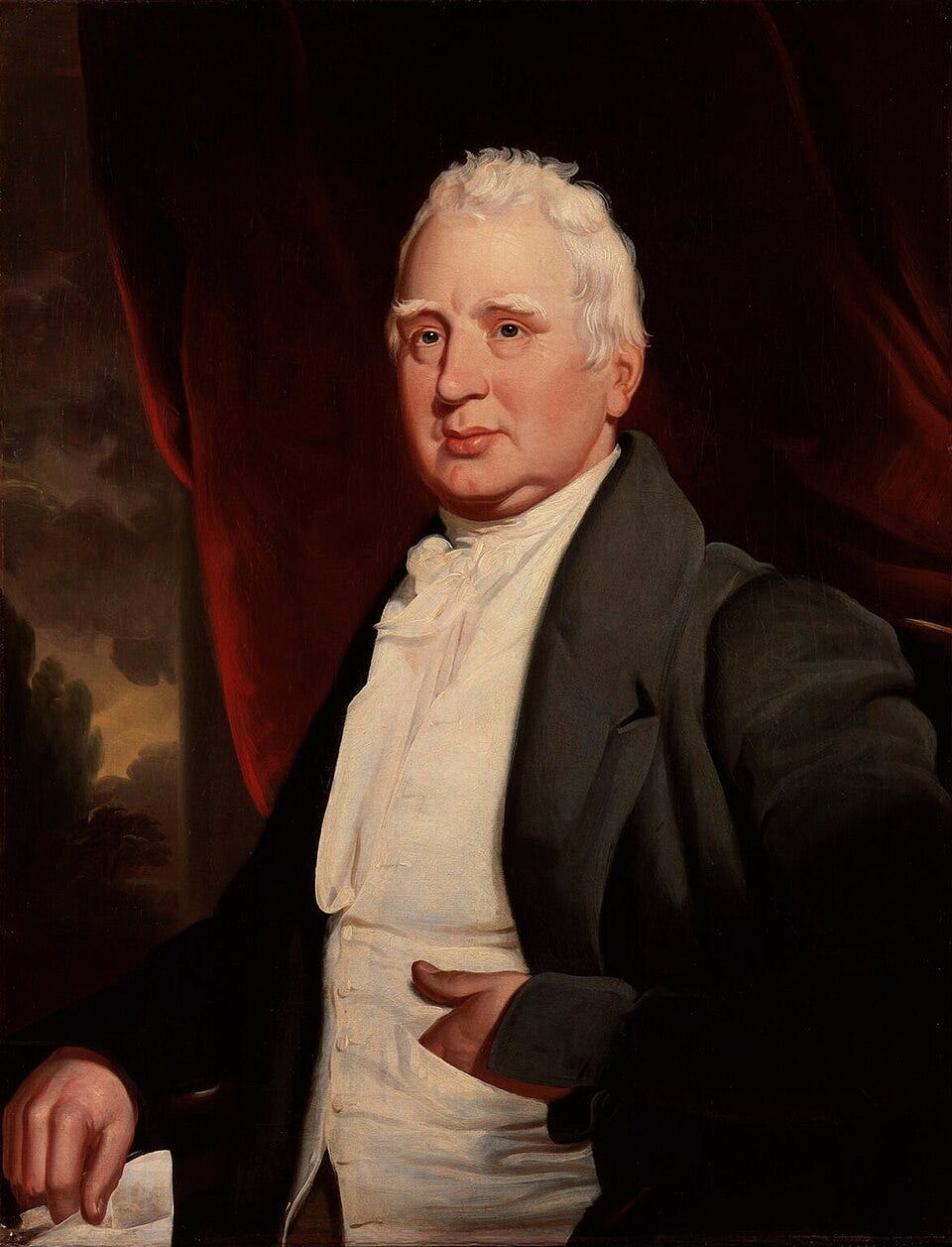
William Cobbett, was an English journalist, pamphleteer, and agrarian reformer. He advocated for restrained foreign activity and raised wages, with the goal of easing poverty among farm laborers and small land holders.
On why he disliked jews, he stated:
“My dislike of the Jews is that which our forefathers had of them: I dislike them as insolent ruffians, who mock the religion and morality of Christians; I dislike them as people that never work, and form a body of wretches who live by trick; I dislike them as usurers, and the great agents of those systems of usury by which so many nations have so severely suffered; and this nation, above all others; in France they were the rapacious farmers of the taxes; in Poland, in Germany, in Hungary; every where, where they have been allowed to practise their arts of plunder, they have produced ruin to the people, and very frequently to the state.”19
In Parliament during the debate on jewish emancipation (March 22nd, 1833), Cobbett challenged a claim that jews were industrious subjects:
“[Whether] he could produce a Jew who ever dug, who went to plough, or who ever made his own coat or his own shoes, or who did anything at all, except get all the money he could from the pockets of the people?”20
Remarking on Britain’s national decline:
“…the daily increasing disposition still to fleece the more than half-shorn clergy, who are compelled to be, in various ways, the mere dependents of the upstarts of trade; the almost entire extinction of the ancient country gentry, whose estates are swallowed up by loan-jobbers, contractors, and nabobs [Indian], who, for the far greater part not Englishmen themselves, exercise in England that sort of insolent sway, which, by the means of taxes raised from English labour, they have been enabled to exercise over the slaves of India or elsewhere; the bestowing of honours upon the mere possessors of wealth, without any regard to birth, character, or talents, or to the manner in which that wealth has been acquired; the familiar intercourse of but too many of the ancient nobility with persons of low birth and servile occupations, with exchange and insurance-brokers, loan and lottery contractors, agents and usurers, in short, with all the Jew-like race of money-changers; the loss of the spirit of independence, which is perceivable in the almost universal willingness and even eagerness, with which the higher classes seek to lean upon the Treasury, and with which the lower classes throw themselves upon the higher in the character of parish poor, thus forming the whole nation into a string of political mendicants, cringing to the minister of the day for a portion of that which he has drained from them in taxes.”21
Louis de Bonald (AD 1754–1840)
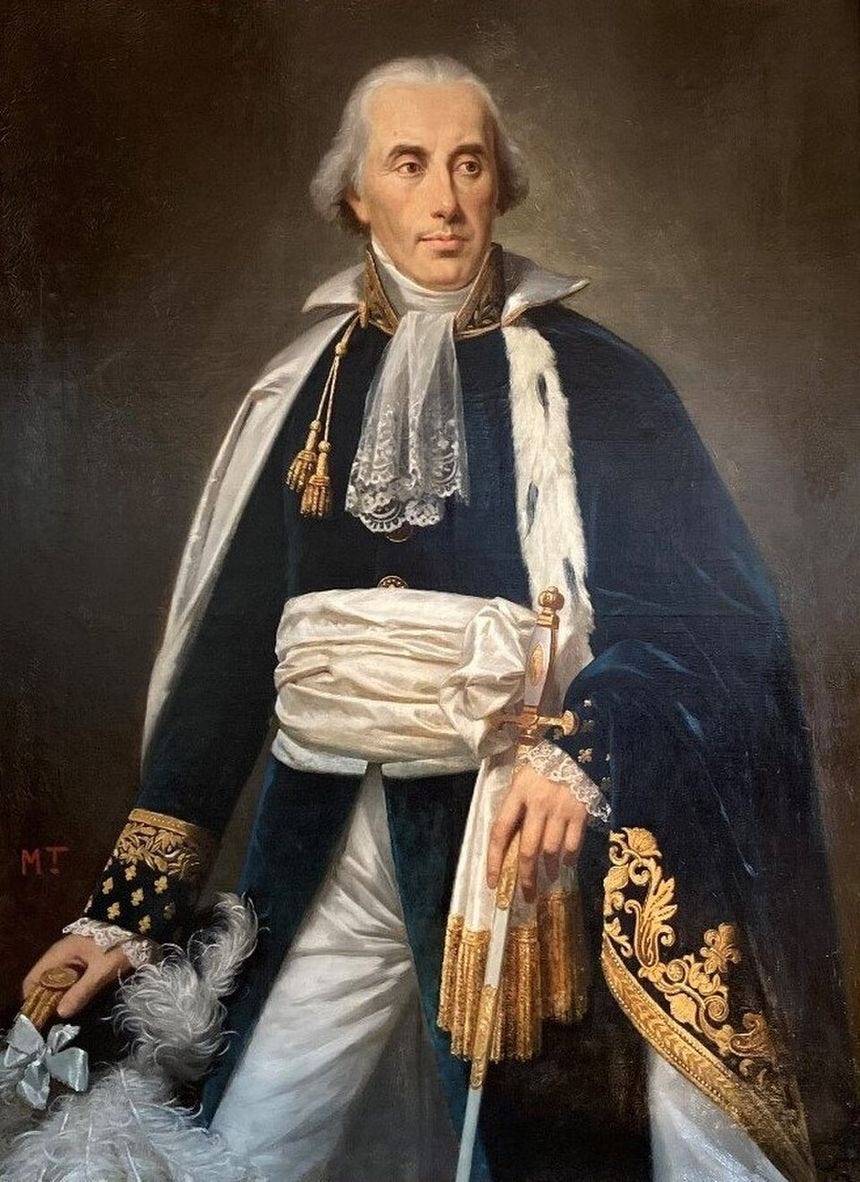
Louis de Bonald, was a counter-revolutionary politician, philosopher, and economist, for which he is mainly remembered for developing a theoretical framework from which French sociology would emerge.
In his article On the Jews (Sur les Juifs, 1806), he stated:22
“For some time now the Jews have been the object of the benevolence of the philosophers and the attention of governments. In these various sentiments there enters philanthropy, indifference toward all religions, and perhaps also a little of the old hatred of Christianity.”
“That is to say, to speak clearly, that the Jews cannot be, and even, whatever one does, will never be citizens under Christianity, without becoming Christians.”
“There is no doubt that if the Jews had been as numerous in the other provinces as they were in Alsace, the friends of the Jews would sooner or later have had to reproach themselves, like the friends of the Blacks, for the haste with which they called to liberty—which then meant domination—a people always foreign even where it is established, and which also had to avenge the unpardonable offense of a long proscription.”
“I do not know whether one day the Jews will be sovereign; but if ever they became legislators, it must be said to our shame that one could challenge a Sanhedrin of Jews to enact more senseless and atrocious laws than those fabricated by a Convention of philosophers.”
Pierre Leroux (AD 1797–1871)
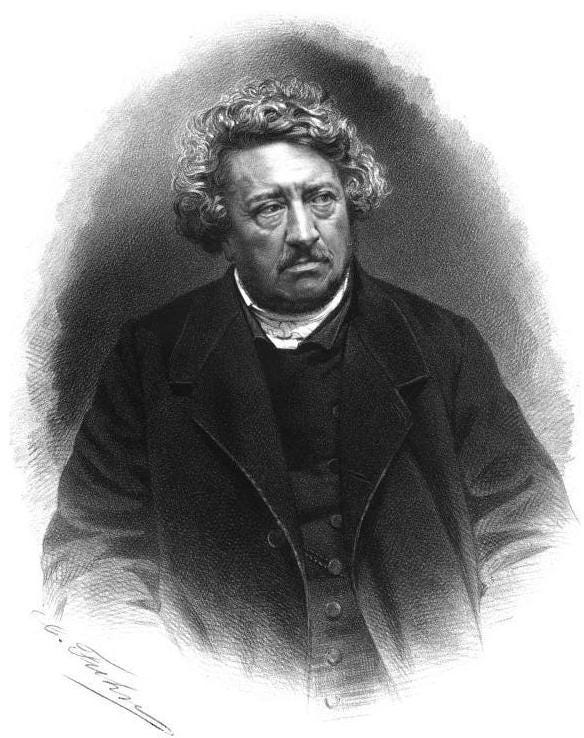
Pierre Leroux, was a French utopian socialist, philosopher, and political economist (often credited with popularizing or coining the term “socialism”).
In his 1846 article, The Jews, Kings of the Era concerning the invention of banking, he wrote:
“Let one, if one wishes, trace general or public banks back to the three monti of Venice, the first of which was established on the account of the republic in the middle of the twelfth century; the true bank will nonetheless be the invention of the Jews. For what constituted and created banking is the bill of exchange, of which banknotes, as well as what we today call shares, bearer bonds, dividend coupons, etc., etc., are only forms and derivatives. All the power of the bank, to accumulate capital and to bring it at a given moment to a decisive point, has come from the invention of the bill of exchange. Now no one denies that it was the Jews who invented it.”23
In his 1846 article, The Jews, Kings of the Era, on the nature of the “jewish spirit,” he wrote:
“The Jewish spirit, the spirit of avarice and greed, is nothing other than one of the forms of the war that man, in his blindness, wages against his fellow man.”24
John R. Commons (AD 1862-1945)
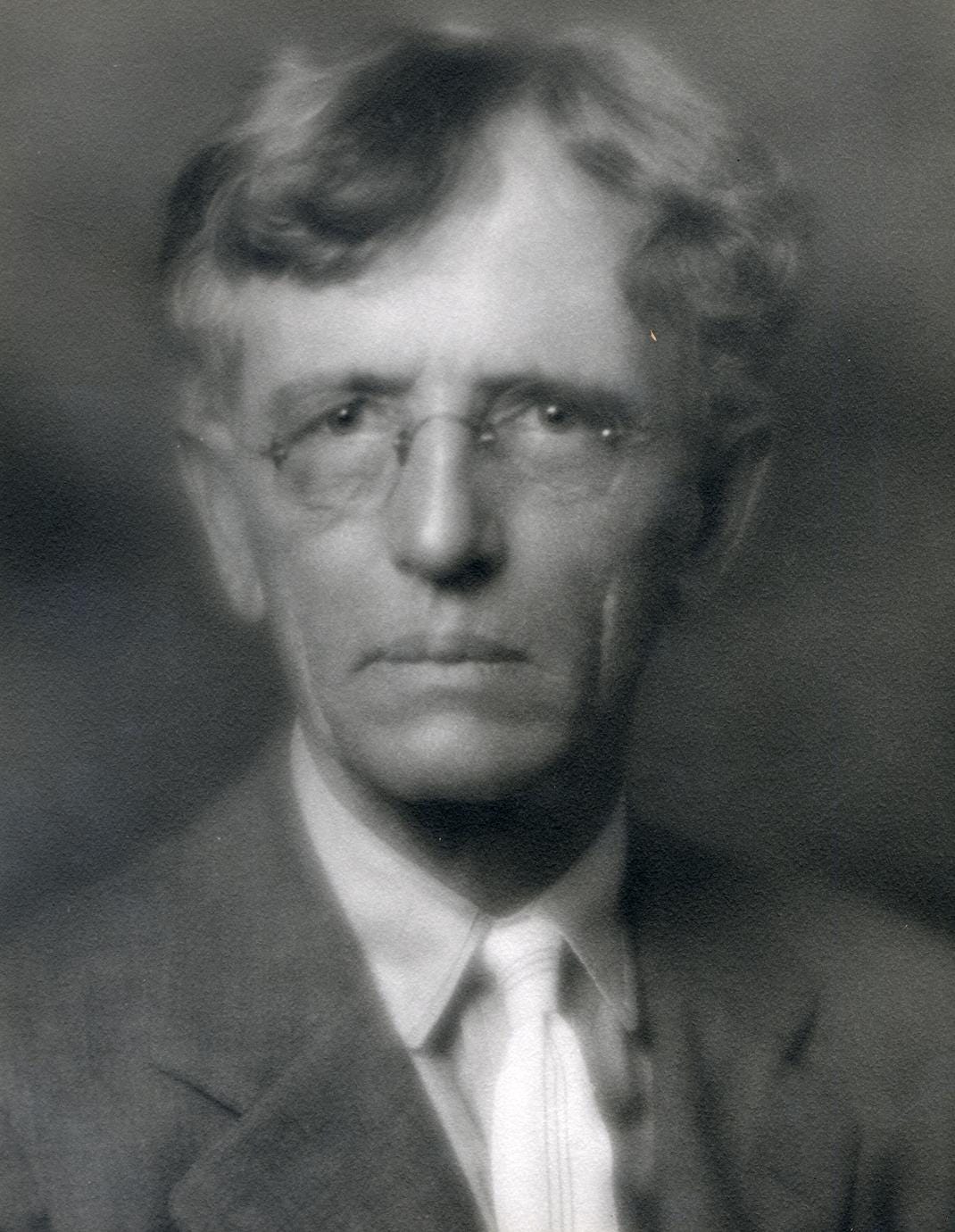
John R. Commons, the American institutional economist and progressive reformer, discussed jews primarily in the context of immigration, labor, and racial characteristics during the Progressive Era.
In his book, Races and Immigrants in America (1907), he stated the following:
“It should not be inferred that the Jews are a race of pure descent. Coming as they do from all sections and nations of Europe, they are truly cosmopolitan, and have taken on the language, customs, and modes of thought of the people among whom they live. More than this, in the course of centuries, their physical characteristics have departed from those of their Semitic cousins in the East, and they have become assimilated in blood with their European neighbors. … That which makes the Jew a peculiar people is not altogether the purity of his blood, but persecution, devotion to his religion, and careful training of his children.”25
“Most remarkable of all, the individualistic Jew from Russia, contrary to his race instinct, is joining the unions.”26 [Commons didn’t understand at the time that jews were collectivizing against Aryans.]
Gustav von Schmoller (AD 1838-1917)
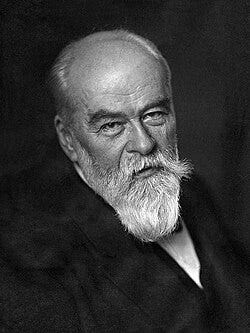
Gustav von Schmoller, was a German economist and leading figure of the Younger Historical School held a neutral stance on the jewish question, but even he stated that jews took advantage of non-jews:
“I regard especially Western German Jewry, fully the assimilated [portion], as a fortunate addition to the Germanic race. It gives us intellectual strengths that we more or less lack, or at least lacked earlier; it has greatly promoted the German economy. But it carries with it the danger that through its commercial superiority, which it still often and in many ways exploits by dubious means, it generates many internal social resentments and struggles. The tendency of the Jew, where he comes into an influential, dominant position, to disadvantage the Germans and Christians is still so manifoldly present that setbacks in the Jew-friendly attitude of all liberals continually recur, and that the resentments of conservative, peasant, small-trade, and cottage-industry circles cannot yet disappear to the extent they have in Western Europe. It is therefore in the interest of the Jews themselves that their predominance in certain positions, professions, and offices should not assert itself too strongly or too visibly.”27
Adolph Wagner (AD 1835-1917)
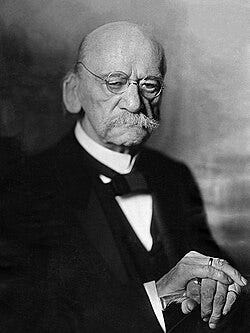
Adolph Wagner, was a German economist and politician, a leading academic socialist, public finance scholar, advocate of agrarianism, and Wagner’s law of increasing state activity is named after him.
In an interview with Hermann Bahr (1893/1894), he states:28
“And in a certain sense I am also an antisemite. I cannot stand the Jewish nature/essence, the Jewish bad habits, and I do believe that it can endanger German customs.”
“Just look at the Jewesses on the street, how they dress and behave! That must awaken a certain aesthetic antisemitism—we simply sense them as a foreign race that is against our taste and our customs. In this sense every German is an antisemite...”
Thomas Carlyle (AD 1795-1881)
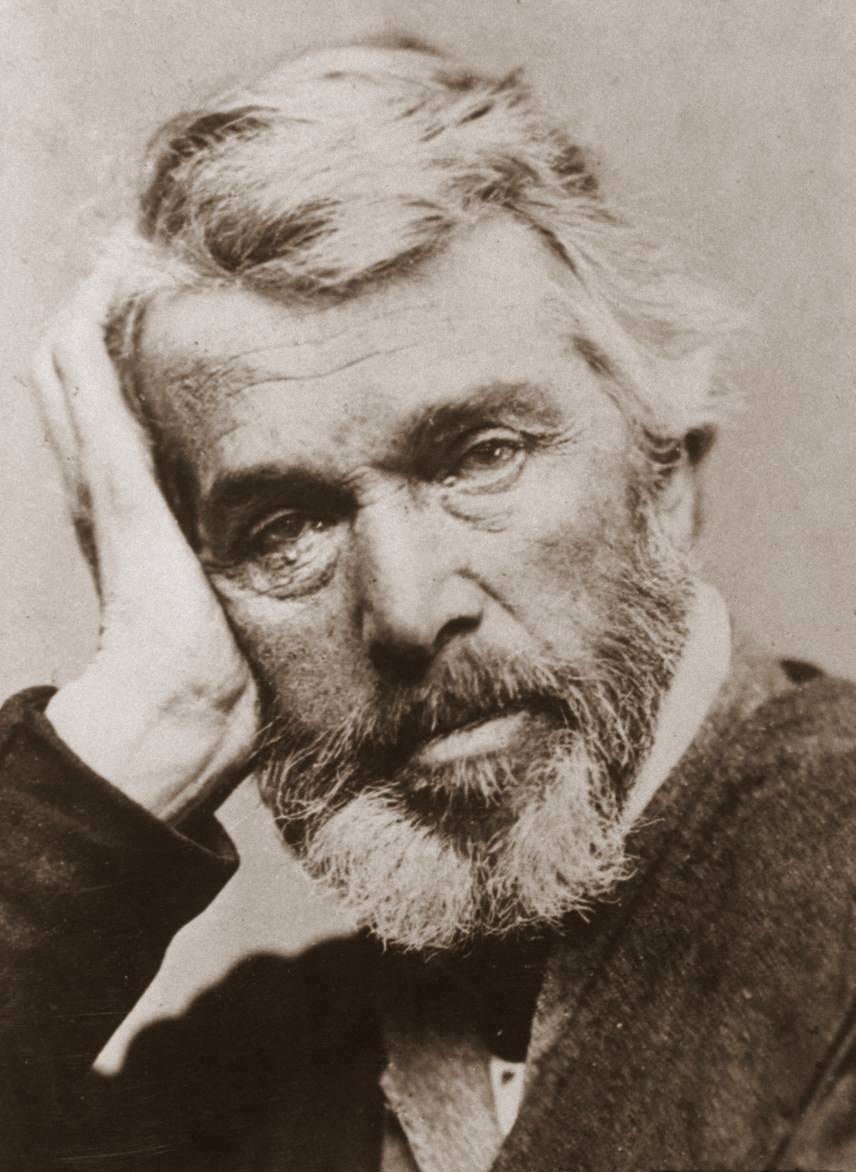
Thomas Carlyle, while not technically an economist, wrote extensively about the economic and social issues of the Industrial Revolution—criticizing laissez-faire capitalism, the “cash nexus,” poverty, and the conditions of the working class.
James Anthony Froude (Carlyle’s biographer and close associate) recorded Carlyle standing opposite Baron Lionel de Rothschild’s mansion at Hyde Park Corner, where Carlyle stated:29
“I do not mean that I want King John back again, but if you ask me which mode of treating these people to have been the nearest to the will of the Almighty about them—to build them palaces like that, or to take the pincers for them, I declare for the pincers.”
He then imagined himself as King John extracting money:
“‘Now, sir, the State requires some of these millions you have heaped together with your financing work. ‘You won’t?’ ‘Very well’—and the speaker gave a twist with his wrist—‘Now will you?’—and then another twist, till the millions were yielded.”
Carlyle is referring to the reign of King John of England (AD 1166-1216). He was incredibly cognizant of the jewish question and in one well-documented case, he ordered a jewish man’s teeth pulled out one by one (with pincers or similar tools) until he paid the 10,000 marks he owed.
Albert Schäffle (AD 1831–1903)
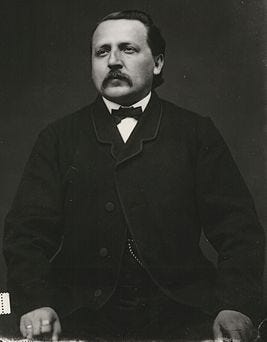
Albert Schäffle, was a German sociologist, political economist, and newspaper editor.
Albert Schäffle developed the idea of the sozialer Parasit (social parasite) in Bau und Leben des sozialen Körpers (Structure and Life of the Social Body).
Schäffle described social parasites as those who live off the labor and wealth of a “host” (Wirt) without making a productive contribution. They are characterized by traits drawn from biological parasites:
shameless intrusiveness;
ability to migrate and adapt to changing circumstances and the whims of the host;
characterless and heartless abandonment of the exploited host;
the penetrating art of sucking dry (Kunst des Aussaugens);
highly elastic ability to leap to a new host;
skill at nesting everywhere, seizing the best places, seeking out debtors, spendthrifts, and vain fools inclined to exploitation, and scenting opportunity “like a raven smells carrion”
In Structure and Life of the Social Body (1881), he states:
“The usurious/proliferating part of Jewry is a parasite, and a highly dangerous one.”30
Edward Alsworth Ross (AD 1866-1951)
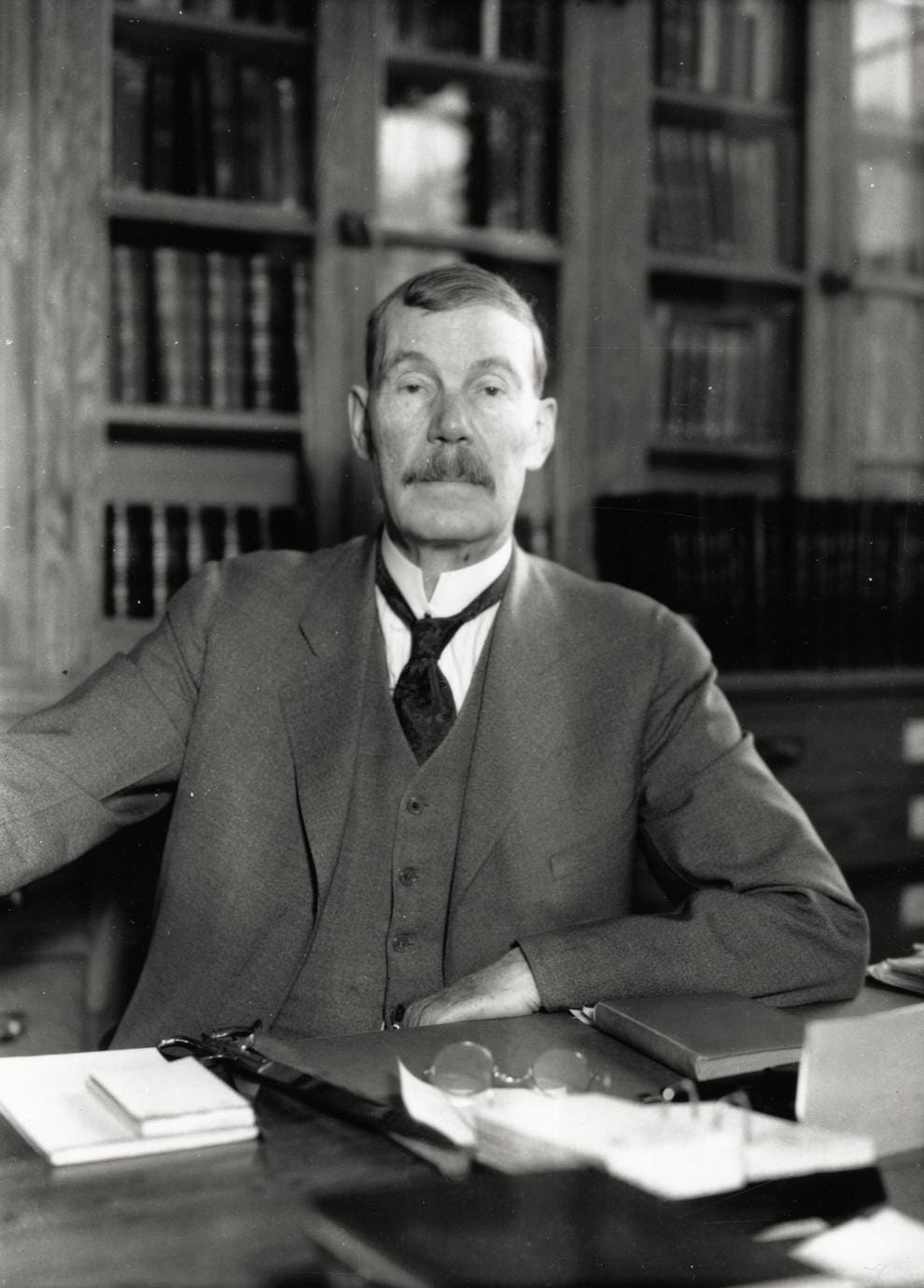
Edward Alsworth Ross, was an American sociologist and university professor, journalist, and publicist. A leading figure in the American Sociological Association, he helped found its journal, the American Journal of Sociology.
The following quotes come from his The Old World in the New: The Significance of Past and Present Immigration to the American People (1914). Here you find him speaking about America becoming the new “promise land” of the jews:
“IN his defense of Flaccus, a Roman governor who had ‘squeezed’ his Jewish subjects, Cicero lowers his voice when he comes to speak of the Jews, for, as he explains to the judges, there are persons who might excite against him this numerous, clannish and powerful element. With much greater reason might an American lower his voice to-day in discussing two million Hebrew immigrants united by a strong race consciousness and already ably represented at every level of wealth, power, and influence in the United States.
…
Easily one-fifth of the Hebrews in the world are with us, and the freshet shows no signs of subsidence. America is coming to be hailed as the ‘promised land,’ and Zionist dreams are yielding to the conviction that it will be much easier for the keen-witted Russian Jews to prosper here as a free component in a nation of a hundred millions than to grub a living out of the baked hillsides of Palestine.”31
And on jews trying to control immigration policy he stated:
“Hence the endeavor of the Jews to control the immigration policy of the United States. Although theirs is but a seventh of our net immigration, they led the fight on the Immigration Commission’s bill. The power of the million Jews in the metropolis lined up the Congressional delegation from New York in solid opposition to the literacy test. The systematic campaign in newspapers and magazines to break down all arguments for restriction and to calm nativist fears is waged by and for one race. Hebrew money is behind the National Liberal Immigration League and its numerous publications. … In order to admit their brethren from the Pale the brightest of the Semites are keeping our doors open to the dullest of the Aryans!”32
Here he comments on jews turning to peddling goods during times of poverty, while the Italians would turn to hard honest work:
“The Hebrew immigrants rarely lay hand to basic production. In tilling the soil, in food growing, in extracting minerals, in building, construction and transportation they have little part. Sometimes they direct these operations, often they finance them, but even in direst poverty they contrive to avoid hard muscular labor. Under pressure the Jew takes to the pack as the Italian to the pick.
…
None can beat the Jew at a bargain, for through all the intricacies of commerce he can scent his profit.”33
While he mentions they show valuable traits, he ultimately states that jews are noisy, disrespectful, more likely to take advantage of their own (when they cannot take advantage of their hosts), and more likely to profit off of White slavery (prostitution):
“The Jewish immigrants cherish a pure, close-knit family life and the position of the woman in the home is one of dignity. More than any other immigrants they are ready to assume the support of distant needy relatives. They care for their own poor, and the spirit of coöperation among them is very noticeable. Their temper is sensitive and humane; very rarely is a Jew charged with any form of brutality. There is among them a fine élite which responds to the appeal of the ideal and is found in every kind of ameliorative work.
Nevertheless, fair-minded observers agree that certain bad qualities crop out all too often among these eastern Europeans. … Genial settlement residents, who never tire of praising Italian or Greek, testify that no other immigrants are so noisy, pushing and disdainful of the rights of others as the Hebrews. That the worst exploiters of these immigrants are sweaters, landlords, employers and ‘white slavers’ of their own race no one gainsays.”34
William Cunningham (AD 1849-1919)
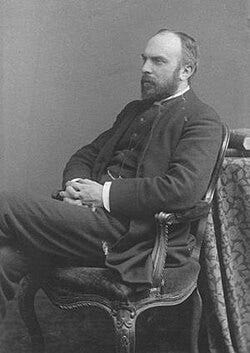
William Cunningham, was a Scottish economic historian and Anglican priest. He was a proponent of the historical method in economics and an opponent of free trade.
In his standard work, The Growth of English Industry and Commerce (1882), about the medieval English economic history, he stated the following about monopoly of moneylending and royal control:
“From the fact that taking of interest was prohibited to Christian men, it followed that money-lending was a business which could not be pursued except by Jews; in England they had an entire monopoly of it for a time. But the Jews had no rights or status of their own; they were the mere chattels of the king, all that they had was his. In this lay their security from popular violence; but it was a security for which they had to pay dearly. Their transactions were all registered in the Exchequer; debts due to them were really due to the king; and they might not accept compositions for payment, or grant a secret release. As a matter of fact therefore, the king had, indirectly, a monopoly of the money-lending in the country: so that the expulsion of the Jews by Edward I. was a permanent loss of revenue to the crown. The Jews gained usurious interest, and banking.”35
He continues with the 1290 AD expulsion of the jews from England by King Edward Longshanks:
“For no action has Edward I. been more unjustly blamed than for the expulsion of the Jews. In the interests of good government the step was absolutely necessary, for owing to changes of circumstances, the Jews could no longer be treated as royal chattels, nor was the law strong enough to protect them if they were placed in the position of other citizens. When the step was determined on, every care was taken to protect the Jews on their journey, and to procure for them the payment of the sums owed them by granting a remission of money that would otherwise have been exacted for the crown, to those who discharged their debts to the Jews themselves.”36
What Cunningham means by “circumstances” was the fact that there was a growing popular and clerical hostility towards jews. Increased accusations of blood libel, intensified crusader rhetoric, and inter-racial conflicts created an unlikely environment for jews to stay in England. While jews enjoyed special royal protection—with the condition that jews were essentially indefinite indentured servants—, the protection became politically costly and harder to enforce.
So, 3 years into his reign, King Edward I. made the Statute of the Jewry (1275 AD), which banned usury (jews’ main livelihood) and tried to push them into honest professions such as farming and the trades.
Before he made the statue in 1275, he began consolidating common-law administration, approved parliamentary consent for taxation, and created more uniform governance. And as the years went on, the 1275 statute was failing. Jews were excluded from guilds (because jews didn’t do manual labor and tried to strong-arm the guilds), landholding remained heavily restricted, and many jews continued lending under the nose of the royal government. Therefore, their economic usefulness to the Crown declined sharply.
Effectively, there was no possible way for King Edward I. to allow them to stay in England without it completely destroying English society.
Conclusion
There are more examples that I could find and publish in this article, but I believe the point—from an economic standpoint—has been accurately made. It wasn’t until after WWII, when economics became dominated by jews, that economists stopped finding correlations between unfair practices and the jews. Since WWII, all we hear is how jews are a net benefit to our economy because they are hard workers, smart, diligent, and productive. But the truth is, they don’t actually produce anything, they’re not that clever, they look down on making an honest living, and they take advantage of other peoples for their overall benefit.
Since is the case, why would any rational thinking person ever want the jews to live inside their nation’s borders? And if you’re against this parasitism, the only real option for you is to become antisemitic. However, if you’re now antisemitic, you must look at the other non-Whites in your nation and see the problems with them as well. Ultimately, you must adopt a nationalist mindset in order preserve your race, you culture, your Christianity, and your way of life.

Gottfried Feder, The German State on a National and Socialist Foundation, trans. Alexander Jacob (Black House Publishing), p. 161–162.
Gottfried Feder, The German State on a National and Socialist Foundation, trans. Alexander Jacob, p. 83 (approx.; the exact phrasing appears in the section discussing the modern credit system and interest slavery).
Gottfried Feder, The German State on a National and Socialist Foundation, trans. Alexander Jacob, p. 113.
Werner Sombart, The Jews and Modern Capitalism, trans. M. Epstein (1913), p. 30.
Werner Sombart, The Jews and Modern Capitalism, trans. M. Epstein (1913), pp. 38–44.
Werner Sombart, The Jews and Modern Capitalism, trans. M. Epstein (1913), p. 11 (or nearby in the introductory section of most editions).
John Maynard Keynes, unpublished Eton school essay “The Differences Between East and West” (c. 1900–1902). Quoted in Robert Skidelsky, John Maynard Keynes: Hopes Betrayed, 1883–1920 (and held in the Keynes Papers, King’s College, Cambridge).
John Maynard Keynes, “A Short View of Russia” (1925), in The Collected Writings of John Maynard Keynes, Vol. 9: Essays in Persuasion, pp. 253–271 (Cambridge University Press/Royal Economic Society).
John Maynard Keynes, “Einstein,” in The Collected Writings of John Maynard Keynes, Vol. 10: Essays in Biography, ed. Elizabeth Johnson and Donald Moggridge (Macmillan/Royal Economic Society, 1972), pp. 382–384.
Alphonse Toussenel, Les Juifs, rois de l’époque: histoire de la féodalité financière, Vol. 1 (Paris: Librairie de l’École sociétaire/G. de Gonet, 1845/1847), p. 73 (or equivalent in later reprints such as the 1886 edition).
Alphonse Toussenel, Les Juifs, rois de l’époque: histoire de la féodalité financière (Paris: Librairie de l’École sociétaire, 1845), Introduction/Preface (p. xxv in the 1845 edition; also appears in the preface to the 1847 second edition and later reprints, e.g., around p. 23 in some editions).
Eugen Dühring, Die Judenfrage als Racen-, Sitten- und Culturfrage. Mit einer weltgeschichtlichen Antwort (Karlsruhe and Leipzig: H. Reuther, 1881), p. 8.
Eugen Dühring, Die Judenfrage als Frage der Racenschädlichkeit für Existenz, Sitte und Cultur der Völker (Berlin: H. Reuther, 1892, 4th edition), p. 178.
Maffeo Pantaleoni, “Leonida Bissolati, Ministro del Re,” La Vita Italiana, November 1916; reprinted in Note in margine della guerra (Bari: Gius. Laterza & Figli, 1917), pp. 215–216.
Maffeo Pantaleoni, “Plutocrazia e bolcevismo giudaico sgretolano il fascismo,” La Vita Italiana, June 1921; reprinted in Bolcevismo italiano (Bari: Gius. Laterza & Figli, 1922).
Pierre-Joseph Proudhon, Carnets de P.-J. Proudhon, ed. Marcel Rivière (or Pierre Haubtmann), Paris: Librairie Marcel Rivière, 1960–1961, Volume II, p. 337 (notebook entry dated 26 December 1847).
Pierre-Joseph Proudhon, Césarisme et christianisme (de l’an 45 avant J.-C. à l’an 476 après), Tome 1, Paris: C. Marpon et E. Flammarion, 1883, p. 139.
Edmund Silberner, “Charles Fourier on the Jewish Question,” Jewish Social Studies, Vol. 8, No. 4 (October 1946), pp. 245–266.
Political Register, 5 June 1830, p. 730.
Hansard, House of Commons, 22 March 1833.
Political Register, 27 October 1804
Mercure de France, 8 February 1806, pp. 249–267
Pierre Leroux, “Les Juifs, rois de l’époque,” Revue sociale 4 (January 1846): 49–58.
Pierre Leroux, “Les Juifs, rois de l’époque,” Revue sociale 4 (January 1846): 49–58.
John R. Commons, Races and Immigrants in America, 1907, pp. 93–95 (depending on the edition).
John R. Commons, Races and Immigrants in America, 1907, p. 153
Gustav Schmoller, “Die heutige deutsche Judenfrage,” Schmollers Jahrbuch 41 (1917): 563–567 (originally in Tägliche Rundschau, 16 January 1917); reprinted in Zwanzig Jahre deutscher Politik (1897–1917) (1920).
Hermann Bahr, Der Antisemitismus. Ein internationales Interview (Berlin: S. Fischer, 1894), chapter/section on Adolf Wagner, pp. 70–78
James Anthony Froude, Thomas Carlyle: A History of His Life in London, 1834–1881, Volume II, pp. 448–450.
Albert Schäffle, Bau und Leben des sozialen Körpers (Tübingen: H. Laupp; multi-volume work, relevant sections commonly cited from the 1881 or revised editions).
Edward Alsworth Ross, The Old World in the New: The Significance of Past and Present Immigration to the American People (New York: The Century Co., 1914), Chapter VII, “The East European Hebrews,” pp. 143–144
Edward Alsworth Ross, The Old World in the New: The Significance of Past and Present Immigration to the American People (New York: The Century Co., 1914), Chapter VII, “The East European Hebrews,” pp. 144–145
Edward Alsworth Ross, The Old World in the New: The Significance of Past and Present Immigration to the American People (New York: The Century Co., 1914), Chapter VII, “The East European Hebrews,” pp. 146–148
Edward Alsworth Ross, The Old World in the New: The Significance of Past and Present Immigration to the American People (New York: The Century Co., 1914), Chapter VII, “The East European Hebrews,” (mid-chapter, approx. pp. 149–153
William Cunningham, The Growth of English Industry and Commerce, 1882, pp. 187–193.
William Cunningham, The Growth of English Industry and Commerce, 1882, p. 265.