


Why White Christians and Pagans Cannot Coexist: No Other Gods Before Me
White Christians and pagans cannot coexist—not authentically, not sustainably, and not without one side ultimately subordinating or erasing the other.
This isn’t about personal tolerance or secular laws papering over differences; it’s about irreconcilable claims on truth, identity, history, and the soul of European-descended (“White”) peoples.
From the standpoint of serious Christians and serious pagans alike, the theological, historical, and ethno-cultural fault lines make stable, equal coexistence a delusion. One worldview must yield.
The Biblical Foundation: God’s Jealousy and the Command Against Idolatry
Exodus 20 and the Second Commandments
Exodus 20:3-6 stands as an unbreakable wall between Christianity and any form of paganism:
3.) Thou shalt have no other gods beside me.
4.) Thou shalt not make to thyself an idol, nor likeness of anything, whatever things are in the heaven above, and whatever are in the earth beneath, and whatever are in the waters under the earth.
5.) Thou shalt not bow down to them, nor serve them; for I am the Lord thy God, a jealous God, recompensing the sins of the fathers upon the children, to the third and fourth generation to them that hate me,
6.) and bestowing mercy on them that love me to thousands of them, and on them that keep my commandments.
This is not some flowery or poetic language. This is not a cultural suggestion, it is divine law spoken directly by God (who later revealed Himself fully in Christ) to Moses to give to His followers.
For White Christians whose ancestors (of which include mostly former pagans) built Christendom on this foundation, the command is non-negotiable. Pagan revival—whether heathenry, Ásatrú, or any reconstruction of pre-Christian European gods—directly violates it. Honoring Odin, Thor, or any ancestral deity is not “cultural heritage”; from Scripture’s standpoint, it is idolatry, plain and severe.
The Punishment for Idolatry
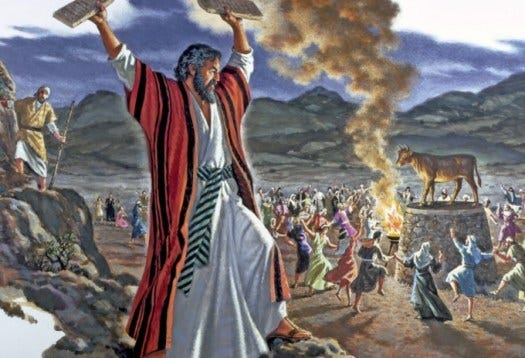
The punishments for the idolatry are also plain and severe. In Exodus 32, we see 3,000 idolatrous Israelites massacred by the faithful Israelites as punishment. Originally God was going to slay all of the Israelites until Moses convinced Him to spare the faithful.
Exodus 32 states:
1.) And when the people saw that Moses delayed to come down from the mountain, the people combined against Aaron, and said to him, “Arise and make us gods who shall go before us; for this Moses, the man who brought us forth out of the land of Egypt—we do not know what is become of him.”
2.) And Aaron says to them, “Take off the golden ear-rings which are in the ears of your wives and daughters, and bring them to me.”
3.) And all the people took off the golden ear-rings that were in their ears, and brought them to Aaron.
4.) And he received them at their hands, and formed them with a graving tool; and he made them a molten calf, and said, “These are thy gods, O Israel, which have brought thee up out of the Land of Egypt.”
5.) And Aaron having seen it build an altar before it, and Aaron made proclamation saying, “To-morrow is a feast of the Lord.”
6.) And having risen early on the morrow, he offered whole burnt-offerings, and offered a peace offering; and the people sat down to eat and drink, and rose up to play.
7.) And the Lord spoke to Moses, saying, “Go quickly, descend hence, for thy people who though broughtest out of the land of Egypt have transgressed;
8.) they have quickly gone out of the way which thou commandedst; they have made for themselves a calf, and worshipped it, and sacrificed to it, and said, ‘These are thy god, O Israel, who brought thee up out of the land of Egypt.’
9.) And now let me alone, and I will be very angry with them and consume them, and I will make thee a great nation.”
10.) And Moses prayed before the Lord God, and said “Wherefore, O Lord, art thou very angry with they people, whom though broughtest out of the land of Egypt with great strength, and with they high arm?
11.) Take heed lest at any time the Egyptians speak, saying ‘With evil intent he brought them out to slay them in the mountains, and to consume them from off the earth;’ cease from they wrathful anger, and be merciful to the sin of thy people,
12.) remembering Abraham and Isaac and Jacob thy servants, to whom thou hast sworn by thyself, and hast spoken to them, saying, ‘I will greatly multiply your seed as the stars of heaven for multitude, and all this land which thou spokest of to give to them, so that they shall possess it forever.’
13.) And the Lord was prevailed upon to preserve His people.
14.) And Moses turned and went down from the mountain, and the two tables of testimony were in his hands, tables of stone written on both their sides: they were written within and without.
15.) And the tables were the work of God, and the writing of God written on the tables.
16.) And Joshua having heard the voice of people crying, says to Moses, “There is noise of war in the camp.”
17.) And Moses says, “It is not the voice of them that begin the battle, nor the voice of them that begin the cry of defeat, but the voice of them that begin the banquet of wine I do hear.”
18.) And when he drew nigh to the camp, he sees the calf and the dances; and Moses being very angry cast the two tables out of his hands, and broke them to pieces under the mountain.
19.) And having taken the calf which they made, he consumed it with fire, and ground it very small, and scattered it on the water, and made the children of Israel to drink it.
20.) And Moses said to Aaron, “What has this people done to thee, that thou hast brought upon them a great sin?”
21.) And Aaron said to Moses, “Be not angry, my lord, for thou knowest the impetuosity of this people.”
22.) For they say to me, ‘Make us gods, which shall go before us for as this man Moses, who brought us out of Egypt, we do not know what is become of him.’
23.) And I said to them, “If anyone had golden ornaments, take them off;” and they gave them me, and I cast them into the fire, and there came out this calf.
24.) And when Moses saw that the people was scattered,—for Aaron had scattered them so as to be a rejoicing to their enemies,—
25.) then stood Moses at the gate of the camp, and said, “Who is on the Lord’s side? Let him come to me.” Then all the sons of Levi came to him.
26.) And he says to them, “Thus saith the Lord God of Israel, ‘Put every one his sword on his thigh, and go through and return from gate to gate through the camp, and slay every one his brother, and every one his neighbor, and every one him that is nearest to him.’”
27.) And the sons of Levi did as Moses spoke to them, and there fell of the people in that day to the number of three thousand men.
And it is written in 4 Kings 17:7-18;
7.) For it came to pass that the children of Israel had transgressed against the Lord their God, who had brought them up out of the land of Egypt, from under the hand of Pharaoh king of Egypt, and they feared other gods,
8.) and walked in the statutes of the nations which the Lord cast out before the face of the children of Israel, and of the kings of Israel as many as did such things,
9.) and in those of the children of Israel as many as secretly practiced customs, not as they should have done, against the Lord their God:
10.) and they built for themselves high places in all their cities, from the tower of the watchmen to the fortified city. And they made for themselves pillars and groves on every high hill, and under every shady tree.
11.) And burned incense there on all high places, as the nations did whom the Lord removed from before them, and dealt with familiar spirits, and they carved images to provoke the Lord to anger.
12.) And they served the idols, of which the Lord said to them, ‘Ye shall not do this thing against the Lord.’
13.) And the Lord testified against Israel and against Juda, even by the hand of all his prophets, and of every seer, saying, ‘Turn ye from your evil ways, and keep my commandments and my ordinances, and all the law which I commanded your fathers, and all that I sent to them by the hand of my servants the prophets.’
14.) But they hearkened not, and made their neck harder than the neck of their fathers.
15.) And they kept not any of his testimonies which he charged them; and they walked after vanities, and became vain, and after the nations round about them, concerning which the Lord had charged them not to do accordingly.
16.) They forsook the commandments of the Lord their God, and made themselves graven images, even two heifers, and they made groves, and worshipped all the host of heaven, and served Baal.
17.) And they caused their sons and their daughters to pass through the fire, and used divinations and auspices, and sold themselves to work wickedness in the sight of the Lord, to provoke him.
18.) And the Lord was very angry with Israel, and removed them out of his sight; and there was only left the tribe of Juda quite alone.
For their idolatry, the northern kingdom of Israel was exiled for their lands.
We see this again in Jeremiah 25:4-11, which states;
4.) and I sent to you my servants the prophets, sending them early; (but ye hearkened not, and listened not with your ears;) saying,
5.) “Turn ye every one from his evil way, and from your evil practices, and ye shall dwell in the land which I gave to you and your fathers, of old and for ever.
6.) Go ye not after strange gods, to serve them, and to worship them, that ye provoke me not by the works of your hands, to do you hurt.”
7.) But ye hearkened not to me.
8.) Therefore thus saith the Lord; ‘Since ye believed not my words,
9.) behold, I will send and take a family from the north, and will bring them against this land, and against the inhabitants of it, and against all the nations round about it, and I will make them utterly waste, and make them a desolation, and a hissing, and an everlasting reproach.
10.) And I will destroy from among them the voice of joy, and the voice of gladness, the voice of the bridegroom, and the voice of the bride, the scent of ointment, and the light of a candle.
11.) And all the land shall be a desolation; and they shall serve among the Gentiles seventy years.’
Again we see more punishment in 2 Chronicles 36:14-25, where the Lord uses pagans to punish the unfaithful:
14.) And Nabuchodonosor king of Babylon came up against him, and bound him with brazen fetters, and carried him away to Babylon.
15.) And he carried away a part of the vessels of the house of the Lord to Babylon, and put them in his temple in Babylon.
16.) And the rest of the acts of Joakim, and all that he did, behold, are not these things written in the book of the chronicles of the kings of Juda? And Joakim slept with his fathers, and was buried with his fathers in Ganozae: and Jechonias his son reigned in his stead.
17.) Jechonias was eight years old when he began to reign, and he reigned three months and ten days in Jerusalem, and did that which was evil in the sight of the Lord.
18.) And at the turn of the year, king Nabuchodonosor sent, and brought him to Babylon, with the precious vessels of the house of the Lord, and made Sedekias his father's brother king over Juda and Jerusalem.
19.) Sedekias was twenty-one years old when he began to reign, and he reigned eleven years in Jerusalem.
20.) And he did that which was evil in the sight of the Lord his God: he was not ashamed before the prophet Jeremias, nor because of the word of the Lord;
21.) in that he rebelled against king Nabuchodonosor, which he adjured him by God not to do: but he stiffened his neck, and hardened his heart, so as not to return to the Lord God of Israel.
22.) And all the great men of Juda, and the priests, and the people of the land transgressed abundantly in the abominations of the heathen, and polluted the house of the Lord which was in Jerusalem.
23.) And the Lord God of their fathers sent by the hand of His prophets; rising early and sending His messengers, for He spared his people, and His sanctuary.
24.) Nevertheless they sneered at His messengers, and set at nought His words, and mocked His prophets, until the wrath of the Lord rose up against His people, till there was no remedy.
25.) And He brought against them the king of the Chaldeans, and slew their young men with the sword in the house of His sanctuary, and did not spare Sedekias, and had no mercy upon their virgins, and they led away their old men: He delivered all things into their hands.
God is merciful as later He brings about the life of the Persian King Cyrus the Great to free the faithful who were enslaved and destroy the Babylonians.
What Scripture Says About Other Gods as Demons
The New Testament removes any ambiguity on the subject. Paul writes in 1 Corinthians 10:20:
“But the things which the heathens sacrifice, they sacrifice to devils, and not to God. And I would not that you should be made partakers with devils.”
The old “gods” of Europe were never neutral powers or “different aspects of the divine.” Scripture identifies them as demonic entities masquerading as deities.
Deuteronomy 32:17-33 echoes the same:
17.) They sacrificed to devils, and not to God; to gods whom they knew not: new and fresh gods came in, whom their fathers knew not.
18.) Thou hast forsaken God that begot thee, and forgotten God who feeds thee.
19.) And the Lord saw, and was jealous; and was provoked by the anger of His sons and daughters,
20.) And said, ‘I will turn away My face from them, and will show what shall happen to them in the last days; for it is a perverse generation, sons in whom is no faith.
21.) They have provoked Me to jealousy with that which is not God, they have exasperated Me with their idols; and I will provoke them to jealousy with them that are no nation, I will anger them with a nation void of understanding.
22.) For a fire has been kindled out of My wrath, it shall burn to hell below; it shall devour the land, and the fruits of it; it shall set on fire the foundations of the mountains.
23.) I will gather evils upon them, and will fight with my weapons against them.
24.) They shall be consumed with hunger and the devouring of birds, and there shall be irremediable destruction: I will send forth against them the teeth of wild beasts, with the rage of serpents creeping on the ground.
25.) Without, the sword shall bereave them of children, and terror shall issue out of the secret chambers; the young man shall perish with the virgin, the suckling with him who has grown old.
26.) I said, I will scatter them, and I will cause their memorial to cease from among men.
27.) Were it not for the wrath of the enemy, lest they should live long, lest their enemies should combine against them; lest they should say, ‘Our own high arm, and not the Lord, has done all these things.’
28.) It is a nation that has lost counsel, neither is there understanding in them.
29.) They had not sense to understand: let them reserve these things against the time to come.
30.) How should one pursue a thousand, and two rout tens of thousands, if God had not sold them, and the Lord delivered them up?
31.) For their gods are not as our God, but our enemies are void of understanding.
32.) For their vine is of the vine of Sodom, and their vine-branch of Gomorrah: their grape is a grape of gall, their cluster is one of bitterness.
33.) Their wine is the rage of serpents, and the incurable rage of asps.
“They sacrificed to devils, and not to God.” Faithful Christians do not have the luxury of treating pagan “gods” as harmless folklore or ancestral spirits. To do so is to partner with the very forces Scripture and the Lord warns will deceive the nations. White Christians today who flirt with pagan aesthetics or “folk traditions” are not reclaiming heritage—they are opening the door to spiritual deception.
Why Syncretism Is Not an Option for Faithful Christians
There has been a new phenomena that I have witnessed called “Christo-paganism.” But any attempt to blend Jesus with the old “gods” is not a creative middle ground; it is apostasy.
Jesus Himself declared in Matthew 6:24:
“No man can serve two masters. For either he will hate one, and love the other: or he will sustain the one, and despise the other. You cannot serve God and mammon.”
The early Church fathers repeatedly condemned any mixing of the Gospel with pagan rites. 1 Thessalonians 1:9 states;
“For they themselves relate of us, what manner of entering in we had unto you; and how you turned to God from idols, to serve the living and true God.”
While for European-descended Christians, the temptation might be the strongest because the old “gods” feel “native.” However, they are anything but. For it was God that created the universe and not the old “gods” which are devils.
Scripture does not make exceptions for blood or soil. Either Christ is Lord of all, or He is not Lord at all. Syncretism dilutes the Gospel into a harmless cultural accessory and robs believers of the power of the cross. There is no faithful coexistence here—only a slow slide into spiritual compromise.
The Exclusive Claims of Christ: One Way, One Truth, One Life
John 14:6 and the Impossibility of Serving Two Masters
Jesus’ words in John 14:6 cut to the heart of the matter:
“Jesus saith to him: I am the way, and the truth, and the life. No man cometh to the Father, but by Me.”
This is not marketing language or one path among many. It is an absolute truth. Pagan traditions operate on reciprocity with multiple gods; Christianity demands exclusive allegiance to the Triune God. There is no theological overlap that allows both to thrive side-by-side in the same heart, the same family, or the same culture. White Christians who imagine they can honor both Christ and their ancestors’ pagan deities are living in self-deception. The claims are mutually exclusive.
The Gospel Versus Ancestral Pagan “Gods”
The Gospel offers forgiveness, resurrection, and eternal life through Christ’s finished work. Pagan paths emphasize fate (wyrd), heroic honor, and this—worldly cycles—valuable virtues in their context, but powerless to save. The New Testament repeatedly warns against returning to “weak and worthless elementary principles.”
Galatians 4:9 states;
“But now, after that you have known God or rather are known by God: how turn you again to the weak and needy elements, which you desire to serve again?”
For White Christians, whose ancestors were converted to Christ over centuries, embracing pagan revival is not progress—it is regression to the very bondage Christ delivered them from. The Gospel transformed Europe; the old gods did not. Christians cannot pretend otherwise without betraying the faith once delivered to the saints.
Scripture offers no middle ground: repentance and turning to Christ alone is the only path that cancels the debt and restores relations with God.
Acts 17:29-31 states;
29.) Being therefore the offspring of God, we must not suppose the divinity to be like unto gold, or silver, or stone, the graving of art, and device of man.
30.) And God indeed having winked at the times of this ignorance, now declareth unto men, that all should every where do penance.
31.) Because He hath appointed a day wherein He will judge the world in equity, by the man whom He hath appointed; giving faith to all, by raising Him up from the dead.
Spiritual Danger of “Christo-Pagan” Compromise
Compromise always begins small: a rune tattoo “for heritage,” a Yule ritual “for culture,” a casual interest in the Eddas.1 But Scripture is clear—idolatry starts in the heart and leads to judgment.
Romans 1:21-25 states:
21.) Because that, when they knew God, they have not glorified Him as God, or given thanks; but became vain in their thoughts, and their foolish heart was darkened.
22.) For professing themselves to be wise, they became fools.
23.) And they changed the glory of the incorruptible God into the likeness of the image of a corruptible man, and of birds, and of four-footed beasts, and of creeping things.
24.) Wherefore God gave them up to the desires of their heart, unto uncleanness, to dishonour their own bodies among themselves.
25.) Who changed the truth of God into a lie; and worshipped and served the creature rather than the Creator, who is blessed forever. Amen.
White Christians face a unique pressure in our time: secularism has hollowed out cultural Christianity, and pagan revival offers an emotionally resonant alternative rooted in “blood and soil.” Yet the spiritual cost is eternal. The Bible does not permit “both/and.” It demands “Christ alone.”
Blood and soil to our people is not paganism, but Christianity. As it was God that gave us our soul and created our blood.

Historical Reality: Christianity Supplanted Pagan Europe, Not Coexisted With It
From Roman Temples to Christian Cathedrals
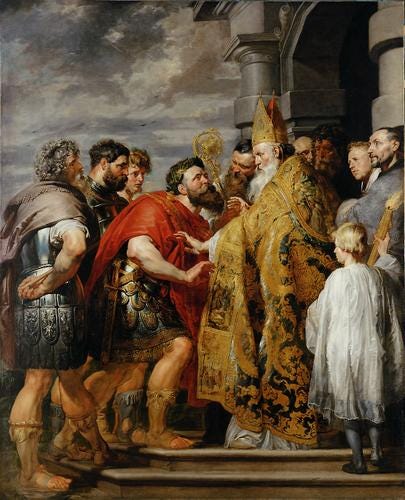
History records no golden age of peaceful pluralism between Christianity and European paganism. When Constantine and later Theodosius made Christianity the faith of the empire, pagan temples were closed, sacrifices banned, and public worship of the old “gods” outlawed.
Constantine’s Edict of Milan (313 AD) may have granted tolerance, but its intention was to stop the pagans from attacking the Christians within the Roman Empire, and it set the way for Christianity to steam roll the other “gods”. Because in a marketplace of free ideas, Christianity wins.
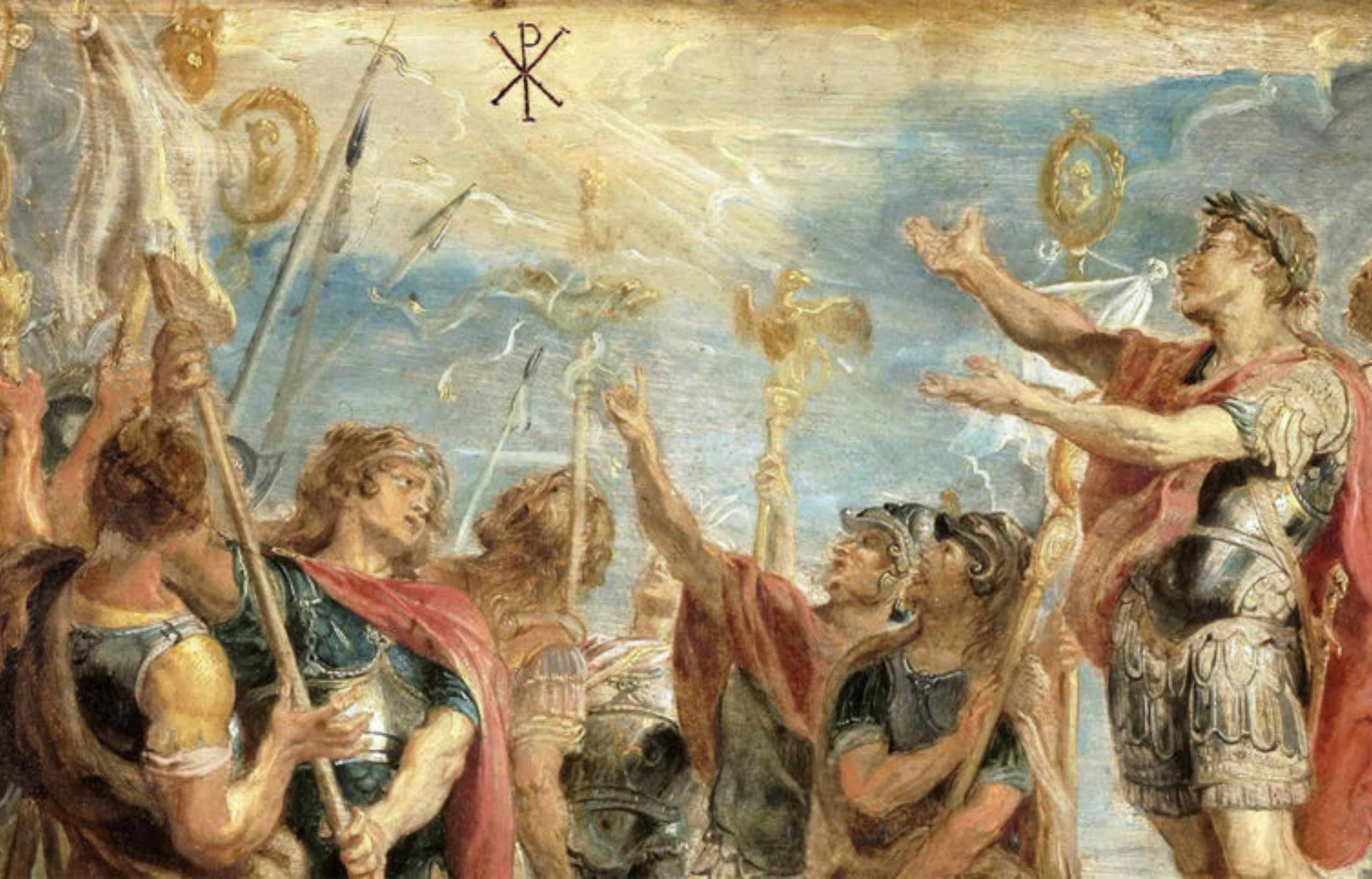
Throughout his life, Constantine ascribed his success to his conversion to Christianity and the support of the one true God. He fought the Battle of the Milvian Bridge in the name of God, having received instructions in a dream to paint the Christian monogram (Chi-Rho, known as the sacred monogram, is formed by the conjunction of the first two Greek letters of the word Christ.) on his troops’ shields. This is the account given by the Christian apologist Lactantius. A somewhat different version, offered by Eusebius, tells of a vision seen by Constantine during the campaign against Maxentius, in which the Christian sign appeared in the sky with the legend “In this sign, conquer.”2
Theodosius I’s edicts (380–392 AD) made it the state religion and banned pagan sacrifices, closed temples, and restricted public rites.
Urban centers saw competition and occasional riots (e.g., the destruction of the Serapeum in Alexandria in 391 AD), while rural areas retained pagan practices longer.
According to the archaeologist Alan Rowe:3
“The Serapeum was the last stronghold of the pagans who fortified themselves in the temple and its enclosure. The sanctuary was stormed by the Christians. The pagans were driven out, the temple was sacked, and its contents were destroyed.”
Scholars describe this as “conflict, competition, and coexistence,” but the trajectory was clear: paganism lost legal and cultural ground. It was not mutual flourishing—it was a power shift.4
The great cathedrals of Europe rose on the ruins of pagan shrines. This was not cultural blending—it was replacement. The faith that built the West did so by decisively rejecting the old “gods,” not by accommodating them.
Forced Conversions and the Suppression of Heathen Practices
In Western Europe most conversions were relatively swift once kings adopted Christianity. For instance we see the conversion of Clovis of the Franks around 496-508 AD at the behest of his wife St. Clotilde.5
Not only were they swift, but many were largely peaceful, especially in the case of St. Patrick’s conversion of Ireland to Christianity.
However, there were examples of forced conversion, which flies in the face of the usual pagan rhetoric of Christians being weak.
The Saxon Wars
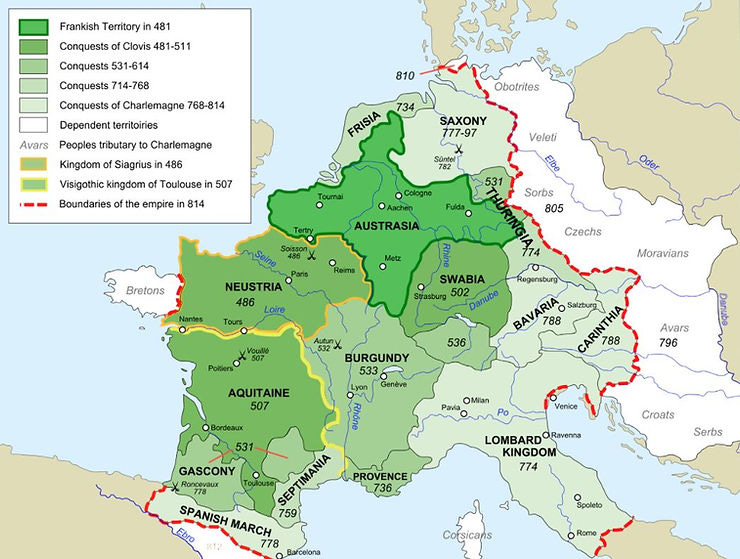
Charlemagne’s Saxon Wars (772-802 AD) included forced baptisms, destruction of sacred sites like the Irminsul and executions for refusal. However, what is important to know here is that the Saxons struck first in January of 772 with the sacking and burning of the church of Deventer.
Charlemagne in retaliation destroyed the Irminsul near Paderborn or Eresburg and sacked several major Saxon strongholds. After that, he negotiated a peace treaty while taking hostages for peace guarantees but Saxon free tenants, led by Widukind, raided Frankish lands in the Rhine region. Armed confrontations continued unabated for years.
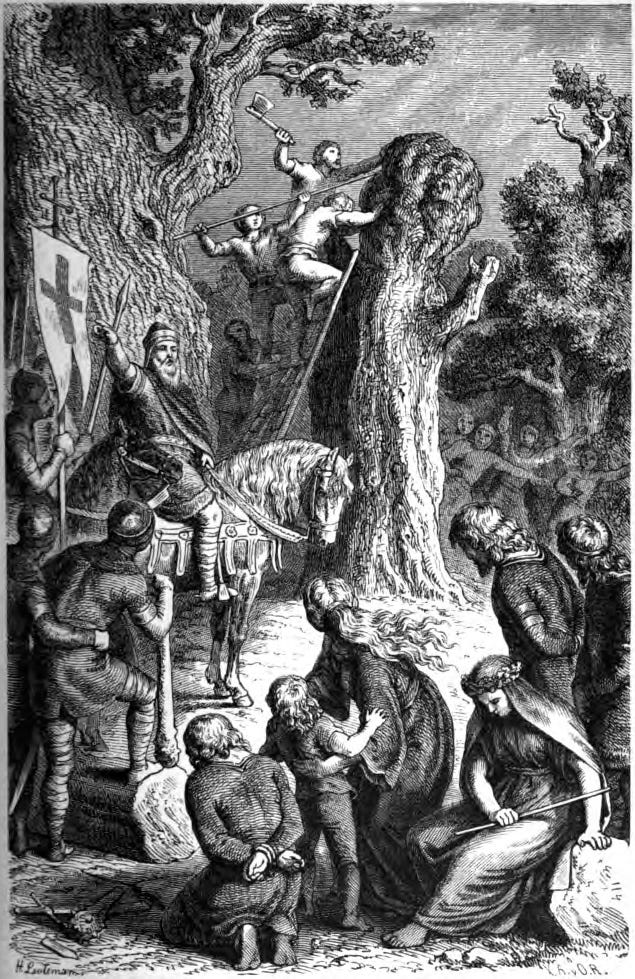
The Second Campaign started in 775 because of the pagans. The Royal Frankish Annals have this to say:
“While the king (Charlemagne) spent the winter at the villa of Quierzy, he decided to attack the treacherous and treaty-breaking tribe of the Saxons and to persist in this war until they were either defeated and forced to accept the Christian religion or be entirely exterminated."
If the pagans weren’t going to stop attacking Christians, what other options did Charlemagne have?
He marched through Westphalia, conquering the fort of Sigiburg, and crossed Engria, where he defeated the Saxons again. In Eastphalia, he defeated them, and their leader Hessi converted to Christianity and swore an oath of fealty to Charlemagne. Years later he became a monk out of his own volition.6
This continued until the last phase of the wars from 792-802 where Saxony was completely swallowed by the First Reich.
Einhard, the Frankish scholar, wrote circa 820 AD in his biography, Vita Karoli Magni (Life of Charlemagne):
“The war that had lasted so many years was at length ended by their acceding to the terms offered by the King; which were renunciation of their national religious customs and the worship of devils, acceptance of the sacraments of the Christian faith and religion, and union with the Franks to form one people.”
But it was not that case that all of them were exterminated, as Charlemagne was gracious enough to allow the pagans their lives if they were to leave.
There are four separate deportations of 10,000 Saxons recorded in the Frankish sources between the years 792 and 804.7
It should also be noted that Charlemagne was allied with the pagan Obotrites who fought the Saxons during this time as well. Although, the Obotrites would go on to attack Christians later before finally converting to Christianity.
Historical Examples of Pagans attacking Christians
Earlier I had mentioned that Constantine the Great had to declare the Edict of Milan (312 AD) just to get the pagans to stop attacking Christians (which caused the explosion of converts to Christianity across the Roman Empire). And in the last subsection I spoke about the Saxon Wars, which were started by the pagans.
However, these aren’t the only examples of pagans initiating attacks against Christians when we are trying to co-exist together.
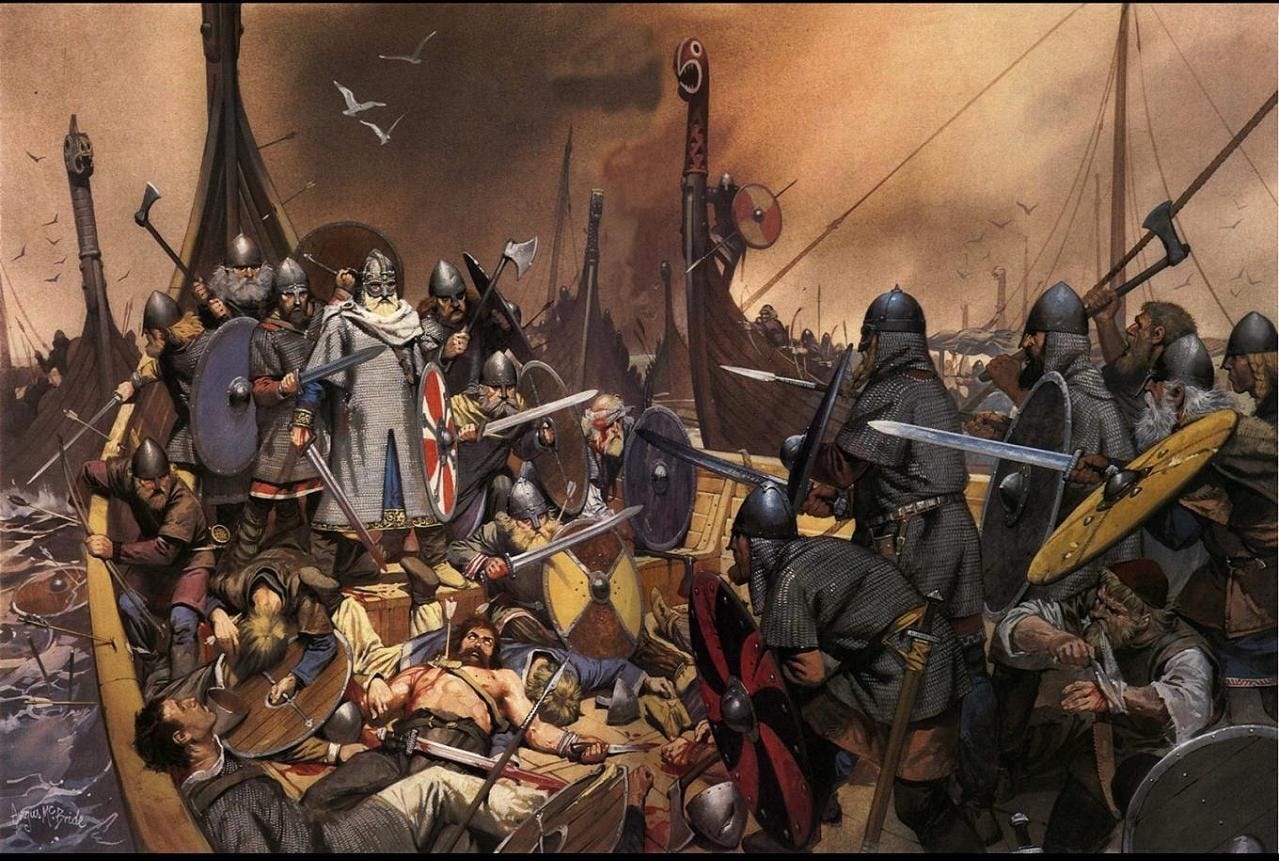
The Norse pagans from Scandinavia raided the monastery of Lindisfarne (Holy Island, off Northumbria, England) on June 8th, 793. This was a completely unprovoked attack where neither of the two peoples had prior history. The Vikings slaughtered monks, drowned some in the sea, enslaved others, plundered treasures, and desecrated relics. No prior Christian military action against the Norse provoked it.
Interestingly enough, Alcuin of York (c. 735 – 804), a priest and scholar, writes letters from Charlemagne’s court to Bishop Higbald of Lindisfarne and King Ethelred of Northumbria, where calls the attack unprecedented:
“The church of St Cuthbert is spattered with the blood of the priests of God… a place more venerable than all in Britain is given as a prey to pagan peoples.”
He explicitly labels the raiders “pagan race,” meaning that White pagans are not of our race until they convert to Christianity.8 | 9
Vikings followed up with repeated attacks on other Christian monasteries, towns, and kingdoms in Britain, Ireland, and Francia (e.g., sacking Noirmoutier in 799, Paris in 845). These were explicitly pagan forces targeting Christian sites.
One of the reasons why the Vikings raided Christian lands for wealth and women is because they had practiced selective female infanticide.10
Pagan Wends (Polabian Slavs) along the Elbe River frontier conducted raids across the Limes Saxonicus into Christian Saxon and Danish territories for tribute, slaves, and plunder. Contemporary chronicler Helmold of Bosau described Wendish attacks that destroyed churches, killed Christians (especially Danes), and involved ritual sacrifice of captives to pagan gods. These “deaths and destruction” inflicted on Christians were cited as justification for the 1147 Wendish Crusade called by Pope Eugenius III.11
Helmold, a Saxon priest on the frontier, details repeated Wendish raids across the Elbe that destroyed churches, killed Christians, and took slaves/tribute—explicitly cited as provoking the 1147 crusade. He notes pagan ritual sacrifice of captives.12
During the Prussian/Livonian Crusades, pagan tribes repeatedly raided Christian Polish and German settlements, burning churches and taking slaves. Polish Duke Konrad invited the Teutonic Knights specifically to stop this. Campaigns succeeded in subjugating the region and the only way to keep the local population from attacking Christians was through German settlement, forced baptisms, and military orders gaining territory.13 | 14 | 15
The Greatest Proponents of Destroying Paganism
King Olaf Tryggvason of Norway (c. 960s - 1000) was once a Viking who raided across the British Isles and the Baltic until he landed on the Scilly Isles, Cornwall, England in 994 AD.
He had heard of a wise man (most likely Saint Lide) that lived there and desiring to test the hermit, he sent one of his men to pose as Olaf. But the hermit was not fooled. So Olaf went to see the hermit, now convinced he was a real fortune teller.16
And the hermit told him:
“Thou wilt become a renowned king, and do celebrated deeds. Many men wilt thou bring to faith and baptism, and both to thy own and others' good; and that thou mayst have no doubt of the truth of this answer, listen to these tokens. When thou comest to thy ships many of thy people will conspire against thee, and then a battle will follow in which many of thy men will fall, and thou wilt be wounded almost to death, and carried upon a shield to thy ship; yet after seven days thou shalt be well of thy wounds, and immediately thou shalt let thyself be baptized.”
After the meeting mutineers attacked Olaf. He was wounded but survived, and as a result he converted to Christianity. He was baptized in 994 AD and signed the Danegeld Treaty, promising not to raid England anymore.17
When he returned home in 995 after the death of the pagan earl Haakon Sigurdsson, he quickly seized the throne and all of Norway pledged allegiance.
He ordered the burning or demolition of major temples, including the famous one at Mære (near Trondheim) and others containing idols of Thor, Odin, and Freyr. Priests and worshippers who resisted were often killed or driven out.
Olaf summoned local earls, chieftains, and assemblies, giving them a stark choice—baptism or death by fire and sword. In the Saga of Olaf Tryggvason (by the Icelandic monk Oddr Snorrason, c. 1190), he tells the Earl of Lade and his men they must convert immediately or face destruction. Many complied under duress.18
Sagas (especially Snorri Sturluson’s Heimskringla, c. 1230) record extreme acts to terrorize holdouts. One infamous example is the sorcerer and chieftain Raud the Strong: after Raud refused conversion, Olaf had a snake forced into his mouth that gnawed through his body, killing him. Olaf then seized Raud’s dragon ship and wealth. Other resisters faced mutilation (eyes gouged out, limbs chopped off), burning alive (especially those accused of sorcery), or exile.19 | 20
He sent priests and enforcers (including the notorious Thangbrand) to Iceland, the Orkney Islands, the Faroes, and Greenland. In Iceland, this pressure contributed to the Althing’s (Icelandic National Assembly) 1000 AD decision to adopt Christianity as the public religion.
Olaf continued to promote Christianity throughout his reign. He baptized the explorer Leif Ericson, who took a priest with him back to Greenland to convert the rest of his kin.21
He was defeated at the Battle of Svolder when his forces were defeated by a combined armada from Denmark, Sweden and the Jarls of Lade. Hallfreðr’s memorial poem for his lord had already alluded to rumors that Olaf escaped death at Svolder.
Ágrip af Nóregskonungasǫgum states:
“But of the fall of King Óláfr nothing was known. It was seen that as the fighting lessened he stood, still alive, on the high-deck astern on the Long Serpent, which had thirty-two rowing places. But when Eiríkr went to the stern of the ship in search of the king, a light flashed before him as though it were lightning, and when the light disappeared, the king himself was gone.”22
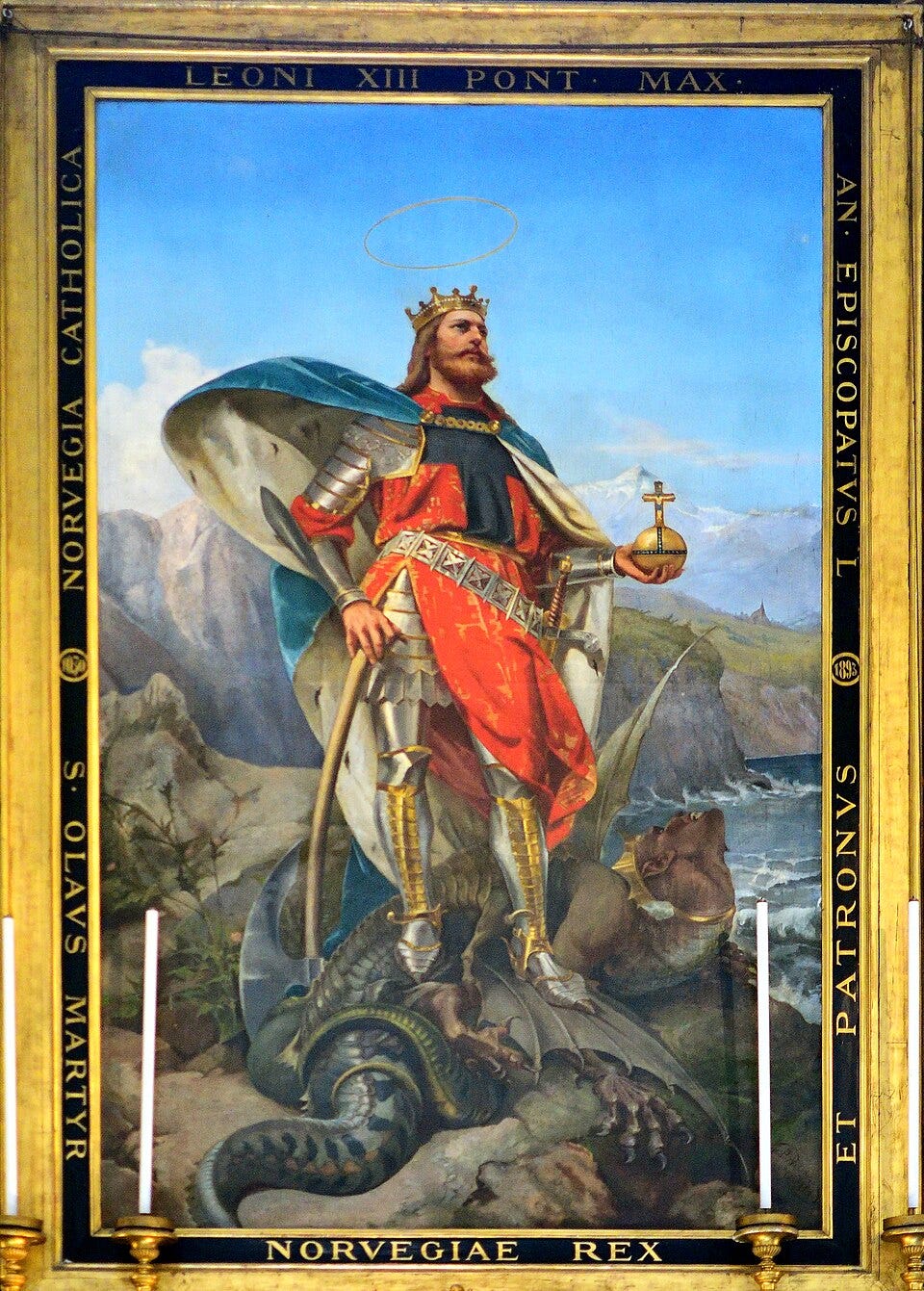
Ultimately Olaf’s short but effective reign laid the groundwork for St. Olaf the Holy, a distant relative of Olaf the Older to completely convert Norway to Christianity.
Like his predecessor, he was a Viking raider who converted abroad (baptized in Rouen, Normandy, in 1013). He returned in 1015, defeated rivals, and consolidated control over all of Norway by 1016.23
At a synod in Moster, Olaf and English bishop Grimkell introduced Norway’s first national Christian law code. It mandated church-building, baptism, observance of holy days, bans on pagan practices (including exposing infants to die), and restrictions on multiple marriages and slavery. This was presented as royal legislation, not just religious decree.24
Coastal regions had begun shifting earlier; the interior (Opplanda and Trøndelag) was more stubbornly pagan and tied to fertility cults. Olaf personally led campaigns there, destroying temples, expelling or mutilating pagan leaders (eyes put out, hands/feet chopped off, executions), and installing priests. Snorri Sturluson describes him as “zealous” and unwilling to leave any holdout unpunished.25
In 1028 he was driven into exile by a coalition backed by Denmark’s King Cnut. He returned in 1030 and was killed at the Battle of Stiklestad fighting a largely pagan army. His death sparked immediate miracles (his body was said to remain incorrupt, and healings occurred). Bishop Grimketel declared him a saint within a year, and Christianity spread rapidly.26
Pagans viewed Christianity as a foreign cult disrupting traditional reciprocity with gods and ancestors. But the pagans that converted to Christianity understood the truth and were the most fervent warriors.
Pagan Revival as a Spiritual Threat to Christendom Today
The Rise of Modern Heathenry and Folkish Paganism
The exploration of neopaganism began during the Völkisch movement from late 19th-century to the fall of the Third Reich in 1945. However, it ultimately began gaining wider popularity post Vatican II (1962-1965) after Catholic authority and dogma waned.
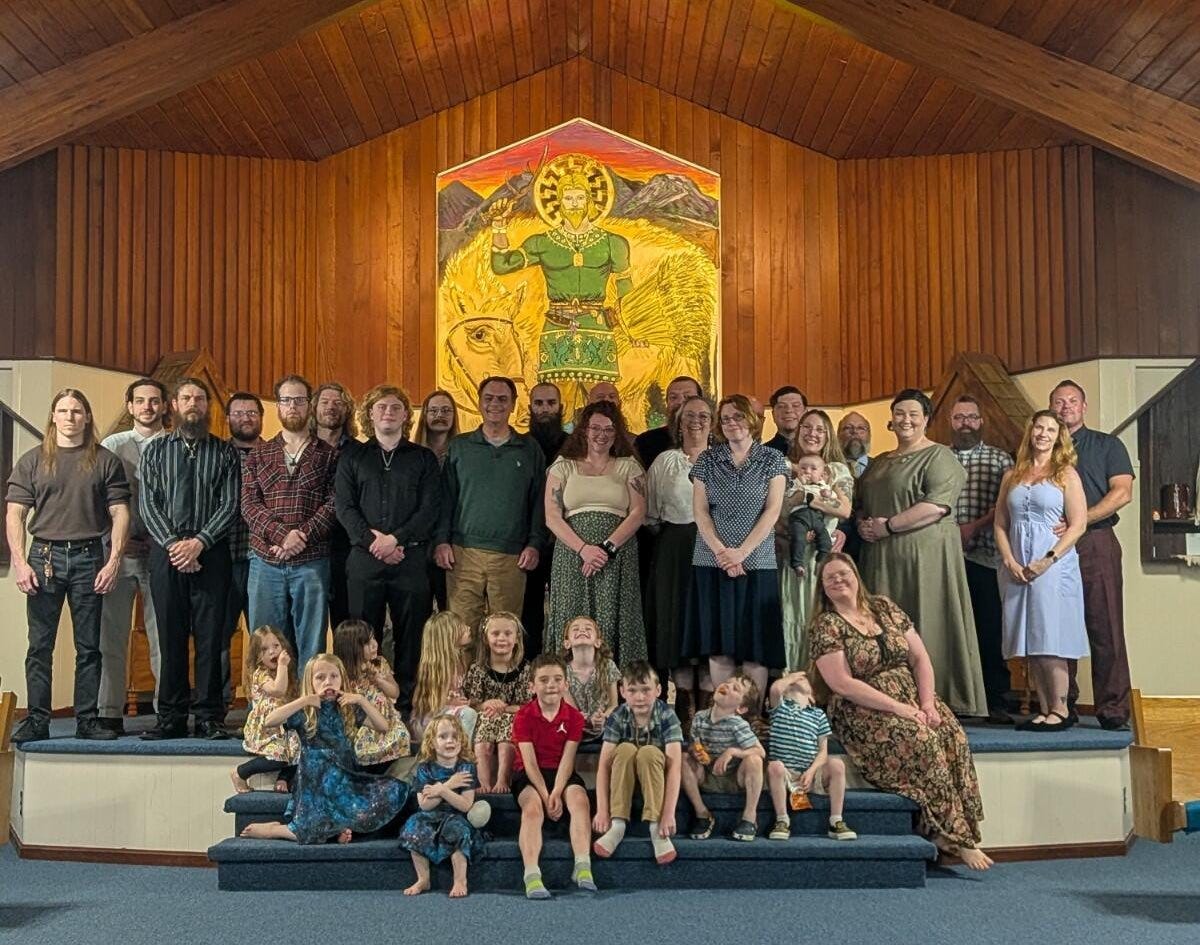
Modern Heathenry (also called Ásatrú or Germanic Neopaganism) is a real, organized revival movement reconstructing pre-Christian Norse, Anglo-Saxon, and Germanic polytheistic traditions. It emerged in the 1970s (e.g., Iceland’s Ásatrúarfélagið in 1972; U.S. groups like the Asatru Free Assembly).
“Folkish Paganism” refers to a specific ideological strain within Heathenry that emphasizes ethnic or ancestral ties—viewing the religion as inherently linked to Northern European (”Germanic”) heritage, often framed in terms of bloodline, culture, and “folk” identity. This contrasts with the more common “universalist” approach, which treats Heathenry as open to anyone regardless of ethnicity.
Since the 1990s, this strain of paganism has been gaining interest driven by cultural disillusionment, identity-seeking, social media, and a desire for rooted, nature-oriented spirituality amid secularization and shifts in mainstream Christianity. However, the scale remains small, and the movement is diverse—not uniformly “folkish” or a monolithic “reclamation of the European soul.”
The disclosed number of heathens is around 20,000 (as of 2016). But because of their decentralized and opsec minded attitudes, their total number is anyone’s guess.27
Ásatrú is the fastest-growing flavor of paganism and the largest non-Christian faith. It grew from ~21 members in 1973 to ~5,000–5,770 by the late 2010s (about 1.5% of the population), with official state recognition and new temples under construction.28 | 29
U.S. estimates for all neopagans (Wicca, Heathenry, etc.) range from 1–1.5 million (roughly 0.4–0.5% of the population), up significantly from the 1990s. UK census data shows Paganism grew 34% from 2011–2021 (to ~74,000 in England and Wales), making it one of the faster-growing religious categories relative to its size.30
In our age of identity crisis, neopagan movements—especially folkish strains emphasizing European ethnicity—are growing among White people disillusioned with liberal Christianity or secularism. While the numbers remain small, their appeal is potent because they speak directly to blood, soil, and ancestral memory. Not only that, but they are heavily present in the nationalist sphere because they need it to recruit converts. Christians must not dismiss this as harmless LARPing. It is a spiritual movement seeking to reclaim the European soul in the name of demons.
Why Pagan Gods Are Still Viewed as Idols or Demons
From a biblical standpoint, nothing has changed since Paul wrote to the Corinthians. The entities behind the old gods remain the same. Modern Heathenry may dress them in scholarly reconstruction and folk aesthetics, but Scripture still calls them demons. The rise of paganism is not cultural renewal—it is a resurgence of ancient spiritual powers that once held Europe in bondage.
Pagan traditions (especially reconstructionist or folkish Heathenry/Ásatrú) are polytheistic, animistic, and reciprocal: the gods are “real,” relational powers tied to blood, land, and ancestors. Honoring them requires offerings, not symbolic tolerance. You cannot authentically serve both without diluting one—Christians risk hellfire; pagans risk offending their gods by elevating a “foreign” jealous deity.
No shared metaphysics, soteriology, or ethics can bridge this. Christianity’s sin-grace-salvation vs. pagan honor-fate-reciprocity aren’t “different paths”; they’re opposing operating systems for reality. Coexistence here means one side pretending or the other compromising core tenets.
The Assault on European Christian Inheritance
Pagan revival explicitly frames Christianity as a foreign imposition that weakened the European spirit. This is not mere disagreement; it is an ideological assault on the faith that defined Europe for 1,500 years. White Christians cannot afford to treat this as a neutral “marketplace of ideas.” It is a direct challenge to Christendom itself.
Modern neopagan revival sees this as cultural erasure—an “Abrahamic import” (Levantine in origin) overwriting native European spirit. From the pagan standpoint, Christianity didn’t coexist; it conquered and rewrote the calendar, myths, and moral framework. Christians counter that pagan gods were demons anyway. Either way, the historical dynamic was dominance, not parallel thriving. Revival today reactivates the same zero-sum conflict: reclaiming “stolen” heritage vs. defending Christendom.
At the same time, Heathenry isn’t a unified threat or inevitable backlash. It’s fragmented, often apolitical, and coexists with (or borrows from) other spiritualities.
The Stakes for White Christians and European Peoples
Universalism vs. Ancestral Loyalty
In the context of “White” peoples—those of European descent seeking cultural survival amid demographic and spiritual decline—the divide sharpens. Folkish pagans (a vocal strain in Heathenry) frame their path as the ethnic European folk religion: tied to blood, ancestors, and the native gods of the North. Christianity, they argue, is universalist (”all nations” under one God), promoting slave morality, guilt, and out-group altruism that weakens kin loyalty and folk strength. They say it subordinates the European soul to a foreign deity, fostering the very self-effacement now eroding White demographics and heritage.
Christianity is universal in its offer of salvation, yet it has always taken root in particular peoples. The idea that Europeans must abandon their Christian inheritance to “return to the gods” is a false choice. True ancestral loyalty for White Christians means remaining faithful to the faith our fathers embraced, not rejecting it for alternatives.
And while the Vatican is encouraging more and more migration to replace the local European populations, it is the Orthodox Church that is trying to change the conversation. While Christians believe in a universal religion, we do not want to be replaced in our homelands.31
Protecting Souls, Families, and Civilizational Legacy
The eternal souls of our children, the spiritual health of our families, and the future of the West hang in the balance. Paganism offers identity without the cross; Christianity offers identity rooted in the only Savior who can deliver. There is no neutral ground.
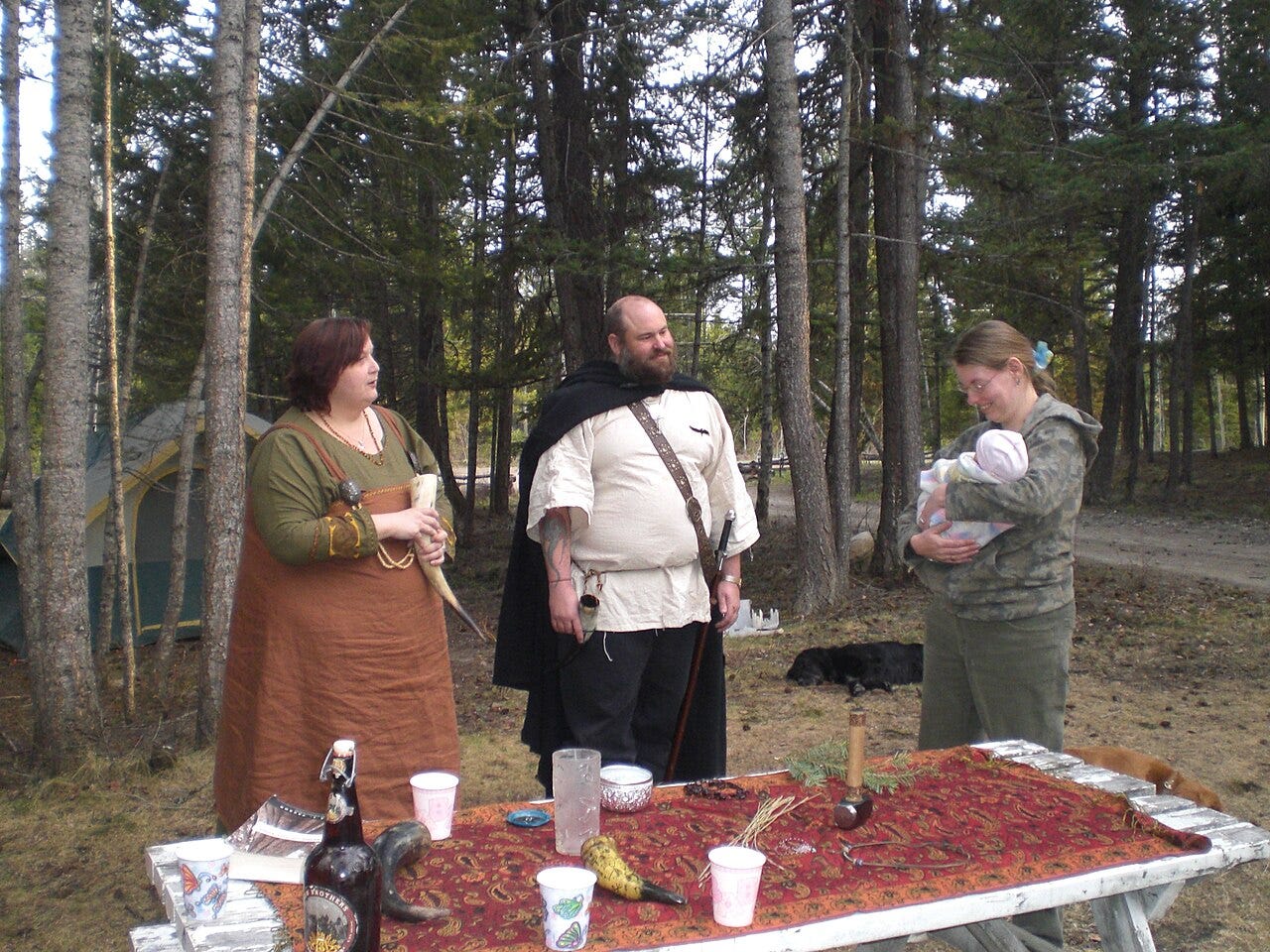
As of now most Heathen groups were 60–70% male in their composition,32 which sends alarm bells in my head. If the false religion is so male dominated like it is reported to be, that means that they will either have to increase their efforts to recruit women or go out of their way to take them. And while in Northern and Western Europe the difference is less, in America it’s more pronounced.33
The heathen community contained a greater percentage of transgender individuals, at 2%, than is estimated to be present in the wider population.34 Similarly, a greater proportion of LGBT practitioners within Heathenry (21%) than wider society has been noted.35
In 2018, the scholar of religion Jefferson F. Calico suggested that it was likely there were between 8000 and 20,000 Heathens in the U.S.36
No Inner Peace Between Christ and the Old “Gods”
Scripture, history, and current reality all testify to the same truth: these are rival covenants. One must yield lest one commits prostitution of the heart and soul.
Hosea 4:12-14 states:
12.) They asked counsel by means of signs, and they reported answer to them by their staves: they have gone astray in a spirit of whoredom, and gone grievously a-whoring from their God.
13.) They have sacrificed on the tops of the mountains, and on the hills they have sacrificed under the oak and poplar, and under the shady tree, because the shade was good: therefore your daughters shall go a-whoring, and your daughters-in-law shall commit adultery.
14.) And I will not visit upon your daughters when they shall commit fornication, nor your daughters-in-law when they shall commit adultery: for they themselves mingled themselves with harlots, and sacrificed with polluted ones, and the people that understood not entangled itself with a harlot.
Again we see this in Ezekiel 16 and 23.
A Call to Unwavering Faith: Christians Must Choose
Rejecting the Allure of Paganism
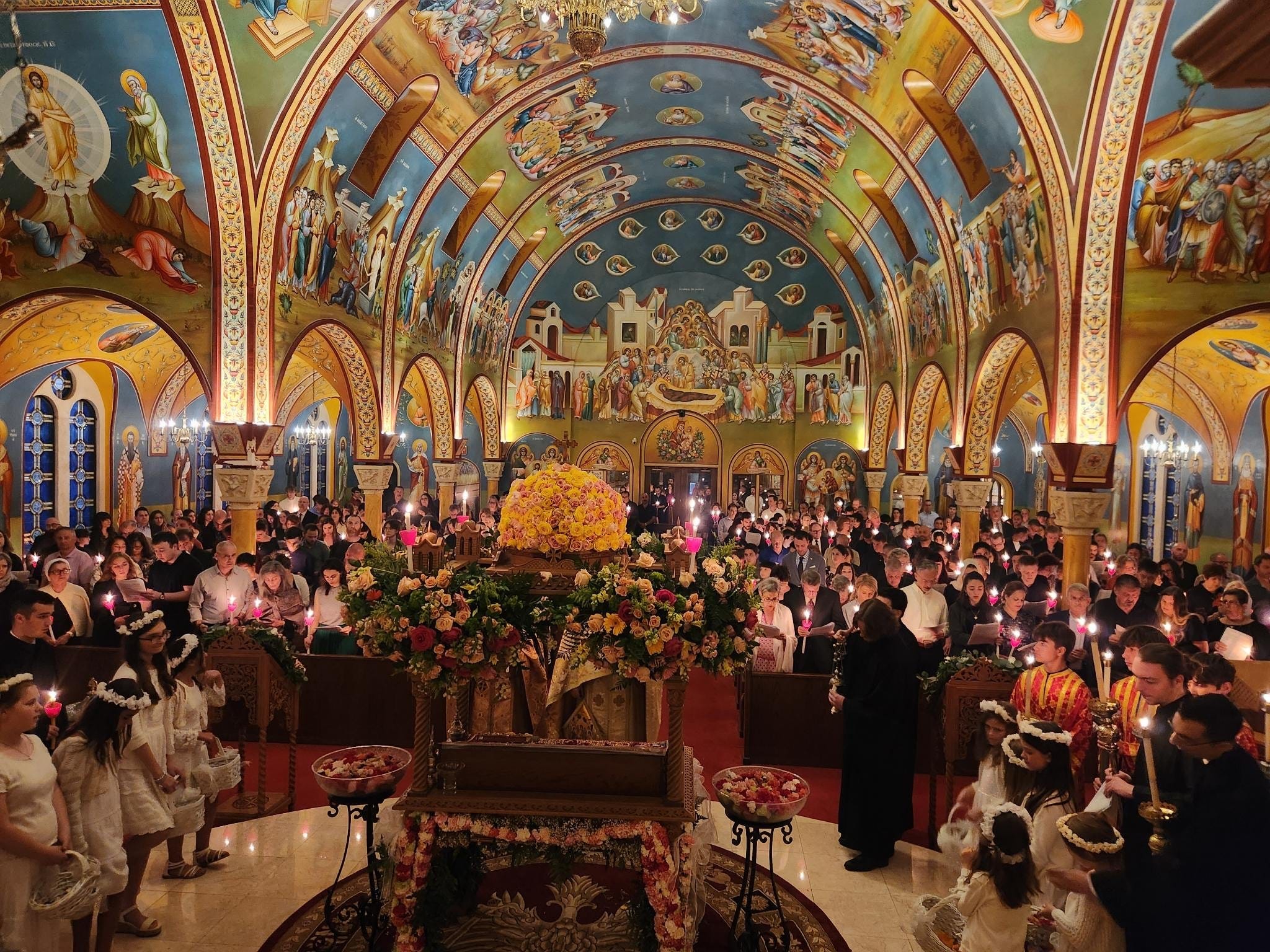
White Christians must reject the siren song of pagan revival with biblical clarity and courage. Heritage matters—but never at the expense of truth. The old “gods” are not our friends; they are defeated foes.
Many pagans cite a childhood interest in mythology that is given to them by pop culture depictions of the Norse religion or mythology that is read during their formative years. Often times these children don’t even read the Bible.
Others involved themselves in the religion after experiencing direct revelation through dreams, which they interpret as having been provided by the gods.37
Elder Ieronymos of Aegina said this of dreams:
“It is better for us not to believe in dreams at all, because many have gone astray on their account. There are three kinds of dreams: those from God, those from our thoughts, and those from the enemy. If they are from God and we don’t believe them, God does not take offense, because we don’t believe them out of fear, lest we be led into deception. If I should come in the night and knock on your door, and you don’t open to me because you do not recognize my voice, I am not offended. So it is with God, He is not angry when out of fear of God we don’t believe dreams. Wine and vinegar have the same appearance. From the taste you understand the difference. If the dreams are from God, they bring calm; if they are from the enemy, they bring turmoil. Beware of deceptions. Better to protect ourselves and not believe anything outside of what our Church teaches.”
Every Christian, therefore, needs to be careful of dreams. Interpretation is crucial and a further understanding of its origin is imperative, if we wish to live a Christian life.38
A sensation of "coming home" has also been reported by many Heathens who have converted to the movement, however, such a narrative is “not characteristic” of most U.S. Heathens.39 Many of the American practitioners were motivated to join the movement both out of a desire to “find roots” within historical European cultures and to meet a “genuine need for spiritual connections and community.”40
Standing Firm in Biblical Truth
Now is the time for faithful confession: “As for me and my house, we will serve the Lord” (Joshua 24:15). No other gods. No compromise. No coexistence.
45% of heathens have been raises as Christians, although 21% had previously had no religious affiliation or been atheists or agnostics.41 Typically adherents live within Western Christian majority societies, however, often state that Christianity offers them very little.42
Although, I would argue that for far too long Christianity has offered them religious freedom and the ability to spread their false beliefs. They have used this freedom to spread a recurring commonality, they “almost always formulate oppositional identities” to Christianity.43
During the 1980s, many heathens in Europe had been motivated to join the religion in part by their own anti-Christian ethos, but that this attitude had become less prominent as the significance of the Christian churches had declined in Western nations.44 This correlates with the rise of homosexuality, transgenderism, and overt manipulation of White Christians by the jews.
However, Jefferson F. Calico, the author of “Being Viking: Heathenism in Contemporary America, noted that a “deep antipathy” to Christianity was still “quite close to the surface for many American Heathens”,45 with anti-Christian sentiment often being expressed by mocking Christians.46 Examples include calling us “Christ-cucks”, “rabbi-worshippers,” “crypto-jews.”
Holy War
Traditionalist Christians respond that Europe became Christendom—the faith that built cathedrals, laws, and the West. Paganism is LARPing dead “gods” or worse, opening doors to occultism. But here’s the rub: both claim the same people and soil as “theirs.” Pagans say Christianity alienates Europeans from their pre-Christian essence; Christians say abandoning it dooms the West to pagan chaos or secular void. Divided spiritual loyalties fracture the ethnic/cultural unity needed for survival. You can’t have a coherent “White” revival movement when half worships the old gods as native and the other sees them as demons.
Coexistence would require either Christianity to abandon its exclusive claims or paganism to cease being pagan. Neither will happen. Therefore, faithful White Christians must choose—and choose Christ.
From this standpoint, “coexistence” is a liberal fantasy or tactical truce. Authentic adherents on either side know the truth: these are rival covenants for the European soul. White Christians and Pagans cannot truly coexist because their gods demand different futures for the same bloodline. One path must prevail if either is to remain intact.
In families, communities, or movements, this plays out as tension, conversion pressure, or schism—not peaceful pluralism. Christians are commanded to evangelize (“make disciples of all nations”); pagans, especially folkish ones, see their gods as calling back their people from foreign faith. Secular society delays the clash, but under stress (identity crises, collapse scenarios), the incompatibility resurfaces. History shows no long-term equilibrium when two faiths claim the same ancestral legacy—one becomes dominant, the other folk-belief at best or heresy at worst.
In the end, the question is not whether White Christians and Pagans can coexist. The question is whether we will remain faithful to the One who said, “I am the Lord, that is My name; I will not give My glory to another, nor My praise to idols” (Isaiah 42:8). The answer must be decisive.
Anchoress and Abbess in Ninth-Century Saxony: The Lives of Liutbirga of Wendhausen and Hathumoda of Gandersheim | Frederick S. Patton | p. 30.
Saxo Grammaticus, Gesta Danorum (History of the Danes, c. 1200), ed. Karsten Friis-Jensen (Oxford University Press, 2015).
Helmold of Bosau, Chronica Slavorum (Chronicle of the Slavs, c. 1170), trans. Francis J. Tschan (Columbia University Press, 1935/1966).
Peter of Dusburg, Chronicon Terrae Prussiae (Chronicle of the Prussian Land, c. 1326).
Henry of Livonia, Chronicon Livoniae (Chronicle of Livonia, c. 1225–1227), trans. James A. Brundage.
Nicolaus von Jeroschin, Kronike von Pruzinlant (Chronicle of Prussia, c. 1330–1341), trans. Mary Fischer (Crusade Texts in Translation, 2010).
ibidem
Snorre Sturlason, Heimskringla, Or the Lives of the Norse Kings (Kessinger Publishing, 2004), p. 188
Ágrip af Nóregskonungasǫgum | Page 35 | 1995 | M. J. Driscoll
Schnurbein, Stefanie von (2016). Norse Revival: Transformations of Germanic Neopaganism | p. 88
Schnurbein, Stefanie von (2016). Norse Revival: Transformations of Germanic Neopaganism | p. 216
Cragle, Joshua Marcus (2017). “Contemporary Germanic/Norse Paganism and Recent Survey Data”. The Pomegranate: The International Journal of Pagan Studies. 19 (1): 77–116. p. 81
ibidem
Cragle, Joshua Marcus (2017). “Contemporary Germanic/Norse Paganism and Recent Survey Data”. The Pomegranate: The International Journal of Pagan Studies. 19 (1): 77–116. p. 85
Calico, Jefferson F. (2018). Being Viking: Heathenism in Contemporary America. Sheffield: Equinox. p. 16
Kaplan, Jeffrey (1996). "The Reconstruction of the Ásatrú and Odinist Traditions". In Lewis, James R. (ed.). Magical Religion and Modern Witchcraft. New York: State University of New York. , pp. 197–198;
Strmiska, Michael F.; Sigurvinsson, Baldur A. (2005). “Asatru: Nordic Paganism in Iceland and America”. In Strmiska, Michael F. (ed.). Modern Paganism in World Cultures. Santa Barbara, California: ABC-CLIO. p. 147
Amster, Matthew H. (2015). "It's Not Easy Being Apolitical: Reconstructionism and Eclecticism in Danish Asatro". In Rountree, Kathryn (ed.). Contemporary Pagan and Native Faith Movements in Europe: Colonialist and Nationalist Impulses. New York and Oxford: Berghahn. p. 49
Schnurbein, Stefanie von (2016). Norse Revival: Transformations of Germanic Neopaganism | p. 89
Calico, Jefferson F. (2018). Being Viking: Heathenism in Contemporary America. Sheffield: Equinox. p. 30
Pizza, Murphy (2015). “Fire and Ice in Midvestjard: American Religion and Norse Identity in Minnesota’s Heathen Community”. In Lewis, James R.; Tøllefsen, Inga Bårdsen (eds.). Handbook of Nordic New Religions. Leiden: Brill. p. 498
Cragle, Joshua Marcus (2017). “Contemporary Germanic/Norse Paganism and Recent Survey Data”. The Pomegranate: The International Journal of Pagan Studies. 19 (1): 77–116. pp. 94–95.
Amster, Matthew H. (2015). “It’s Not Easy Being Apolitical: Reconstructionism and Eclecticism in Danish Asatro”. In Rountree, Kathryn (ed.). Contemporary Pagan and Native Faith Movements in Europe: Colonialist and Nationalist Impulses. New York and Oxford: Berghahn. p. 47
Snook, Jennifer; Horrell, Thad; Horton, Kristen (2017). “Heathens in the United States: The Return to ‘Tribes’ in the Construction of a Peoplehood”. In Rountree, Kathryn (ed.). Cosmopolitanism, Nationalism, and Modern Paganism. New York: Palgrave Macmillan. pp. 44
Schnurbein, Stefanie von (2016). Norse Revival: Transformations of Germanic Neopaganism | p. 89.
Calico, Jefferson F. (2018). Being Viking: Heathenism in Contemporary America. Sheffield: Equinox. p. 32
Calico, Jefferson F. (2018). Being Viking: Heathenism in Contemporary America. Sheffield: Equinox. p. 34.
Everything you quoted from is Semitic, btw, and it's hilarious to me that you are highlighting the very verses pagans use to point out how utterly foreign and subverted your religion can get.
And it's humorous as well that after going through verse after verse about how Christians must not allow paganism to survive, you then to go into how pagans are ackshually da bad guys who attacked poor Christians for no reason at all!
I expected this from you, and I'm glad there are less spergy Christians who are willing to be friendly with pagans and secularists. The majority of your religion is literally third world brown people, and you are busy making a phantom out of your own people.
Sigh....
Here we have yet another White man, eagerly promoting religious in-fighting among our people.... This is exactly why our people are being destroyed, and why Jews are winning.
I'm a "pagan", a member of the Asatru Folk Assembly, led by a former infantry officer. I don't wear bearskins, I don't have a horned helmet (a creation of Jewish movies)....
I don't hate Christians, or "Christ", but I walked away from the entire Abrahamic mess decades ago. Nearly everyone I see involved in Christianity is a devout, fanatical, hysterical Israeli bootlicker. Seriously.
I'm sure some will shriek "no, not me!!!" but that doesn't change the fact that every single major Christian denomination, and just about every leader of note, eagerly endorses not only Israel, but Jewish supremacy (Zionism).
That is vile, black evil in my eyes.
Your entire religion is focused on, and obsessed with Israel, "the holy land."
All this talk of Israel, "true Israel", "no, modern Rothschild Israel isn't the BIBLICAL ISRAEL!!!", and "I will bless those that bless thee", and then Thessalonians ("Jews are the enemy of all mankind)... it's all very contradictory.
Was Jesus a "Jew"? Was he a Nazarene/Nazerite? Was he WHITE? Was David "White"? joshua? Jeremiah? Johan? John the Baptist? Were any of these Biblical figures White?
I care about our people. I don't care about "religion", in the fanatical way that you see to care about religion. I do not care about Israel. I don't base my life around service to an evil, alien people in a faraway land that our ancestors have no connection to whatsoever.
Our people hail from Europe, not the deserts of Canaan. Stonehenge was built more than a thousand years before David ever ruled some small desert tribe in the backwoods of nowhere.
.
Why do you so eagerly spew hatred against your own people, over religion?
Hitler spoke against "pagans" because they avoided political issues (of his time). Asatru does not. My faith has been declared a "hate group" by the SPLC..... Has yours?
Look at that Catholic woman who dared to speak out against Israel, in the gov't religious council. Look at how many Christian groups immediately attacked her and threw her out, because she wouldn't lick Jewish boots.....
.
Is that what your religion endorses? Not just the worship of Israel, the place, but of Jews, the people? Do *you* support the modern nation of Israel? Do you uphold Zionism? Does your religion support it...?
I honor my ancestors, I honor my people, and I work for their benefit. I do not work for an alien people in an alien land.
You do you, and I'll do me. We are growing..... and we won't be silenced.